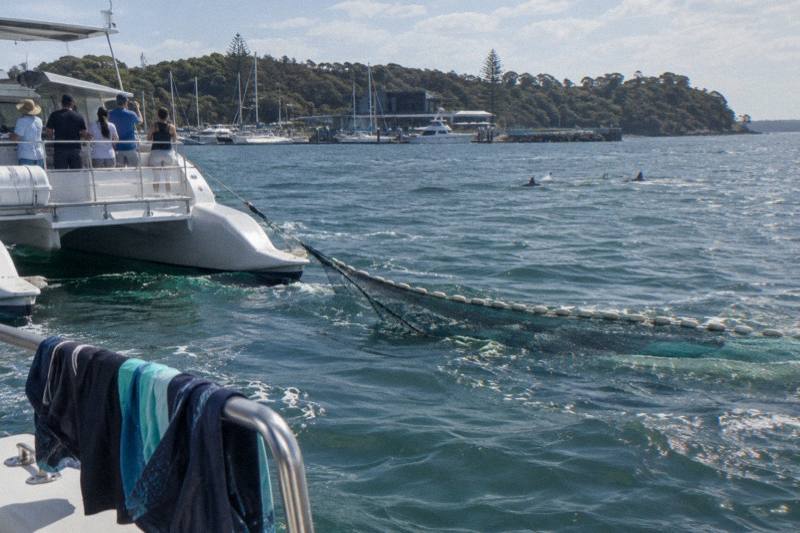
What Is The Best Time To Go On A Dolphin Cruise?
Season by season and departure by departure, a plain answer to when to take a dolphin cruise in Port Stephens: which boats run when, what the climate averages say, and how to pick a time.
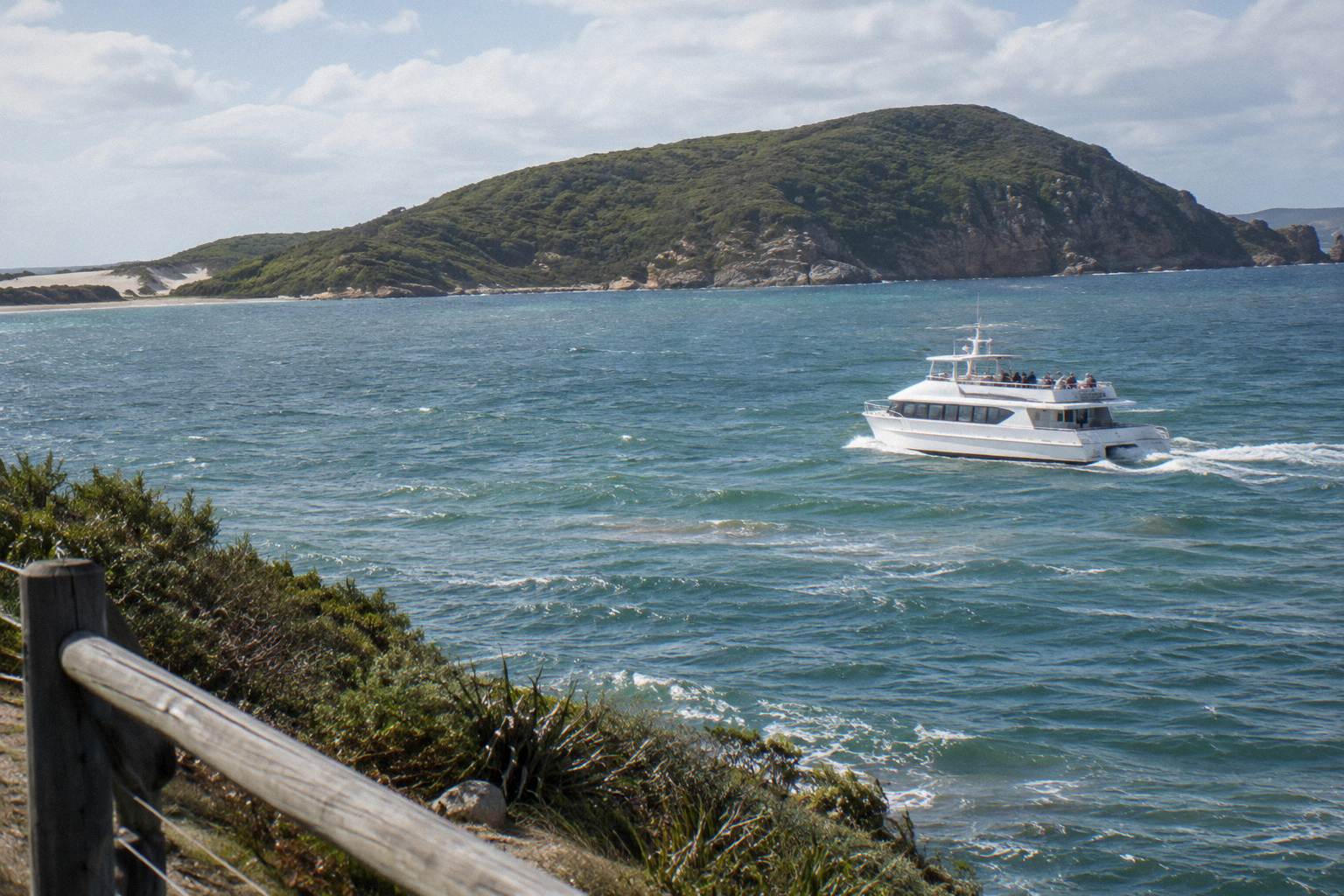
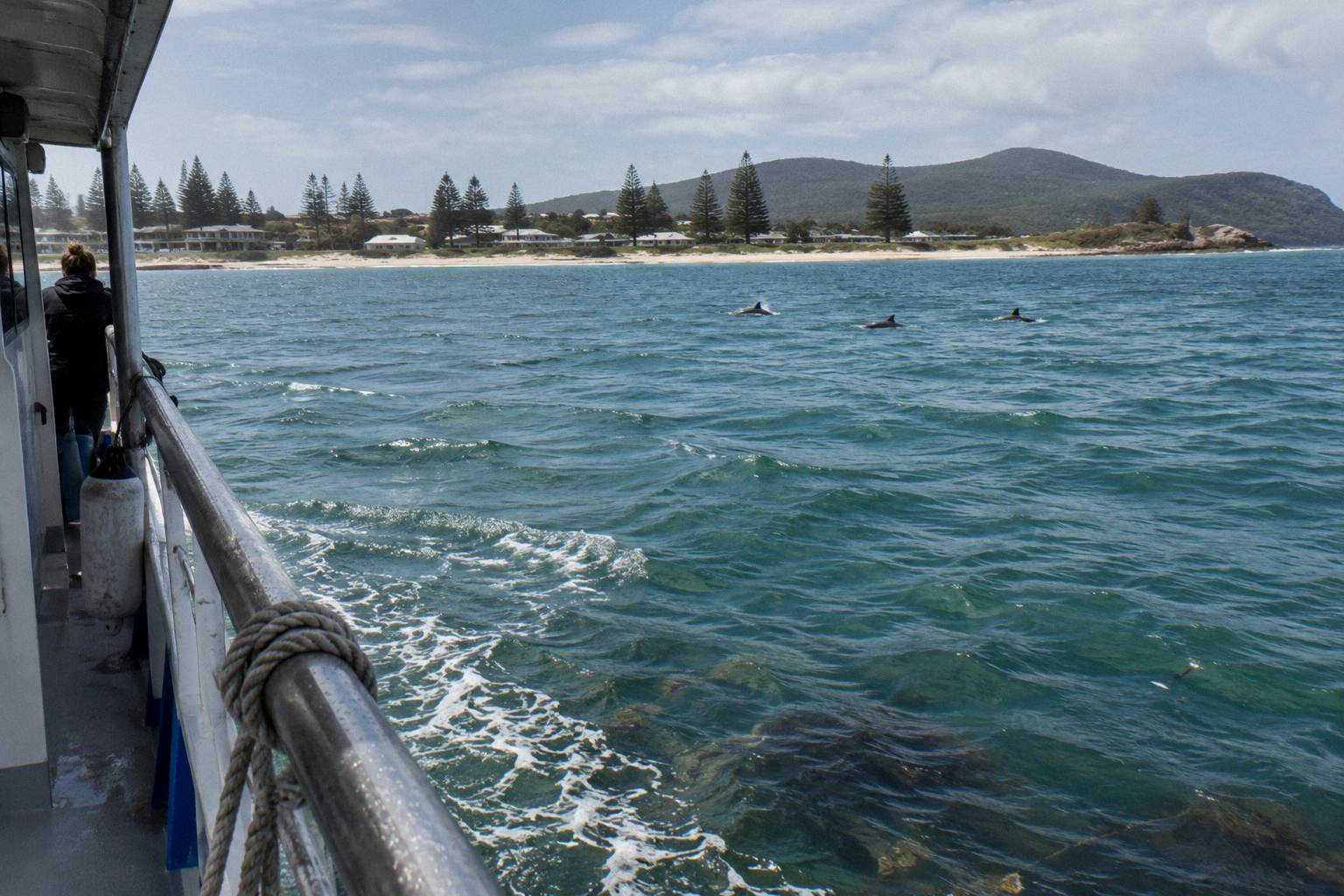
Any month works, because the dolphins never leave Port Stephens. The NSW National Parks and Wildlife Service counts roughly 90 to 120 Indo-Pacific bottlenose dolphins living permanently in these marine park waters, so you can visit Nelson Bay year-round to see them. What changes with the calendar is which cruises operate: Moonshadow sails all year, Imagine runs November to April, and the BBQ and Boom Net cruise runs December to April.
The question sounds like it should have one answer, a best week, a golden hour, and the mechanics of it are simpler and more useful than that. Port Stephens is one of the few places on the east coast where the dolphin population is resident rather than migratory. The pod does not head north in winter or arrive on a schedule the way humpback whales do. It lives here, breeds here, and feeds here across all four seasons, which is why the operators can run dolphin cruises through July drizzle as well as January heat.
That resident pod is also unusually well studied. Macquarie University research cited by NPWS found the population is genetically distinct and seldom interbreeds with coastal dolphins, and a second dolphin community lives around Broughton Island about 20 km away. Some animals travel outside the Heads, and dolphins in the eastern section of the port are often seen off Shoal Bay beach. An annual Community Dolphin Census keeps a running count of the resident community.
So the version of "when is best" splits into three smaller questions that each have a real answer: which month gives you the boat you want, whether a late-morning or an early-afternoon departure suits your day better, and what weather you are signing up for. The rest of the article works through each, with the operators' own seasonal windows and the Bureau of Meteorology's Nelson Bay climate averages, because those two things decide your timing more than any dolphin behaviour does.
No cruise guarantees a sighting, whatever the season. Moonshadow says plainly that the dolphins are totally wild and "100% sighting success isn't guaranteed", and if dolphins are not located it gives a non-transferable free return voucher on a standby basis rather than a cash refund. Imagine's Dolphin Watch Cruise and Sail carries a "Dolphin Guarantee (Free Return)" on its operator. Those terms matter more in winter, when the boats may work harder for a pod, than in any fixed "best" month.
If you are already choosing a departure, the three trips below cover the main timing styles: a fast one-hour watch, a summer sailing cruise, and a two-hour summer barbecue trip.
Which Months Work For Which Dolphin Cruise?
Moonshadow's dolphin cruises, including the 1.5-hour Dolphin Discovery cruise from A$46, run all year, every day except Christmas Day. Imagine's Dolphin Watch Cruise and Sail, from A$50, runs November to the end of April only. The BBQ and Boom Net cruise, from A$59, runs December to April. The 1-Hour Dolphin Watch Express from Aquamarine, from A$55, is the quick option whenever you arrive.
Seasonality here is about boats, not dolphins. If you visit in August and want to sail under catamaran canvas with dolphins alongside, that trip is simply not running: Imagine's sailing season closes at the end of April and reopens in November, and it should never be assumed to run in winter. If you visit in August and want a dolphin cruise at all, Moonshadow's trips and Aquamarine's one-hour express are both on the water.
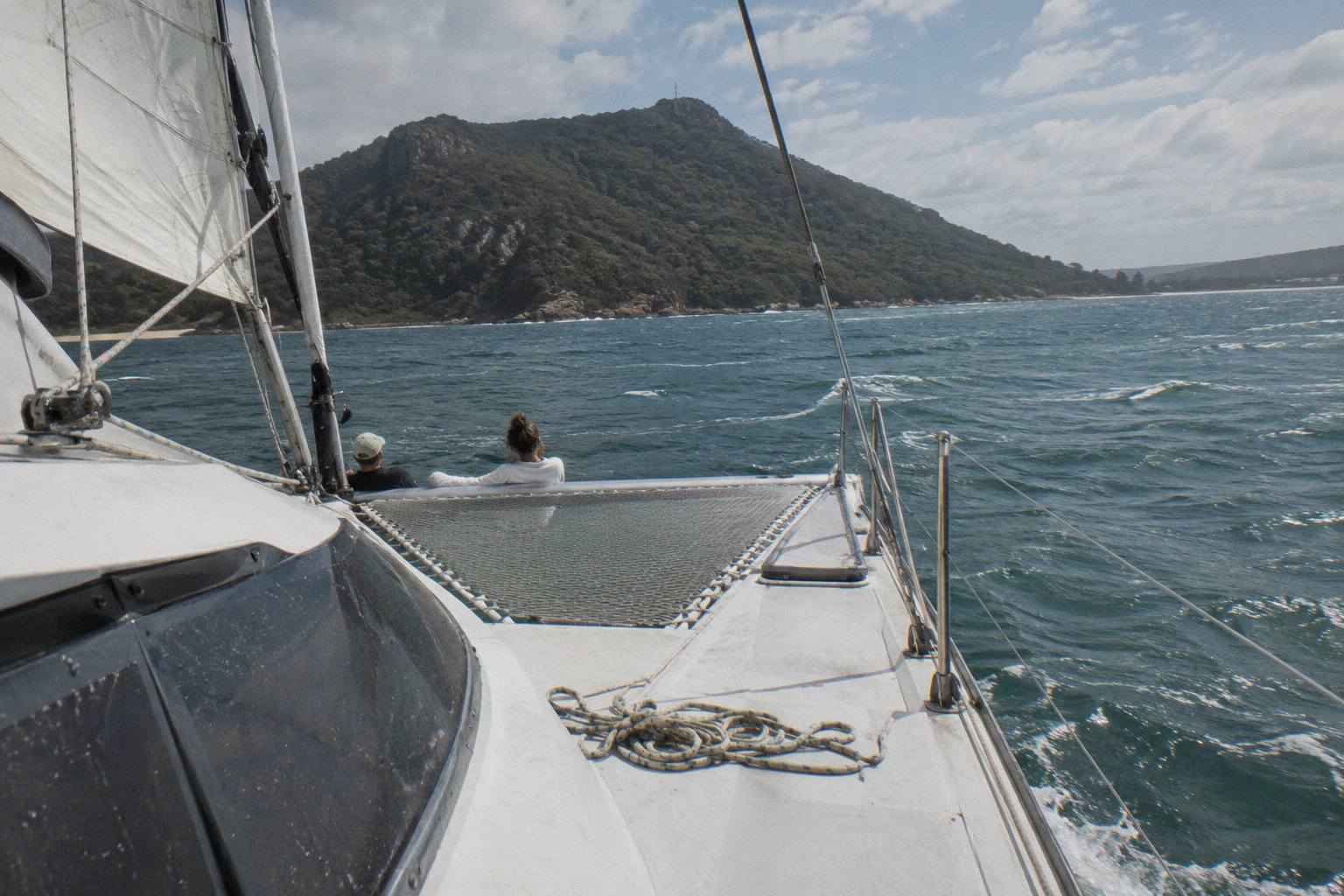
The summer-only trips are summer-only for reasons that make sense once you are on the water. The sailing cruise's dry bow-net and wet boom-net are far more appealing in January water than in a southerly in June, and the barbecue cruise's sausage sizzle on walk-around decks is a warm-weather format. The Dolphin Discovery boom net also stays inshore, which pairs naturally with the warmer months, though it runs year round and you bring your own swimsuit and towels either way.
| Cruise | Operator | Season | Duration | From (per person) |
|---|---|---|---|---|
| Dolphin Discovery Cruise | Moonshadow - TQC Cruises | All year, daily except Christmas Day | 1.5 hours | A$46 |
| 1-Hour Dolphin Watch Express | Aquamarine Adventures | Year round | 1 hour | A$55 |
| Dolphin Watch Cruise and Sail | Imagine Cruises | November to end of April | 1.5 hours | A$50 |
| BBQ and Boom Net Cruise | Moonshadow - TQC Cruises | December to April | 2 hours | A$59 |
| Wild Port Stephens Marine Park Cruise | Moonshadow - TQC Cruises | Year round | 1.5 hours | A$46 |
Two planning notes fall out of that table. First, the two summer-only trips overlap only December to April, so an early-summer or autumn visit is when the full spread of formats is available, sailing, barbecue, boom net, fast watch. Second, prices are from-prices in Australian dollars and change: check the current price when you book. Child and family fares are set by each operator and shown at booking.
For a fuller boat-by-boat comparison, the guide to dolphin watching seasons month by month works through the calendar in more detail, and the Port Stephens cruises compared guide sets the dolphin trips against the sailing and sunset formats side by side.
The sailing cruise is the one to lock in early if it is your priority. Its November-to-April window is fixed, its 4.8 rating from 106 reviews reflects a seasonal product with a defined audience, and it includes tea and coffee, a dry bow-net and a wet boom-net, plus the operator's Dolphin Guarantee (Free Return).
Late Morning Or Early Afternoon: Does Departure Time Matter?
Moonshadow describes a late-morning and an early-afternoon departure daily all year, with an extra afternoon departure in school holidays except in winter. The dolphins are resident and do not keep office hours, so the choice is practical: light, warmth, meal times, and the rest of your day. Pick whichever departure leaves your day in better shape.
The departure pattern is this: late morning and early afternoon, per the operator, with an extra afternoon sailing in school holidays outside winter. Booking calendars decide the exact times and they change, so never plan around a clock time you read anywhere, including here, and the dock is on your booking confirmation.
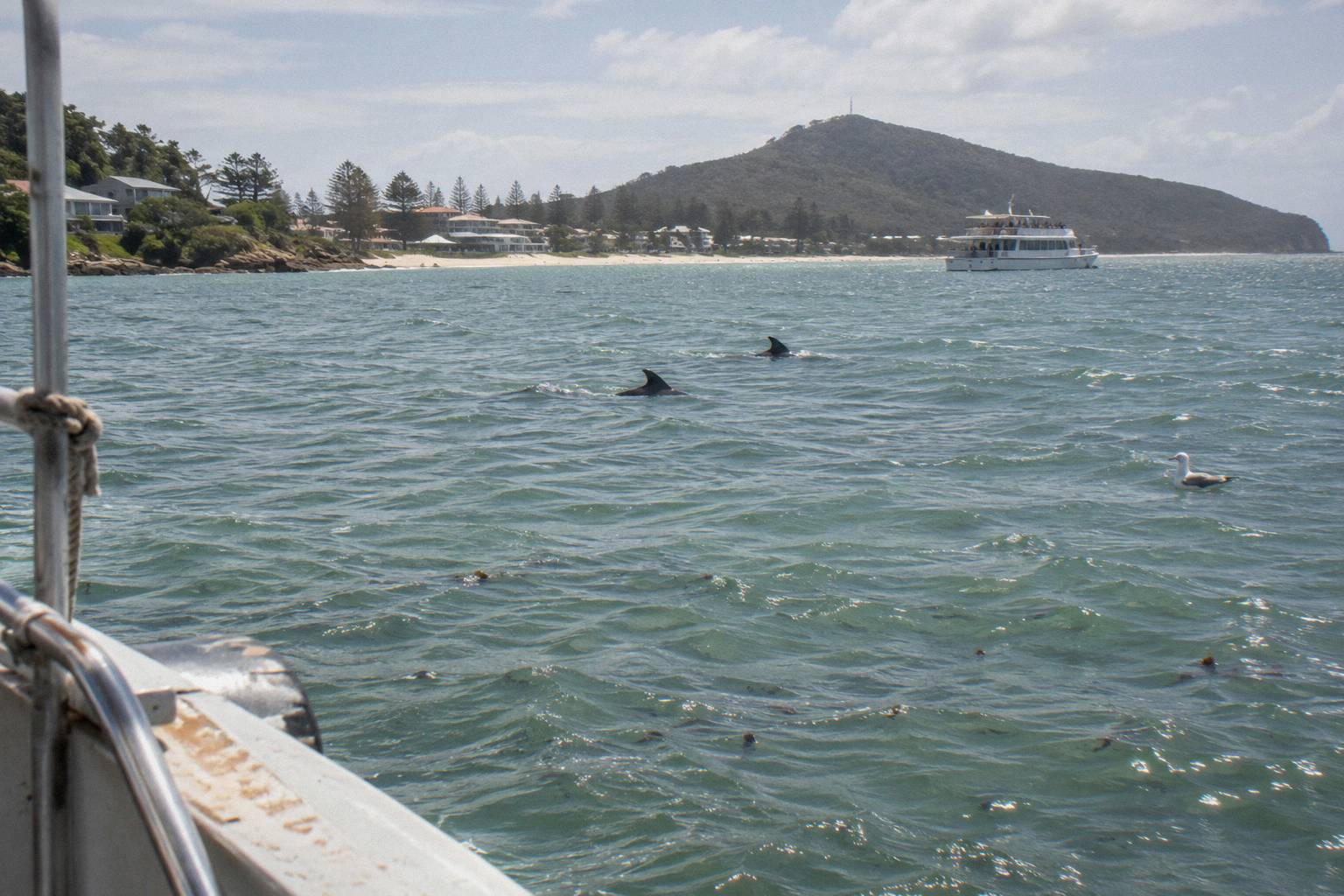
The practical case for each is worth spelling out. A late-morning departure leaves the afternoon free for the beach, the Tomaree Headland walk or the drive home, and it means you are on the water close to the warmest part of the day in the cooler months, when the Bureau of Meteorology's Nelson Bay climate averages put the June maximum at just 18.2 degrees. An early-afternoon departure gives you a slower morning, useful with small children or after a late arrival the night before, and in the December-January window it puts you on the water while the afternoon is still long: sunset on 15 December is about 7:55pm, an approximate figure from a computed table, so an afternoon trip still ends in daylight.
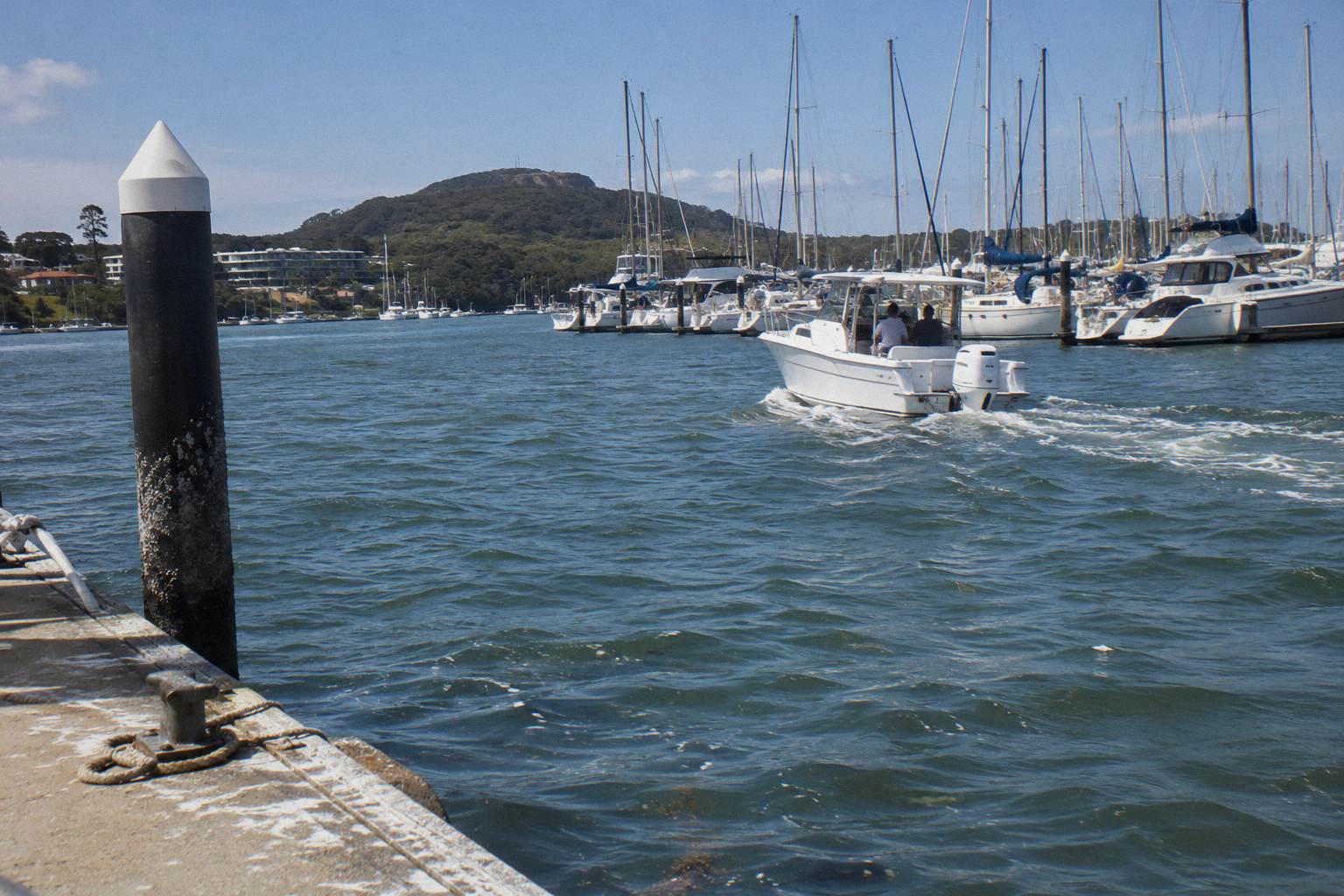
Moonshadow asks guests to board about 15 minutes before departure, and the boats leave from d'Albora Marina on the Teramby Road side of Nelson Bay, except the BBQ and Boom Net cruise, which boards at Wharf 1, the Cruise Passenger Terminal on Victoria Parade, a different place. Build the boarding buffer and the marina parking into your timing rather than the departure alone.
What About Daylight And Sunset Times In Nelson Bay?
Daylight ranges from about 10.0 hours in June to about 14.3 hours in December, per a computed sunrise-and-sunset table for Nelson Bay, and every dolphin cruise runs inside daylight hours. Longer summer days mean later, brighter afternoon departures and time for a swim afterwards; short winter days simply mean an earlier finish, not fewer dolphins.
The sunrise and sunset figures below are approximate calculations for the 15th of each month, in local time, not boat times and not a claim about light quality. They matter to planning in two ways: they tell you how much day is left after a late-morning cruise in each season, and they frame why summer's extra afternoon departures exist at all, there is simply more usable afternoon. The wider set of guides lives on Port Stephens Dolphin Cruises.
| Month (15th) | Sunrise (approx.) | Sunset (approx.) |
|---|---|---|
| January | 5:58am | 8:02pm |
| February | 6:28am | 7:44pm |
| March | 6:51am | 7:11pm |
| April | 6:12am | 5:31pm |
| May | 6:33am | 5:02pm |
| June | 6:51am | 4:52pm |
| July | 6:52am | 5:02pm |
| August | 6:30am | 5:23pm |
| September | 5:51am | 5:42pm |
| October | 6:12am | 7:02pm |
| November | 5:43am | 7:30pm |
| December | 5:38am | 7:55pm |
A February visit, for instance, gives you light until about 7:44pm, so a dolphin cruise can sit inside a full beach day rather than compete with it. A July visit ends the day's light around 5:02pm, which pushes everything earlier: the cruise, dinner, and the drive back toward Newcastle or Sydney, which is about 2.5 hours by car from Nelson Bay per operator figures. For more on the drive itself, see getting to Nelson Bay from Sydney.
One caution about clock times: the only scheduled clock times on any related product are the Sydney coach day trip, which leaves Sydney about 7:00am with earlier hotel pickups, and the Newcastle Animal Lovers tour, which is back in Newcastle around 4pm. Dolphin cruises themselves publish no fixed clock times; the calendar you book on is the source of truth.
What Is The Weather Like Month By Month?
The Bureau of Meteorology's Nelson Bay climate averages run from a summer maximum of 27.3 degrees in January to a winter maximum of 17.6 in July, with the wettest months June (157.2 mm) and May (149.7 mm) and the driest October (78.4 mm) and November (79.7 mm). These are land averages, not sea conditions, and no sea-state, wind or water-temperature figure is published here.
Weather shapes comfort, not dolphin presence. A winter cruise is a jackets-and-layers affair with a warm cabin between deck watches; a summer cruise is sunscreen, a hat and often a dip in the boom net. The table below is the Bureau of Meteorology's Nelson Head station data, monthly means drawn from 37 years of temperature records and 114 years of rainfall records.
| Month | Mean max (C) | Mean min (C) | Rainfall (mm) | Rain days (1 mm+) |
|---|---|---|---|---|
| January | 27.3 | 19.0 | 99.5 | 7.8 |
| February | 27.0 | 19.1 | 112.5 | 7.9 |
| March | 25.9 | 18.0 | 123.6 | 8.8 |
| April | 23.6 | 15.4 | 129.2 | 9.1 |
| May | 20.8 | 12.5 | 149.7 | 9.6 |
| June | 18.2 | 10.3 | 157.2 | 9.4 |
| July | 17.6 | 9.2 | 136.7 | 9.1 |
| August | 18.9 | 10.0 | 101.5 | 8.1 |
| September | 21.4 | 12.2 | 89.0 | 7.7 |
| October | 23.2 | 14.3 | 78.4 | 7.7 |
| November | 24.7 | 16.1 | 79.7 | 7.5 |
| December | 26.0 | 17.8 | 91.7 | 7.6 |
Read the rainfall column as a frequency signal, not a forecast. Seven to nine rain days of a millimetre or more each month, across the whole year, means Port Stephens carries a fairly steady chance of a shower whenever you come, and it does not stack the calendar against any particular month. The summer-winter temperature spread is the bigger planning input: a January afternoon on the water and a July morning on the water are different packing problems, covered in the guide to what to wear on a Nelson Bay dolphin boat.
If poor weather threatens your own date, the operators' behaviour is defined rather than vague. Every trip on the calendar carries free cancellation up to 24 hours before for a full refund, and if the operator cancels you get a full refund or a transfer. Moonshadow's terms are stricter inside 24 hours: a standard cruise cancelled then is charged in full, and missing the departure brings no refund or transfer. The guide to weather and cancellations on the dolphin boats works through those rules.
One seasonal nuance worth knowing: if offshore conditions are poor, the Wild Port Stephens route on the MV Osprey may stay inside the bay, per the operator, and the Dolphin Discovery boom net stays inshore by design. Neither is a weather promise, just a description of how flexible the routes are.
Does Whale Season Change The Timing Maths?
Humpback season runs May to November, with up to 40,000 humpbacks passing the NSW coast, and it overlaps the quieter dolphin-boat months. From May to early August the whales head north, from August to November they head south with calves. A winter visit can pair a dolphin cruise with a dedicated whale trip such as the Whale Watching Express, 1.5 hours, from A$99, 4.5 from 87 reviews.
This is the strongest argument for a winter visit, and it is a real one. The whale express carries a whale guarantee: a free return voucher on a standby basis, valid 12 months, if no whales are seen, and its operator also posts a lookout for dolphin pods; some guests report dolphin sightings on it too. Minimum age is 5 years. Its operator's 2026 whale window ends in early November, so a late-spring visit is cutting it fine for whales while still sitting comfortably inside all-year dolphin season.
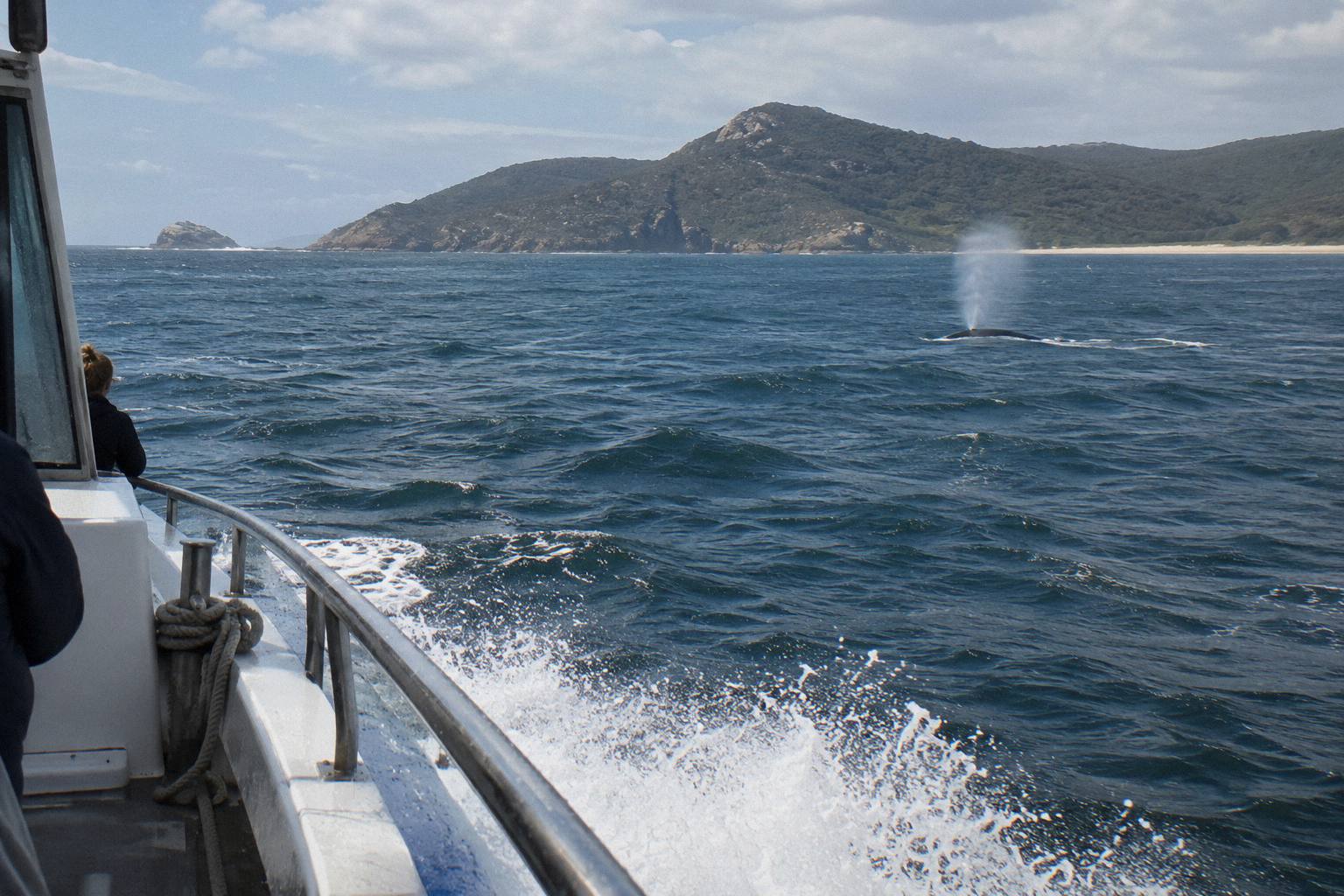
The overlap works in both directions. A June or July visit means the summer sailings and the barbecue cruise are off the table but the whale boats are running, and the resident dolphins are exactly where they always are, roughly 90 to 120 of them per NPWS. A December or January visit means every summer dolphin format is available and the whales have gone. Shoulder months, October and November, are the narrow window when the whale express is finishing and Imagine's sailing cruise is starting.
If you are weighing the two against each other, the guide on whether whale watching is worth it covers the whale side of that decision, and which Port Stephens boat gets you closest to dolphins covers the viewing-distances side.
The official approach rules shape what "close" means at any time of year: NSW Government rules cap a vessel at 50 m from a dolphin and 100 m from a whale, with caution zones at 150 m and 300 m, and if dolphins choose to bow-ride, the vessel maintains course and speed rather than turning in. Those rules, detailed by NSW's approach-distance regulations, apply in every season and are worth knowing before your first trip.
Common Mistakes When Picking A Time
The recurring mistakes: assuming the sailing cruise runs in winter, planning around a clock time read somewhere, treating a summer price as the year-round price, forgetting the Christmas Day closure, and booking a tight connection that leaves no buffer for boarding 15 minutes early or the marina's paid parking. Each is avoidable with one check of the booking calendar before you commit.
The first mistake is the most common. Visitors anchored to the idea of a catamaran sail arrive in June or July and find the season closed, because Imagine's window is November to April, full stop. The second is clock-time planning: departure times live on the calendar, and a time quoted in a forum or an old review may be a year out of date. The pattern that actually holds, per Moonshadow, is late-morning and early-afternoon departures daily all year, plus an extra afternoon departure in school holidays outside winter.
The barbecue cruise deserves its own note, because its December-to-April window is narrower than the sailing cruise's and it boards from a different place, Wharf 1 at the Victoria Parade terminal rather than d'Albora Marina. It runs 2 hours, from A$59, with a twin-level boat, walk-around decks, live captain's commentary and a classic sausage sizzle, and the operator flags it as unsuitable for people prone to seasickness.
The remaining mistakes are logistical. Moonshadow runs every day except Christmas Day, so a 25 December plan needs a rethink. Parking at d'Albora Marina and Victoria Parade is paid up to 4 hours between 8:30am and 4:30pm, some nearby streets are free and unlimited, and your number plate is the ticket, pay by card, coin or the Park'nPay app. And the free-cancellation window on every trip is 24 hours before, which makes an early booking cheaper to change than a last-minute one.
Pull it together and the decision tree is short. Want every boat format available, long daylight and warm water? December to April, and book the seasonal trips early. Want whales and dolphins on one visit? June to October, with a dolphin cruise one day and the whale express the next. Want the quietest marina and the lowest-season prices? Midwinter works, with layers, and the dolphins are the same dolphins.
Common Questions About Going On A Dolphin Cruise
What Is The Best Time To Go On A Dolphin Cruise?
Any month of the year, because the dolphins are resident: roughly 90 to 120 Indo-Pacific bottlenose dolphins live permanently in Port Stephens per NPWS. The calendar decides your boat, not your dolphins: Moonshadow's dolphin cruises run all year, Imagine's sailing cruise runs November to April, and the BBQ and Boom Net cruise runs December to April. Choose late morning or early afternoon by what suits your day.
Do Dolphin Cruises Run All Year In Port Stephens?
Moonshadow's dolphin cruises, including the Dolphin Discovery cruise and the Wild Port Stephens cruise, run all year, every day except Christmas Day. Aquamarine's 1-Hour Dolphin Watch Express also runs year round. Imagine's Dolphin Watch Cruise and Sail runs November to the end of April, and the BBQ and Boom Net cruise runs December to April.
Is Morning Or Afternoon Better For Seeing Dolphins?
The dolphins are resident and do not follow a daily timetable, and the operators describe late-morning and early-afternoon departures rather than a best slot. Pick the departure that fits your meals, your children and the rest of your day, and check the calendar for exact times.
Is There A Guarantee I Will See Dolphins?
No cruise guarantees a sighting. Moonshadow says the dolphins are totally wild and "100% sighting success isn't guaranteed", and offers a non-transferable free return voucher on a standby basis if dolphins are not located. Imagine's Dolphin Watch Cruise and Sail carries a "Dolphin Guarantee (Free Return)" on its operator, again a return trip rather than a refund.
What Is The Warmest Month For A Dolphin Cruise In Nelson Bay?
January, with a mean maximum of 27.3 degrees, just ahead of February at 27.0, per the Bureau of Meteorology's Nelson Bay climate averages. July is the coolest month for a cruise, averaging a 17.6 degree maximum and a 9.2 degree minimum. Those are land averages, not sea conditions.
When Can I Combine Whales And Dolphins On One Trip?
Whale season is May to November, with up to 40,000 humpbacks passing the coast, so a winter or spring visit lets you take a dolphin cruise and a dedicated whale trip such as the Whale Watching Express. The whale boats' 2026 season windows end in early November. No single trip here is both a two-hour-plus whale-and-dolphin boat and a short dolphin cruise; the combination is two bookings on different days.