Are There Dolphins In Port Stephens?
Yes, roughly 90 to 120 resident Indo-Pacific bottlenose dolphins live in Port Stephens all year. Here is where they are, when to go, and how the boats work.
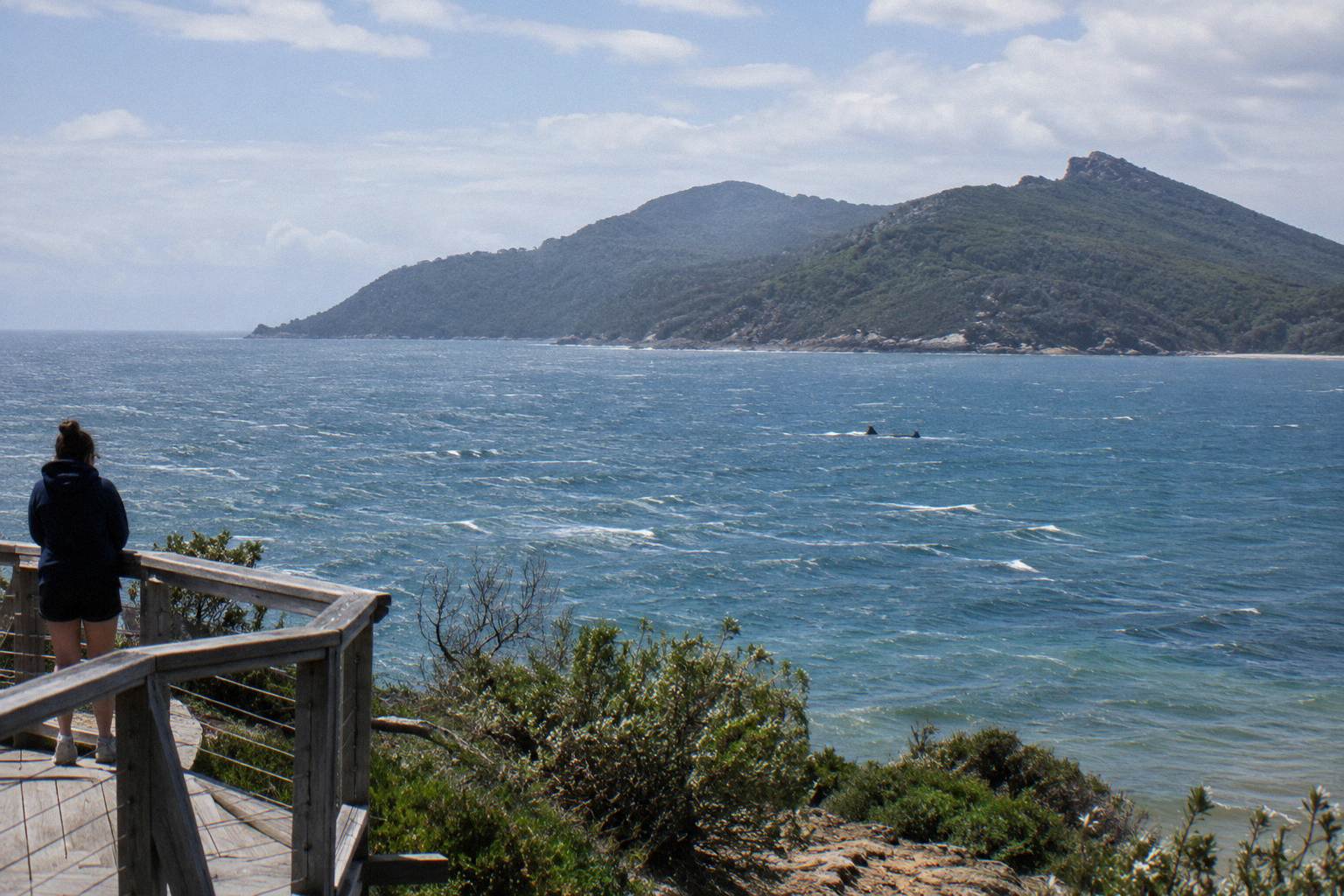
Yes. Around 90 to 120 Indo-Pacific bottlenose dolphins live permanently in the waters of Port Stephens inside the Port Stephens-Great Lakes Marine Park, according to the NSW National Parks and Wildlife Service, and they are present in every month of the year. A second, separate dolphin community lives around Broughton Island, about 20 km away, and the two groups seldom interbreed.
That single fact is what separates Port Stephens from most dolphin destinations on the east coast. Many places get seasonal visitors that pass through on migration. Port Stephens has a resident population that feeds, breeds and raises calves inside the port year round, which is why the NSW National Parks and Wildlife Service says you can visit Nelson Bay at any time of the year to see them. Macquarie University research found the population is genetically distinct from the coastal dolphins outside the Heads and seldom interbreeds with them, so the pod in the bay is effectively its own community, with a lifespan of 30 to 40 years.
An annual Community Dolphin Census runs in the port, which is how locals keep tabs on the group between formal research surveys. No 2026 count exists, and the operators quote different figures, some higher, some lower, so the number worth remembering is the official one: roughly 90 to 120 (NPWS). Nobody can promise how many of those animals you will personally see on any given cruise, and no operator here does.
The genetic isolation is the detail that most visitors never hear about. Because the bay's dolphins seldom mix with the coastal population, every calf born in the port strengthens a community that exists nowhere else in quite the same form. That is also why the marine park's zoning, covered below, is built around how these specific animals feed and rest, rather than around a generic set of ocean rules.
Because the dolphins never leave, the decision is less about whether they are there and more about how you want to see them.
Where The Resident Dolphins Actually Live
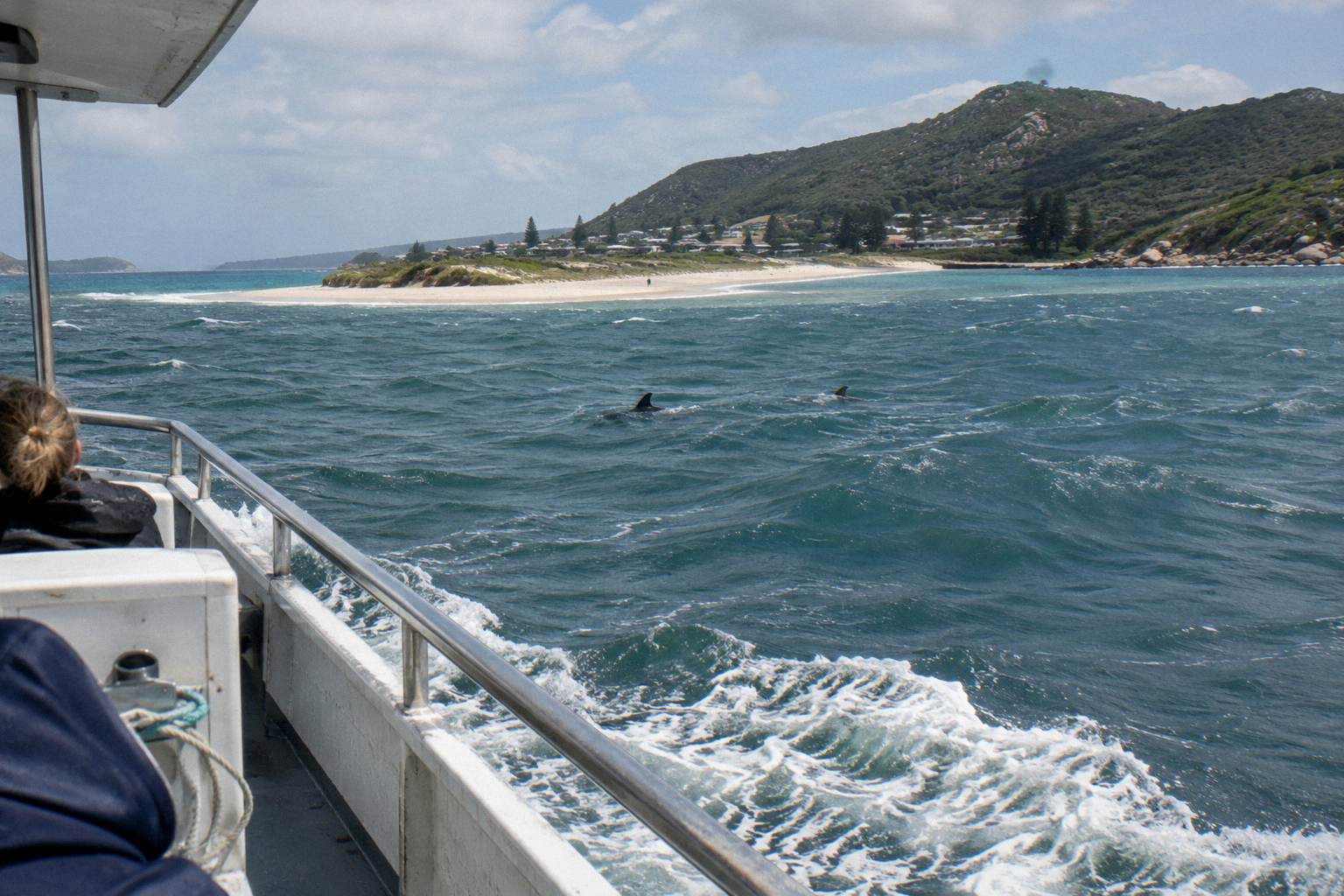
The pod lives inside the Port Stephens-Great Lakes Marine Park, and dolphins in the eastern section are often seen off Shoal Bay beach, close to where the cruise boats depart at d'Albora Marina in Nelson Bay. Some animals travel outside the Heads at times, but the core population stays within the port, moving between feeding and resting areas the marine park protects.
The geography matters more than most first-time visitors expect. Port Stephens is a large drowned river valley, roughly two and a half hours by car from Sydney according to the operators, and its eastern section funnels past Shoal Bay before opening to the ocean through the Heads. Dolphins hunting in that eastern section regularly work the water just off Shoal Bay beach, which is why dolphins are sometimes visible from the sand before any boat has left the marina.
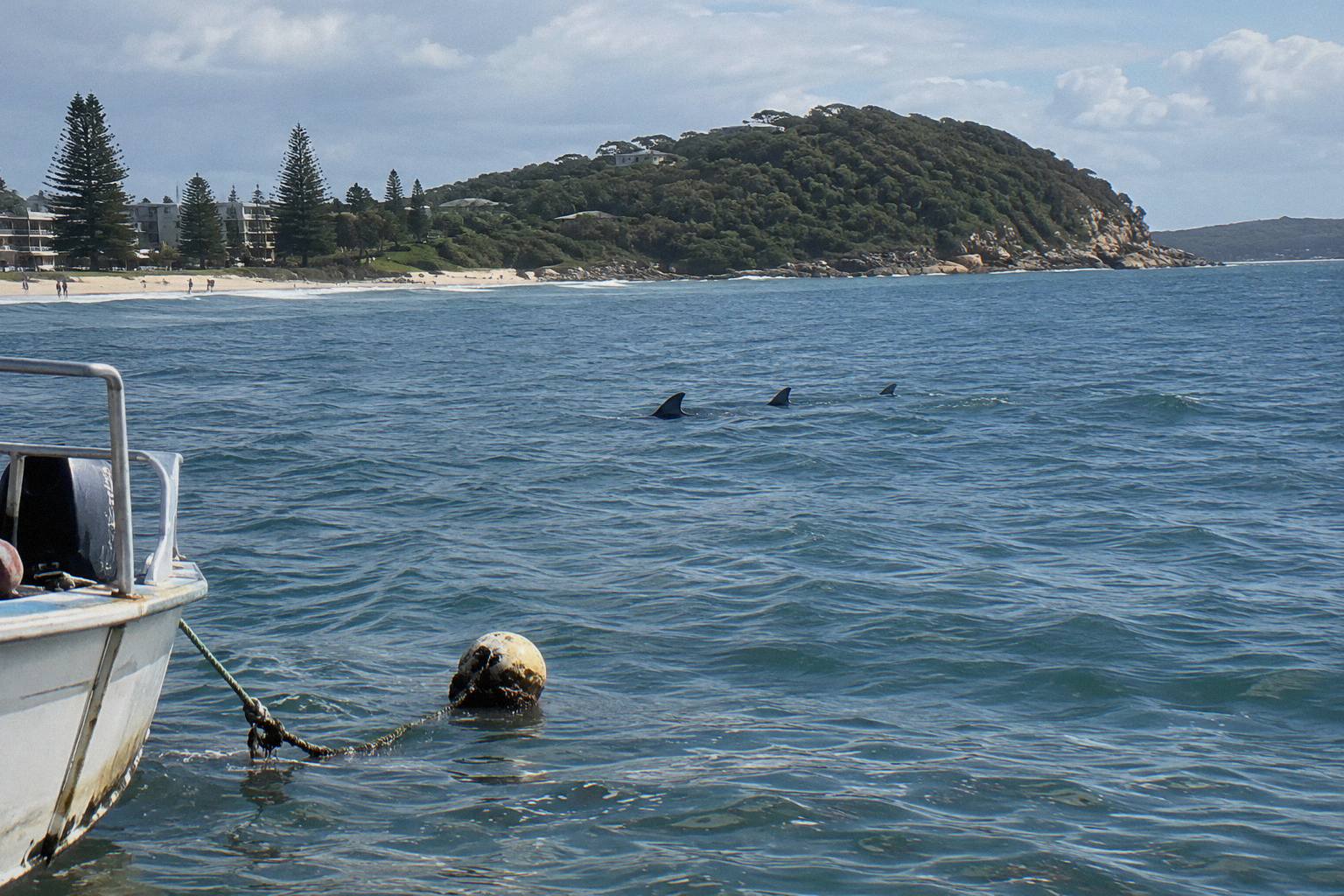
The marine park, created in 2005, works with four zone types: sanctuary, habitat protection, general use and special purpose. Boating, snorkelling and diving are all allowed in sanctuary zones, but collecting is not. The detail that matters for dolphins is the two 4-knot speed areas, one at Middle Grounds and one covering all of the Jimmys Beach sanctuary zone, both identified as important resting and feeding areas for the resident bottlenose dolphins. The boats you ride are aware of these zones and the dolphin traffic that defines them.
For a visitor, the zoning translates into a simple pattern: the dolphins move between shallow resting areas where boats travel slowly, and the deeper channels where they feed, and a cruise route stitches those places together. The eastern section near Shoal Bay is where the two worlds meet most visibly, since the pod's hunting ground there sits within easy sight of land.
A sightseeing cruise built around the marine park itself, rather than a sprint to a single pod, is the Wild Port Stephens Marine Park Cruise, a 1.5-hour trip on the 24 m MV Osprey from A$46 per person, with commentary and panoramic decks. If offshore conditions are poor, the operator says the route may stay inside the bay, which suits this kind of trip well. The deeper background on the port and its boats is in the guide to Port Stephens Dolphin Cruises, and if you are weighing months, the month-by-month breakdown of the dolphin watching season in Port Stephens covers it in detail.
How The Boats Work Around The Pod
Every dolphin cruise from Nelson Bay operates under NSW approach rules: a vessel may move no closer than 50 m to a dolphin, the caution zone begins at 150 m, only three vessels may be inside that zone at once, and if dolphins choose to bow-ride, the boat must maintain course and speed. The dolphins are totally wild animals going about their day.
Those rules come from the NSW Government's approach distances for whales, dolphins and dugongs, and they shape what a cruise actually looks like. The boat does not chase dolphins and does not cut across a pod. It approaches from the side at a constant slow speed inside the caution zone, with a lookout posted when two or more people are on board, and it holds that approach until the dolphins decide what to do. Because the resident pod is used to boats in the port, dolphins frequently come over to bow-ride on their own terms, and when that happens the skipper's job is to keep everything predictable for the animals.
With a calf present, a vessel may not enter the caution zone for closer viewing, and a mostly white animal always carries a 500 m distance, whether dolphin or whale. Jet skis must stay 300 m away and drones 100 m. These are rules for vessels, and they say nothing about touching or swimming, so treat any claim about those as separate questions. The NSW Government sets out the full approach distances for whales, dolphins and dugongs if you want the complete picture.
| Situation | Official rule (NSW Government) |
|---|---|
| Closest a vessel may go to a dolphin | 50 m |
| Dolphin caution zone begins | 150 m |
| Vessels allowed inside the caution zone | Three at once |
| Dolphin with a calf | No entry to the caution zone for closer viewing |
| Mostly white animal | Always 500 m |
| If dolphins bow-ride | Vessel maintains course and speed |
The three-vessel limit is the rule that quietly organises the whole port. With only three boats allowed inside any one caution zone, skippers spread out across the bay rather than crowding a single pod, and a dolphin group that has drawn an audience soon gets space again as boats rotate through. Visitors sometimes expect a feeding-frenzy scene of boats circling one pod; the reality is slower, quieter and better for the animals.
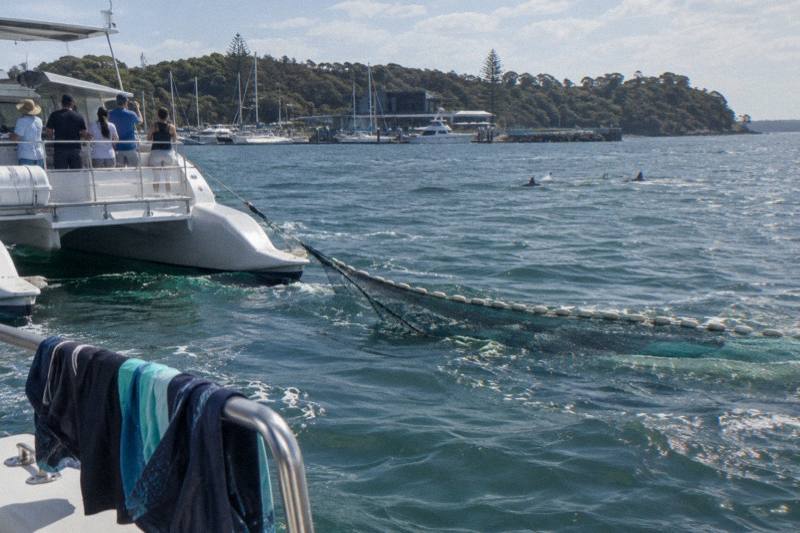
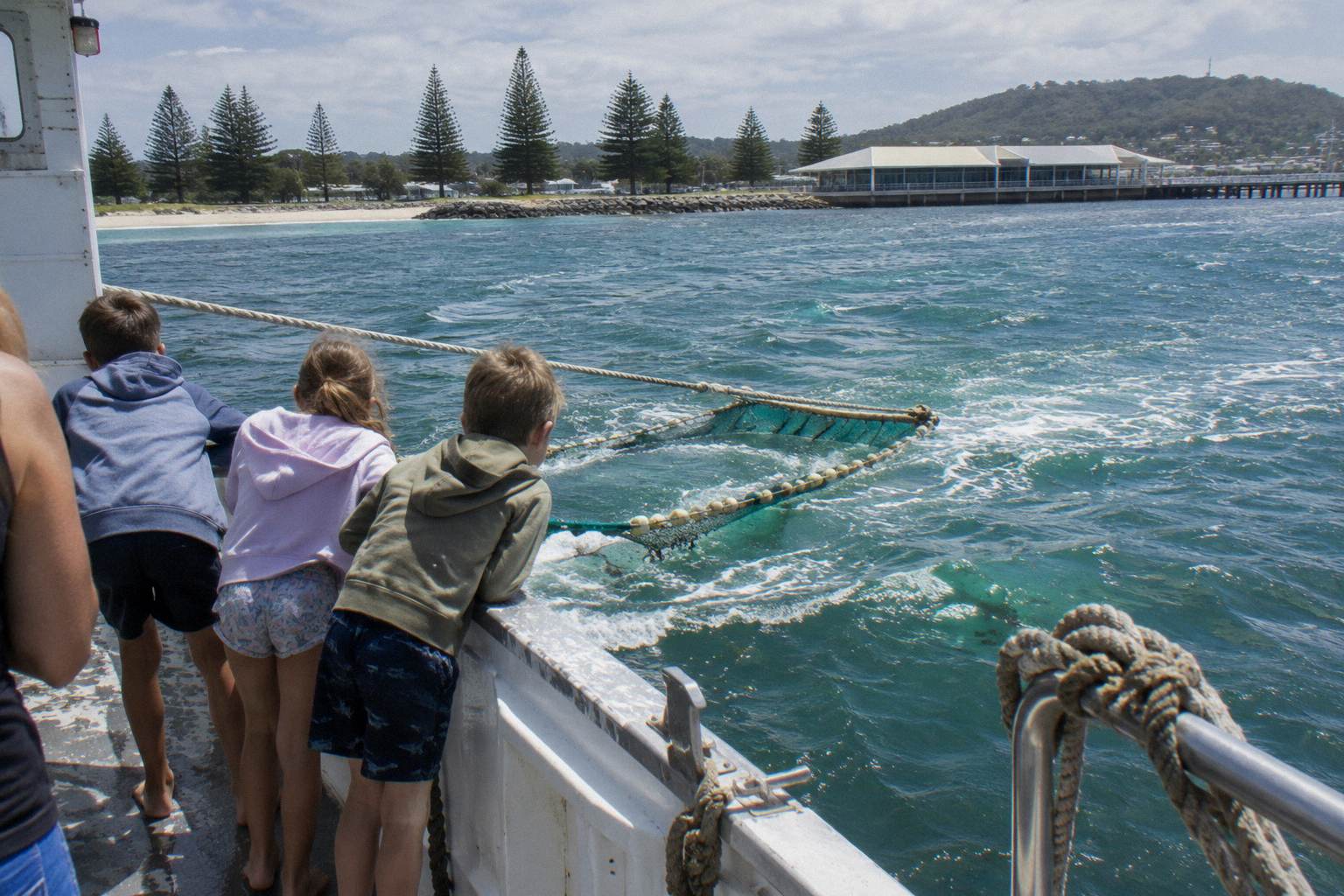
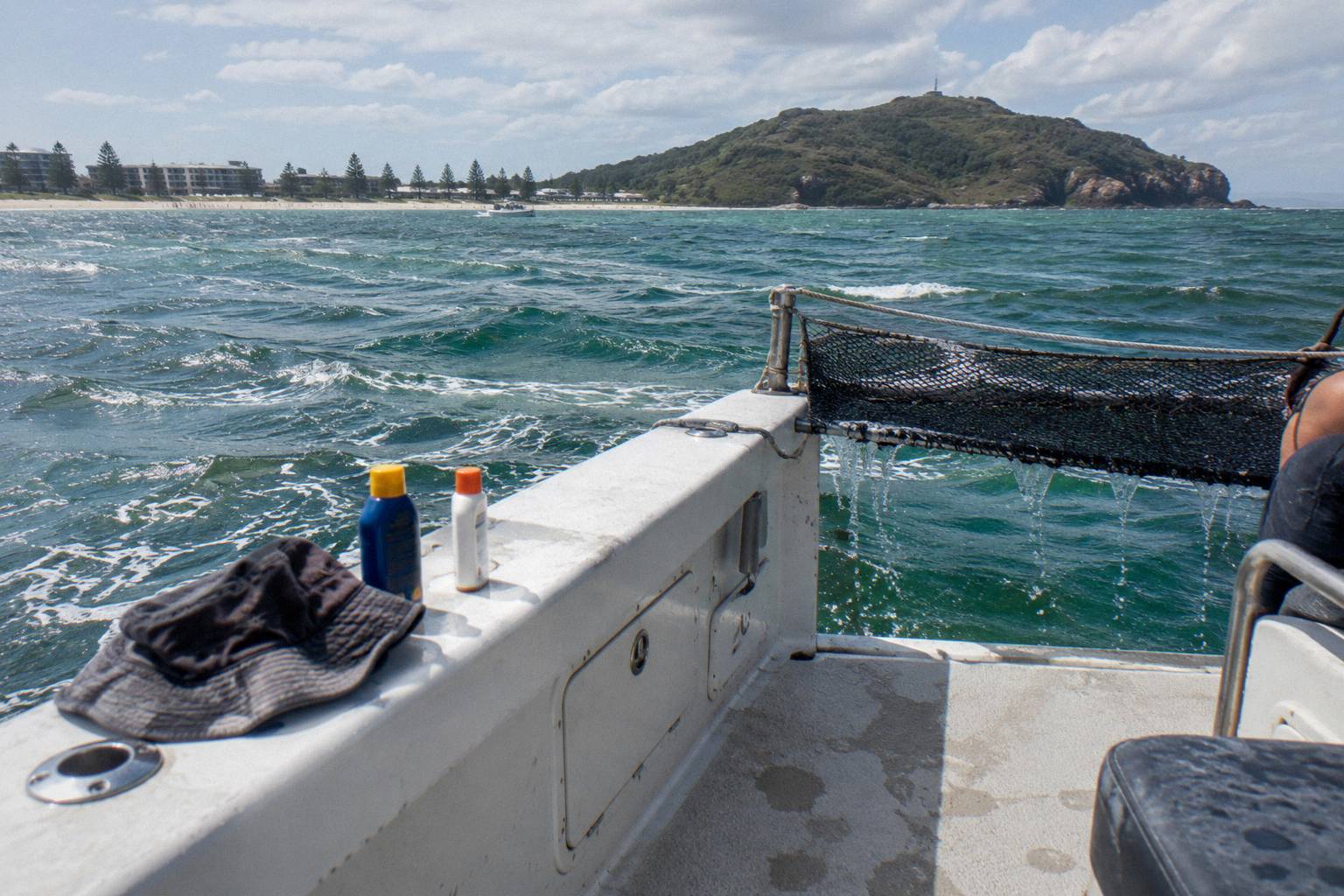
In practice the boats from d'Albora Marina each run the rules in their own style. The Moonshadow Dolphin Discovery Cruise, 1.5 hours from A$46 per person and rated 4.4 from 1,047 reviews, pairs captain's commentary with a boom net ride that stays inshore, a net slung off the vessel that guests sit in while the boat moves. It is a net ride, never a swim with dolphins. Moonshadow describes its own practice on the water in more detail on its resident dolphins page.
The 1-Hour Dolphin Watch Express from Aquamarine takes the opposite approach: a fast, compact run out to the resident bottlenose dolphins on a power catamaran, from A$55 per person, rated 4.9 from 62 reviews. For a fuller comparison of hulls and styles, see which boat gets you closest.
What Time Of Year They Are There
All year, which is the point of a resident pod. The dolphins do not migrate, so winter cruises see the same animals as summer ones. What changes by season is the boats: Moonshadow's dolphin cruises run all year, while Imagine's sailing cruise runs November to April and the BBQ and Boom Net cruise runs December to April.
Humpback whales are the seasonal contrast worth knowing. Up to 40,000 humpbacks pass the coast between May and November, heading north from May to August and back south from August to November, so in those months a port visit can pair resident dolphins with migrating whales, and the Whale Watching Express Cruise from A$99 per person, rated 4.5 from 87 reviews, carries a free return voucher valid 12 months if no whales appear. In the summer months the port is dolphins and dolphins only.
| Month | Dolphins | What else runs |
|---|---|---|
| May to August | Resident pod, all year | Humpbacks heading north |
| September to November | Resident pod, all year | Humpbacks heading south, whale cruises to early November |
| November to April | Resident pod, all year | Sailing dolphin cruise and BBQ and Boom Net cruise in their season |
The winter case is worth making plainly, because many travellers assume dolphin watching is a warm-water activity. A June or July visit to Nelson Bay has the same pod in the same water, thinner crowds on the docks, and the added possibility of humpbacks offshore. Daylight is shorter, roughly 10 hours in midwinter against about 14 in December, so the departure windows sit closer to the middle of the day, but the animals themselves are indifferent to the season.
Weather does not change whether the dolphins are present, only how the boats run. If you are sensitive to conditions, the Bureau of Meteorology's Nelson Bay climate averages put summer monthly maxima around 25 to 27 degrees and winter maxima around 18 to 19, with rainfall peaking in the cooler half of the year. Those are land averages, not sea conditions. If a boat trip in swell worries you, read up on seasickness on a Nelson Bay dolphin boat before you pick a date.
Seeing Dolphins From Land Versus From A Boat
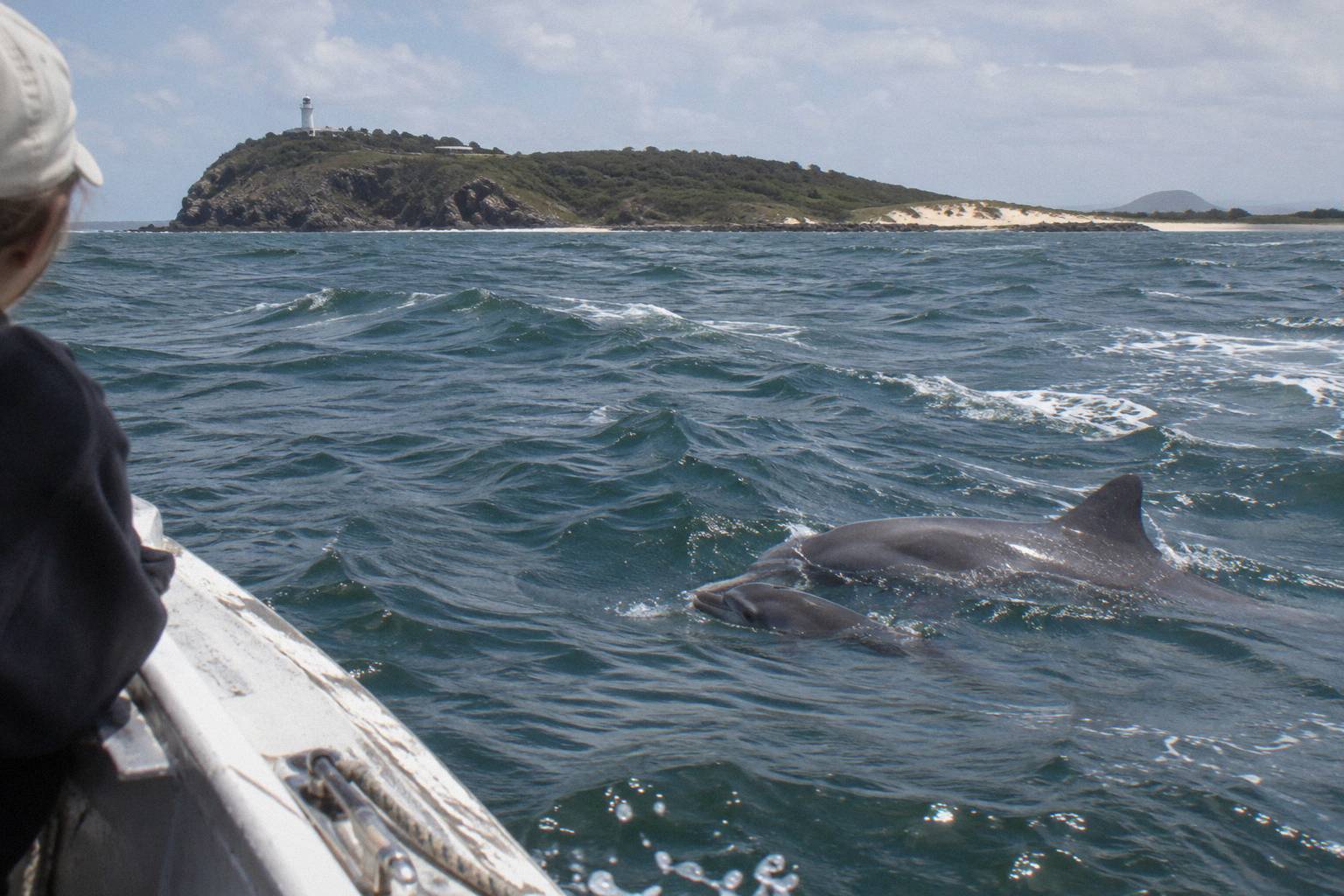
Dolphins in the eastern section of the port are often seen off Shoal Bay beach, so land-based viewing genuinely works here, especially around that eastern stretch of water. A boat still changes the equation: it covers far more of the pod's range, carries a crew who know where the animals have been, and can hold position at the legal distance while the dolphins move around you.
The land option costs nothing and is a real Port Stephens pleasure. Walk the Shoal Bay shoreline early or late in the day and you have a fair chance of spotting fins, because that beach sits beside the eastern section where the pod is often seen. Tomaree Head's summit track looks down over the same water, and a pod working the bay below is a common sight from up there. The catch is obvious: you see whatever happens to pass in front of you, and you see it from a distance.
A boat puts you inside the pod's living room, on the rules above. The Wild Port Stephens cruise from A$46 per person is built exactly for this: a 1.5-hour circle of the marine park on the MV Osprey with panoramic decks and commentary, purely a watching trip, with no boom net, described on the operator's own cruise page. At the fuller end, the Marine Discovery Snorkel Cruise, 3.5 hours from A$100, sails when conditions permit with a dive-master guide, snorkel gear included, and dolphins en route, with a bow-net and boom-net as well.
The two experiences answer different needs. From the headland you get context, the shape of the bay, the scale of the pod's home. From the water you get proximity and patience: a boat can sit at the legal distance for the length of its route, drift with a feeding group, and move when the dolphins move. Families with very young children or anyone uncertain about a boat can start on land and graduate to a cruise later the same day.
The practical difference between a 1-hour, 1.5-hour and half-day trip on the water is explained in the guide to dolphin cruise departures and durations.
Are Dolphin Sightings Guaranteed?
No, and no cruise here claims they are. Moonshadow says plainly that the dolphins are totally wild and that 100 percent sighting success is not guaranteed; if dolphins are not located it offers a non-transferable free return voucher on a standby basis, not a cash refund. Imagine's sailing cruise carries a Dolphin Guarantee in the form of a free return, on its own terms.
That is the fair way round. The dolphins are wild animals with no schedule, and a port with a resident pod of roughly 90 to 120 animals makes sightings very likely without making them certain. What you can rely on is what happens on the off day: each operator's return arrangement, quoted above, is its own, and the terms never transfer from one boat to another.
It helps to understand why the operators word it this way. A return voucher costs an operator little compared with a cash refund, and it gives the dolphins the benefit of the doubt: the animals were simply elsewhere, so come back and try again. A standby basis means your return seat depends on space on the day, which is worth knowing if you are visiting Port Stephens for a single weekend only.
Cancellation works the same way across the board here. Every trip offers free cancellation up to 24 hours before departure for a full refund. Moonshadow's own terms add that a standard cruise cancelled inside 24 hours is charged in full, amendments carry an admin fee, there is no refund or transfer if you miss the departure, and if the operator cancels you receive a full refund or a transfer. Checking dates and the current price before you commit costs nothing.
Mistakes People Make When Planning A Dolphin Trip Here
The most common mistakes are assuming every dolphin boat runs year round, assuming the boom net is a dolphin swim, and assuming one cruise is interchangeable with another. Imagine's sailing cruise stops at the end of April, the BBQ and Boom Net cruise runs December to April, and only certain trips carry a boom net at all, while the MV Osprey has none.
Booking the wrong season for the wrong boat is the classic one. A winter traveller who books the sailing catamaran or the sausage-sizzle cruise will find those boats out of their season, while the year-round trips, the Dolphin Discovery cruise, the 1-Hour Express and the Wild Port Stephens cruise, keep running every day except Christmas Day on Moonshadow's schedule, with late-morning and early-afternoon departures per the operator.
The second mistake is expecting to swim with dolphins. A boom net is a net slung off the vessel that guests sit in while the boat moves, a ride in the water, not an encounter on the dolphins' terms, and no cruise here lets you swim with wild dolphins. What is and is not allowed in the water is covered fully in the guide to swimming with dolphins in Port Stephens.
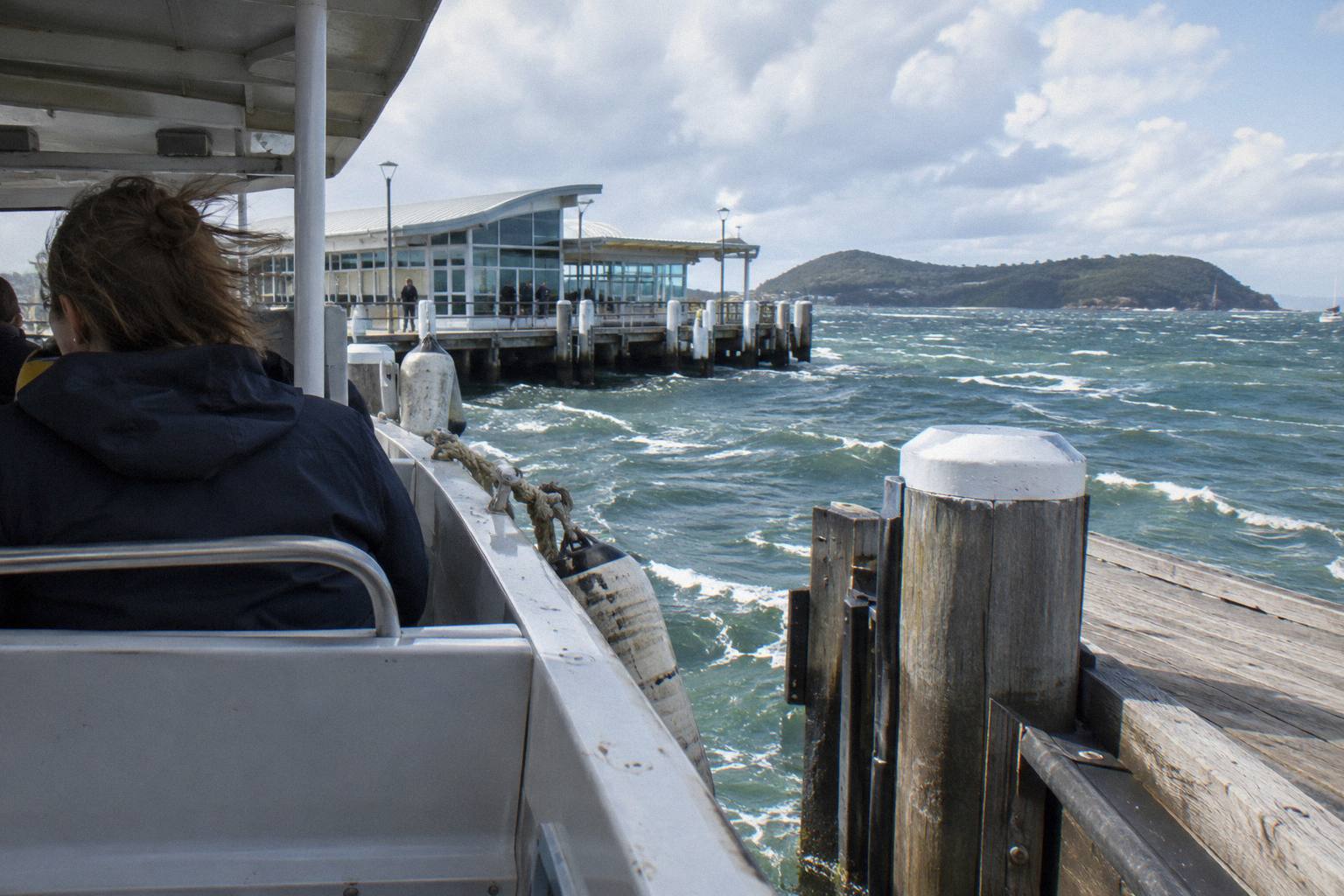
The third is ignoring where the boats leave from. The dolphin boats depart d'Albora Marina on the Teramby Road side of Nelson Bay, with the dock on your booking confirmation, while the BBQ and Boom Net cruise boards at Wharf 1, the Cruise Passenger Terminal on Victoria Parade, a different place entirely. Moonshadow asks guests to board about 15 minutes before departure, and its Stockton Street office is not a boarding point. Parking around the marina is paid for up to 4 hours between 8:30am and 4:30pm, while some nearby streets are free, so check the signs.
A fourth, quieter mistake is treating the trip as a pure spectator outing and arriving unprepared for the water. On the boats with a boom net, a swimsuit and towel are things you bring yourself, and on the snorkel cruise a wetsuit is your own or hired, never supplied. The full packing picture, including what to wear across the seasons, is in the guide to what to wear on a Nelson Bay dolphin boat.
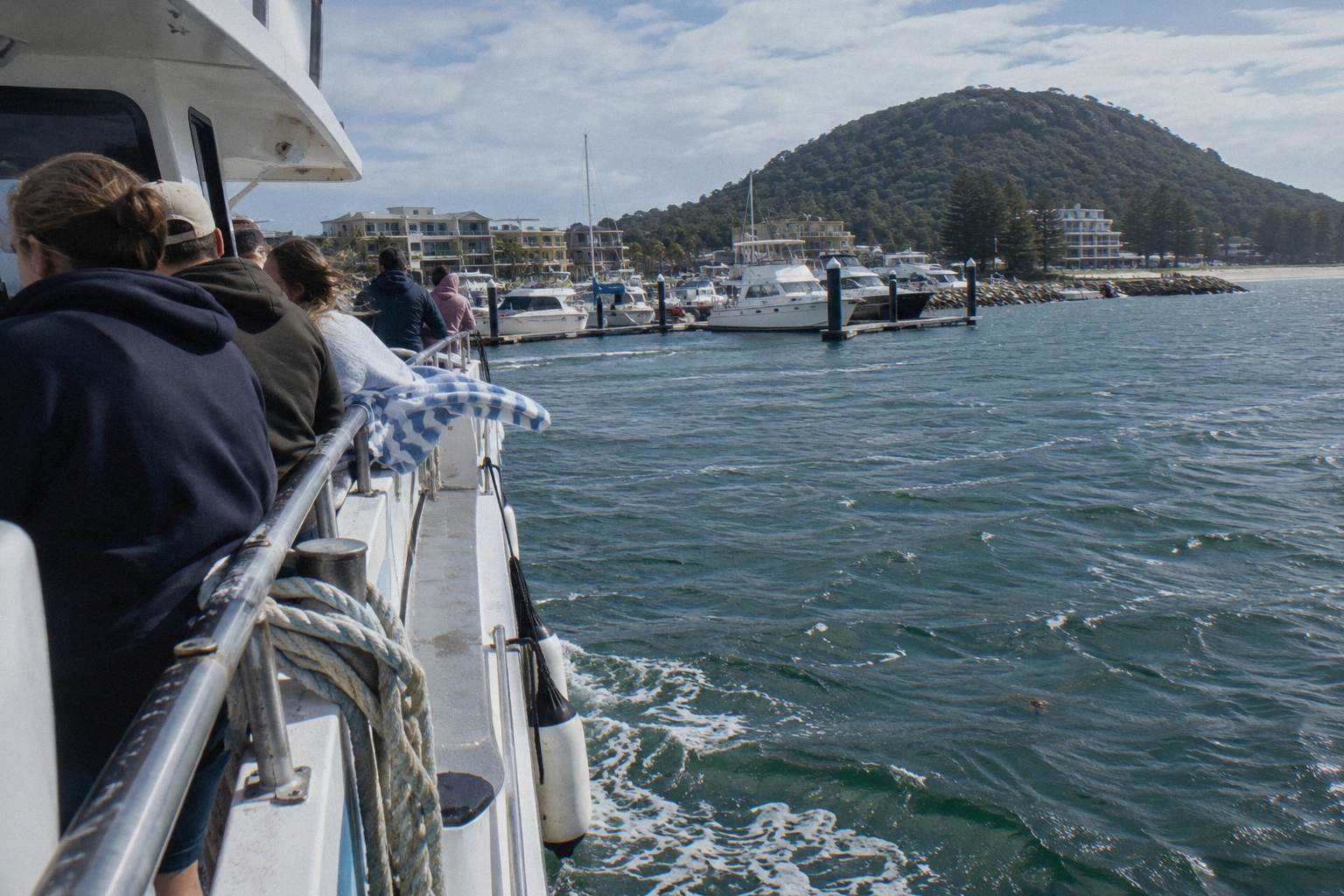
For a short trip, the 1-Hour Dolphin Watch Express keeps things simple: one hour on the water, from A$55 per person, straight out to the resident bottlenose dolphins and back.
| Quick fact | Detail |
|---|---|
| Resident pod size | Roughly 90 to 120 (NPWS) |
| Species | Indo-Pacific bottlenose dolphin |
| When they are there | Every month of the year |
| Where they are often seen | Eastern section, off Shoal Bay beach |
| Closest a boat may go | 50 m (NSW Government) |
| Sighting promise | None; operators offer free-return terms instead |
Whichever month and boat you land on, the premise holds: the dolphins of Port Stephens are permanent residents, not a seasonal gamble, and a well-chosen cruise is simply the most reliable way to meet them. These three trips cover the watching, the full-day and the in-water angles.
Common Questions About Dolphins In Port Stephens
Are There Dolphins In Port Stephens?
Yes. Around 90 to 120 Indo-Pacific bottlenose dolphins live permanently in the waters of Port Stephens within the marine park, according to the NSW National Parks and Wildlife Service, and they are present in every month of the year. A separate dolphin community lives around Broughton Island about 20 km away.
What Kind Of Dolphins Live In Port Stephens?
Indo-Pacific bottlenose dolphins. Macquarie University research found the resident population is genetically distinct from coastal dolphins and seldom interbreeds with them. They live 30 to 40 years.
When Is The Best Month To See Them?
There is no wrong month for dolphins, since the pod is resident all year. What changes is the boats: Moonshadow's dolphin cruises run all year, while Imagine's sailing cruise runs November to April and the BBQ and Boom Net cruise runs December to April. Humpback whales add themselves from May to November.
Can You See Dolphins From The Shore In Port Stephens?
Often, yes. Dolphins in the eastern section of the port are frequently seen off Shoal Bay beach, and the headland walks above it look down over the same water. A boat covers far more of the pod's range and carries a crew tracking where the animals have been.
Are Dolphin Sightings Guaranteed On A Cruise?
No cruise guarantees dolphins. Moonshadow states that 100 percent sighting success is not guaranteed and offers a non-transferable free return voucher on a standby basis if dolphins are not located. Imagine's sailing cruise carries a Dolphin Guarantee in the form of a free return, on its own terms.
Can You Swim With The Dolphins In Port Stephens?
Not on the cruises here. The boom net on some boats is a net slung off the vessel that guests sit in while the boat moves, a ride rather than a swim, and no cruise lets you swim with wild dolphins. Boats must also stay at least 50 m from a dolphin under NSW approach rules.