
Is It Worth Going Whale Watching In Port Stephens?
A plain decision answer on whale watching in Port Stephens: the whale express cruise, season, prices, approach rules and how it compares with a dolphin boat.
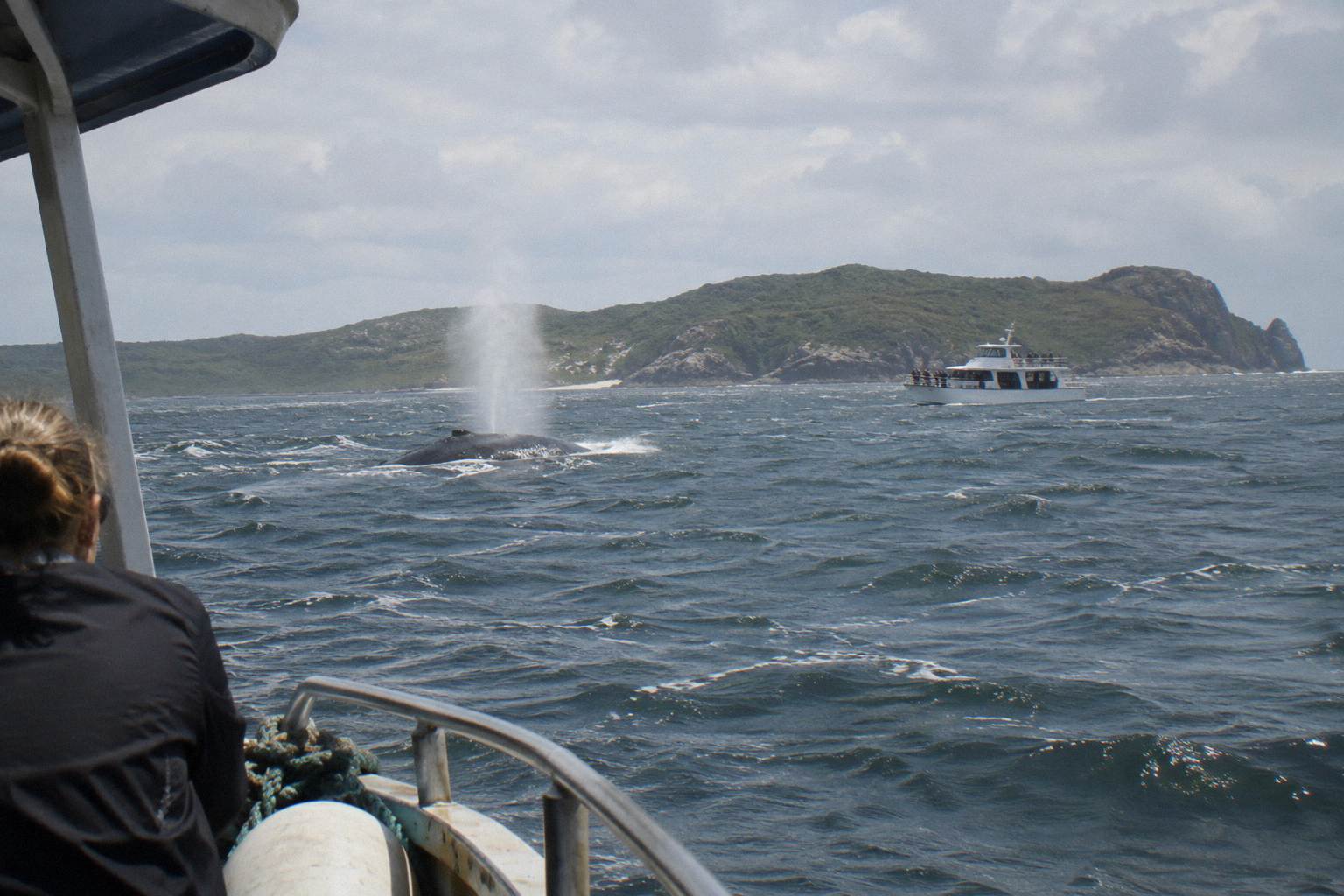
For most visitors in season, yes, and the arithmetic is straightforward: the Whale Watching Express Cruise costs from A$99 per person, runs 1.5 hours, is rated 4.5 from 87 reviews, and carries a free return voucher valid 12 months if no whales appear. Humpbacks pass Port Stephens between May and November, with up to 40,000 animals migrating along the NSW coast each year, so timing matters more than boat choice.
That is the short version. The longer version depends on when you are visiting, who is in your group, and how you weigh a wild-animal encounter against a fixed price and a fixed 90 minutes on the water. Whale watching in Port Stephens is a seasonal product riding on top of one of the animal kingdom's great commutes: humpbacks swim north from May to August and back south from August to November, passing the port on both legs of the journey. Moonshadow, whose whale page tracks the migration, notes the two directions of travel; the NSW Government and destination sources put the coastwide figure at up to 40,000 humpbacks a year.
The decision usually comes down to season. If you are in Nelson Bay between May and November, a whale cruise is a genuine option. If you are visiting between December and April, the humpbacks are not passing and a dolphin cruise is the boat that runs, and the answer to whether whale watching is worth it becomes a question about rescheduling rather than booking. Roughly 90 to 120 Indo-Pacific bottlenose dolphins (NPWS) live in the port permanently, so the dolphin option exists on every day of the year while the whale option is a window that opens and closes.
There is also the matter of what you are actually buying. A whale cruise is not a zoo visit with a turnstile count of animals. It is a fast boat ride to the migration lane, a crew who read the water and each other's radio calls, and a set of NSW regulations that dictate exactly how close any vessel may go. The experience is watching wild animals on their own terms, at a distance the law sets, with a fallback voucher in your pocket if the ocean decides otherwise that day. For some people that uncertainty is the whole appeal. For others, a resident dolphin pod that cannot leave the bay is the safer bet, and both readings are reasonable.
For a fuller look at the boats, the whale watching boats and what you will see guide breaks down each trip in the season, and the Port Stephens whale season month by month guide maps the migration onto the calendar.
What Is The Whale Watching Express Cruise Actually Like?
The Whale Watching Express Cruise, run by Aquamarine Adventures, is a 1.5 hour fast trip on a power catamaran from Nelson Bay, from A$99 per person, rated 4.5 from 87 reviews, for ages 5 and over. If no whales are seen, the operator provides a free return voucher on a standby basis, valid 12 months. The operator also posts a lookout for dolphin pods, and some guests report dolphin sightings on the same trip.
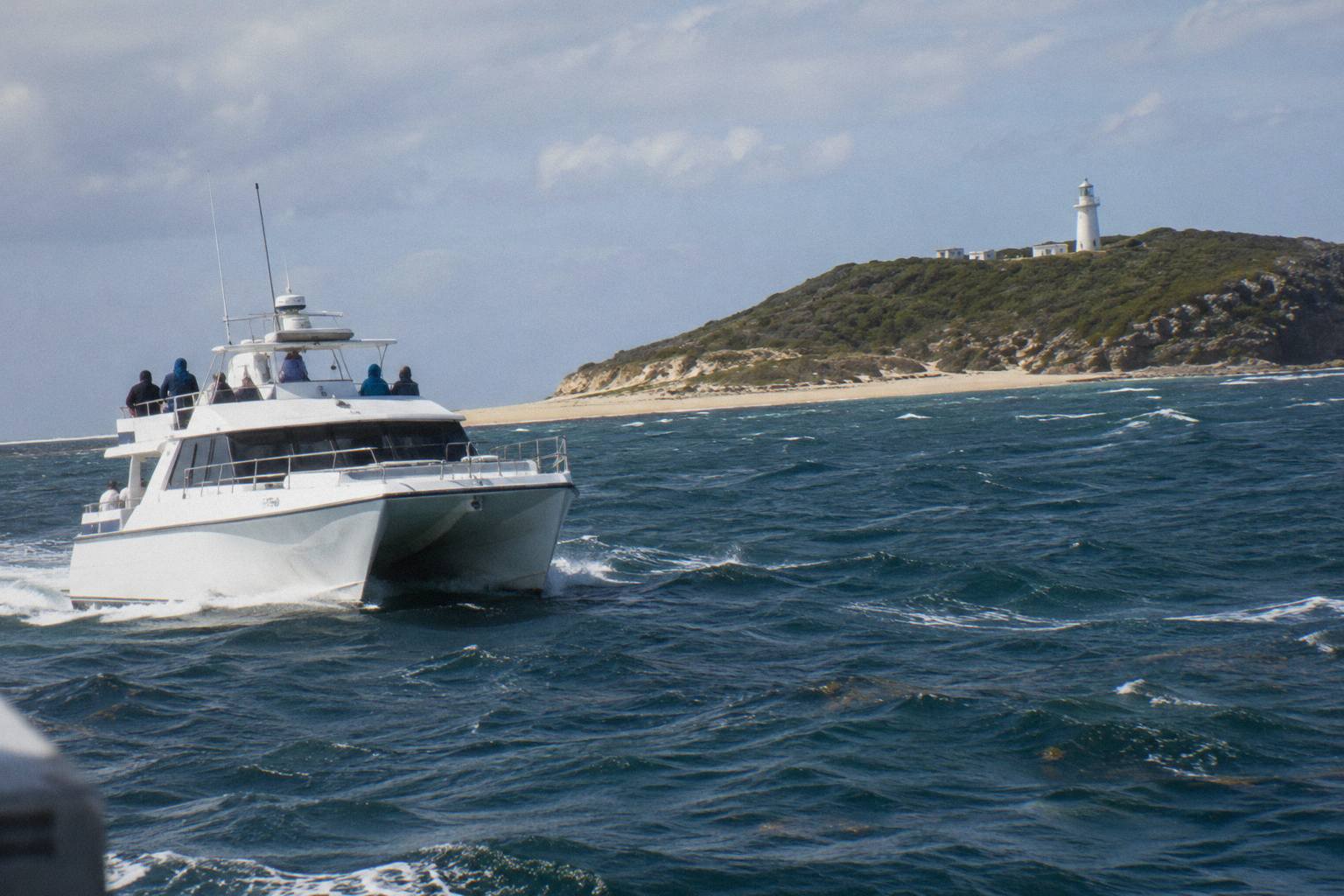
It is the shortest whale product on the water here and the only whale cruise in the trip list. The power catamaran layout is built for speed out to where the whales are, which is the point of an express format: less travel time circling the bay, more time beside the migration lane. Boarding is at d'Albora Marina, Nelson Bay, with the dock shown on your booking confirmation. Start times are chosen on the booking calendar, and the best guidance on morning versus afternoon conditions in a given week is to ask the operator directly.
Two practical notes shape the experience. First, the boat has no snack or drink facilities, per the operator's own advice, so bring water and anything you want to eat; a 90 minute offshore trip in winter wind works up an appetite. Second, the ages 5 and over rule is firm, so families with younger children should look at a dolphin cruise instead; the resident pod is visible year round and the boats that go looking for it take all ages, which makes the dolphin option the default family product for the under fives.
The return voucher is the piece that changes the value question. A whale cruise cannot promise a whale; wild animals move on their own schedule, and no operator here promises otherwise. What the whale express offers instead is a second chance: if the trip finds nothing, you can come back on standby within 12 months at no extra cost. For a visitor on a week long holiday, that is a realistic fallback, since a stretch of days in season gives the voucher room to be used. For someone in town for a single weekend, it is worth less, and that difference belongs in your decision from the start.
Free cancellation applies up to 24 hours before departure for a full refund, which is standard across the trips on the calendar here. If the operator cancels, you get a full refund or a transfer. Miss the departure yourself and there is no refund or transfer, so the 15 minute early boarding guidance Moonshadow gives its guests is a good habit for any boat from this marina. Plan to be at the marina with time to park, walk the dock and board calmly rather than at a run.
When Is Whale Season In Port Stephens?
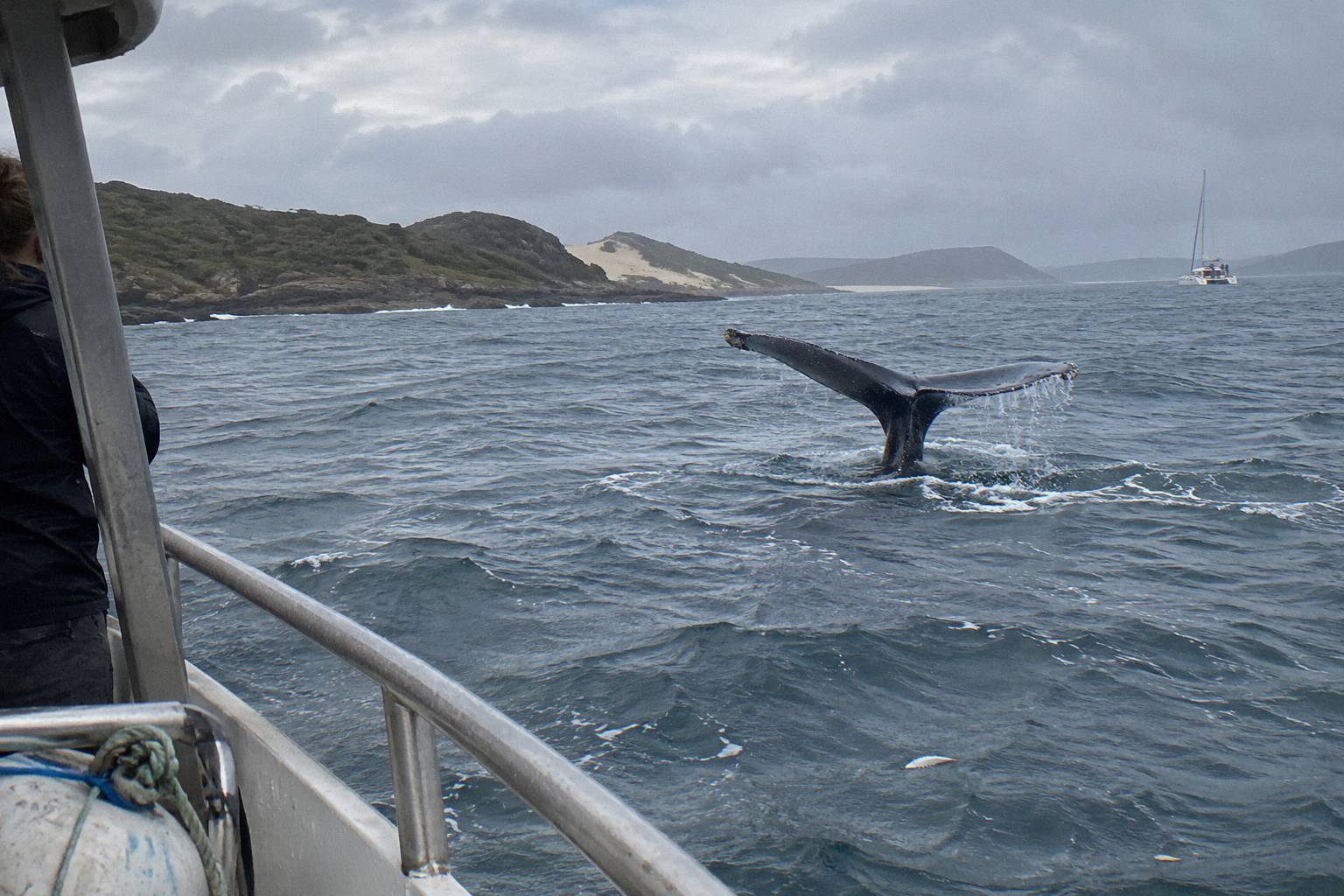
Humpback whale season runs May to November: whales pass north from May to August and return south from August to November, with up to 40,000 humpbacks migrating along the NSW coast each year. The whale express runs within that window, and operators' 2026 whale trips finish in early November, so a late November or December visit is out of season.
The shape of the season matters more than the edges. The northern leg, May to August, carries whales moving toward breeding grounds in Queensland; the southern leg, August to November, brings them back past Port Stephens, often with calves in tow later in the season. A calf changes the encounter under the official approach rules, which we cover below, because boats may not enter the caution zone for closer viewing when a calf is present. That does not make late season worse; it makes it different, with more breaching behaviour reported around migrating groups and tighter limits on how boats behave near mothers and calves.
Weather is a real factor in the decision, and it deserves more weight than most visitors give it. The Bureau of Meteorology's Nelson Bay climate averages, from decades of records at the Nelson Head station, show the whale window sitting over the cooler, wetter half of the local year. These are land averages, not sea conditions, and no wind or swell figure is published here, but they tell you what the air will feel like on an open deck at speed.
| Month | Average max | Average min | Rainfall | Rain days (1 mm or more) |
|---|---|---|---|---|
| May | 20.8 °C | 12.5 °C | 149.7 mm | 9.6 |
| June | 18.2 °C | 10.3 °C | 157.2 mm | 9.4 |
| July | 17.6 °C | 9.2 °C | 136.7 mm | 9.1 |
| August | 18.9 °C | 10.0 °C | 101.5 mm | 8.1 |
| September | 21.4 °C | 12.2 °C | 89.0 mm | 7.7 |
| October | 23.2 °C | 14.3 °C | 78.4 mm | 7.7 |
| November | 24.7 °C | 16.1 °C | 79.7 mm | 7.5 |
What the table says in plain terms: the heart of whale season is also the coldest and wettest stretch of the Nelson Bay year, with July the chilliest month at a 9.2 °C average minimum, while the spring months of the southern migration warm steadily and dry out. Layers for the cooler months, non-slip flat shoes, a hat and sun protection are the sensible kit; the boats do not hand out blankets or waterproof shells. Ask a pharmacist about motion-sickness options before an offshore trip, since the express runs out past the heads where the swell lives.
One timing note that trips people up: whale season and the summer dolphin season overlap only briefly. The Imagine Dolphin Watch Cruise and Sail runs November to the end of April, so in May, for example, your sailing option is closed while the whale window is just opening. The month by month breakdown in the dolphin watching season guide shows how the two calendars interlock.
How Close Do The Boats Get To The Whales?
These are regulations, not operator courtesy, and they are published by the NSW Government at environment.nsw.gov.au. Moonshadow's own whale page describes staying 100 m back with no more than three boats near a pod, which mirrors the regulation; treat the official figures as the rule and the operator's wording as practice. For dolphins the limits are tighter: 50 m minimum, a 150 m caution zone, and the same three vessel cap. Inside a caution zone the vessel approaches from the side at least 30 degrees, holds a constant slow speed, and keeps a lookout posted when two or more people are aboard.
The rules change what "worth it" means for photographers. You will not be beside a whale's eye; you will be watching animals the length of a bus from a respectful distance, with the boat holding course and speed if dolphins choose to bow-ride on the way out. A phone camera will produce a speck; a camera with a long lens will produce a photograph. Binoculars are worth packing precisely because the legal distances are generous to the animal and observers plan around them rather than resenting them.
The rules also cover other craft, and they are worth knowing even if you never board a boat: jet skis must stay 300 m from whales and dolphins, drones 100 m, and helicopters 500 m. If you are watching from a headland or a kayak of your own, the same framework of distances applies to you. The rules say nothing about touching or swimming, and no cruise here lets you enter the water with whales or dolphins; the boom net trips keep the net inshore as a ride, not a swim. The reasons behind those limits are covered in why you can't swim with dolphins anymore.
There is a scientific footnote that explains the careful distances without turning into a lecture. A 2012 Journal of Environmental Management paper (Steckenreuter, Moller and Harcourt), using boat surveys from August 2008 to August 2009, found that while dolphin-watching boats were present, dolphins fed and socialised less, and groups with newborns came closer than the minimum distances in nine of ten encounters. That is pre-rules data from over a decade ago; it is not a claim about today's boats. It is the reason today's rules are written the way they are, with rest areas and approach angles and vessel caps.
Whale Watching Or A Dolphin Cruise: Which Should You Book?
If you are visiting between May and November and have not seen humpbacks from a boat, book the whale express, from A$99 for 1.5 hours. If you are travelling with children under 5, or visiting outside the whale window, book a dolphin cruise: the 1-Hour Dolphin Watch Express is from A$55, rated 4.9 from 62 reviews, and the resident pod is in the port all year.
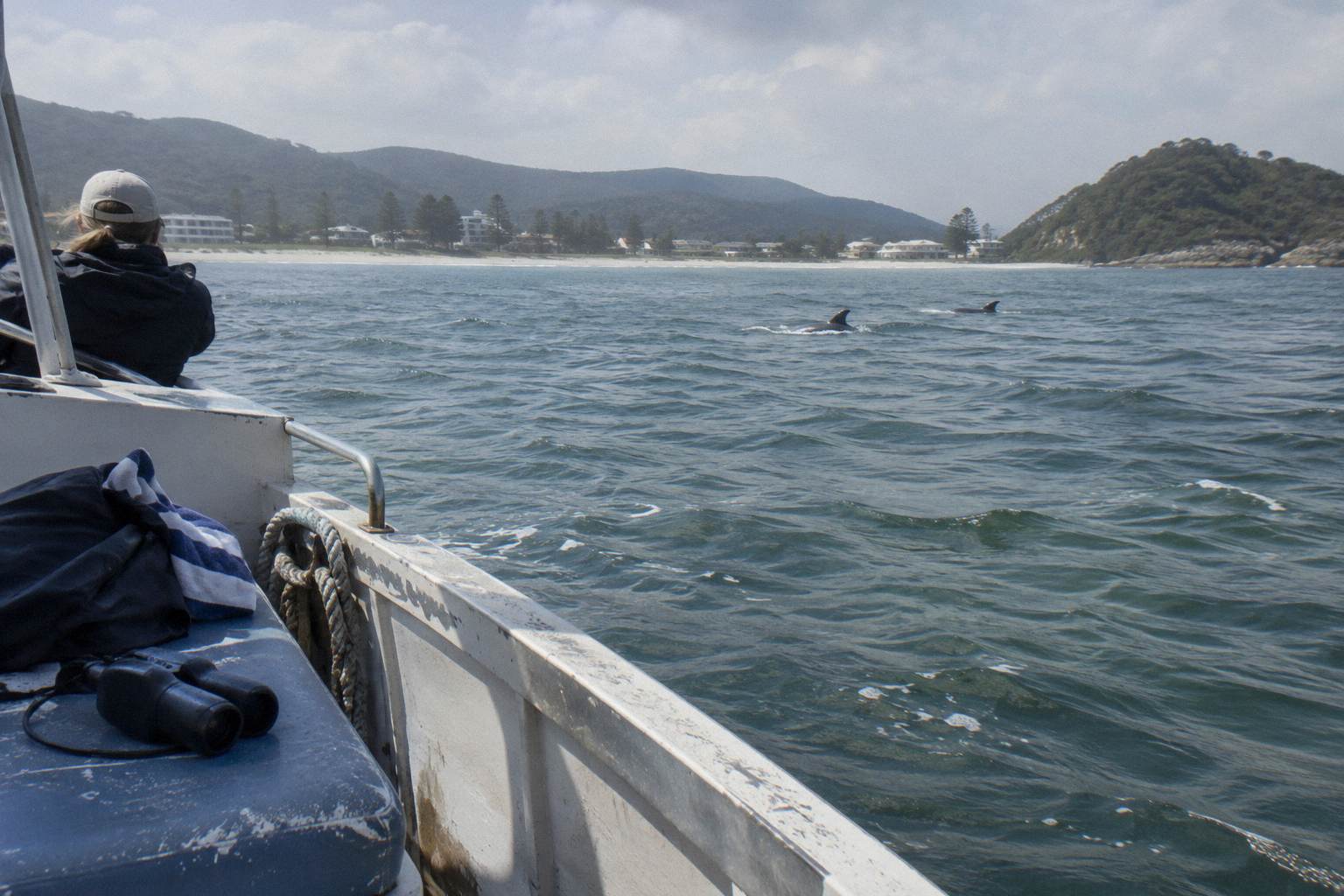
The dolphin boats have one structural advantage: their stars live here. Roughly 90 to 120 Indo-Pacific bottlenose dolphins (NPWS) are resident in the Port Stephens-Great Lakes Marine Park, they can be seen off Shoal Bay beach in the eastern section of the port, and you can look for them any month of the year. Macquarie University research shows the population is genetically distinct and seldom interbreeds with coastal dolphins, with some animals travelling outside the Heads and a second community living near Broughton Island about 20 km away. A whale cruise chases migrating animals on a schedule; a dolphin cruise visits a home population that cannot leave.
| Trip | Duration | Price (per person) | Rating | Season | Operator |
|---|---|---|---|---|---|
| Whale Watching Express Cruise | 1.5 hours | from A$99 | 4.5 from 87 reviews | May to November | Aquamarine Adventures |
| 1-Hour Dolphin Watch Express | 1 hour | from A$55 | 4.9 from 62 reviews | All year | Aquamarine Adventures |
| Dolphin Watch Cruise and Sail | 1.5 hours | from A$50 | 4.8 from 106 reviews | November to April | Imagine Cruises |
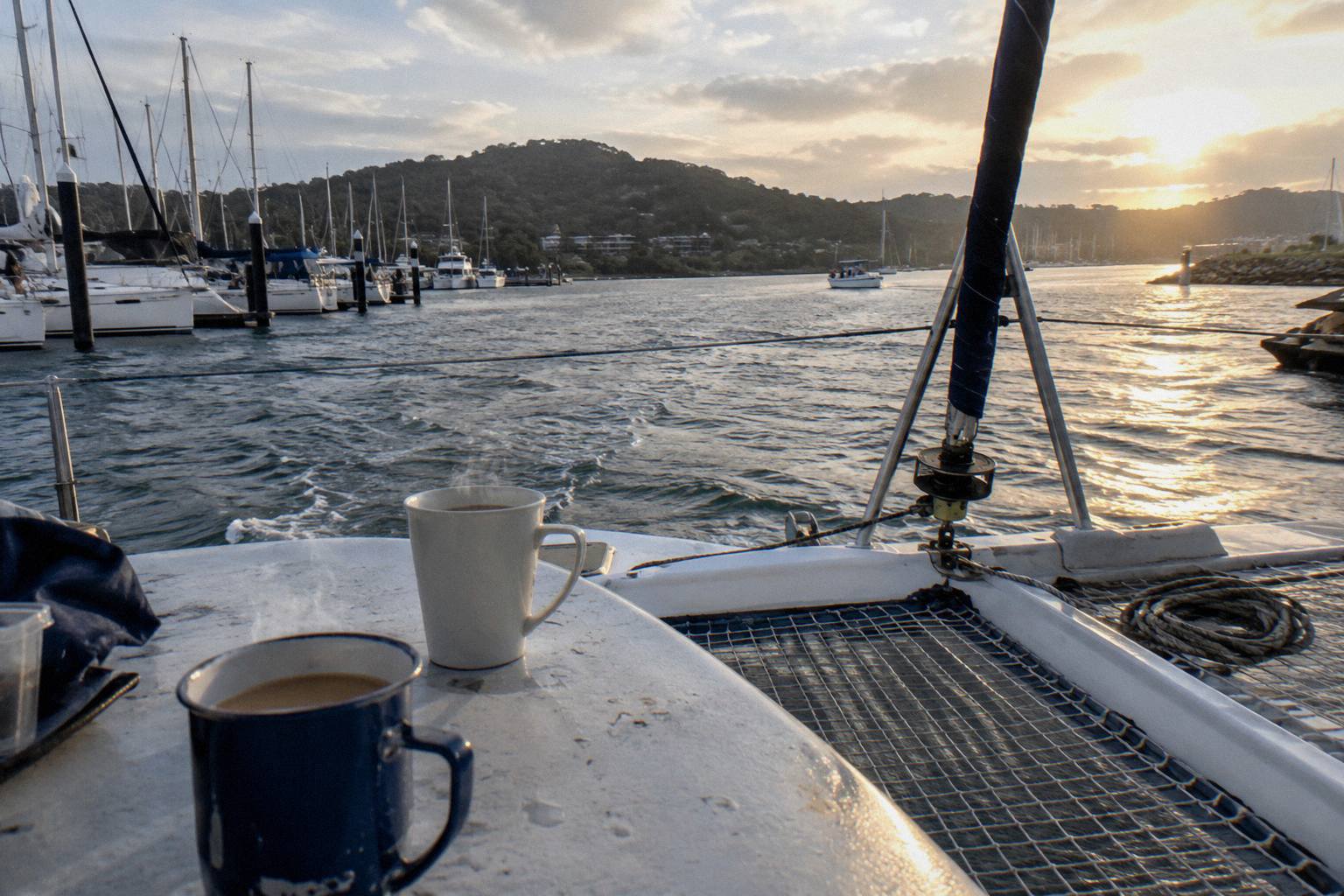
The sailing option deserves a look if your dates allow it. The Dolphin Watch Cruise and Sail, run by Imagine Cruises on a sailing catamaran with 360 degree viewing, includes tea and coffee, carries a Dolphin Guarantee (Free Return) on the operator's terms, and runs only from November to the end of April, which makes it a summer companion to the whale window rather than a competitor. In the short overlap of early November, a visitor can genuinely do both in one week: whales on the express one morning, the sailing catamaran among the resident pod the next.
A short power-cruise dolphin trip suits a tight schedule or a first timer, and the whale express suits a visitor who wants the bigger animal and can wear the season's weather. Some guests on the whale express report dolphin sightings as well, since the operator keeps a lookout for pods, but that is a bonus, never a promise. For a deeper comparison of all the boats side by side, see the Port Stephens cruises compared.
What Does It Cost And What Do You Get For The Money?
The whale express is from A$99 per person for 1.5 hours, in Australian dollars, and every trip on the calendar here carries free cancellation up to 24 hours before for a full refund. Child and family fares are set by the operator and shown when you check availability. The dolphin boats run from A$46 to A$55, and the 3.5 hour snorkel cruise from A$100.
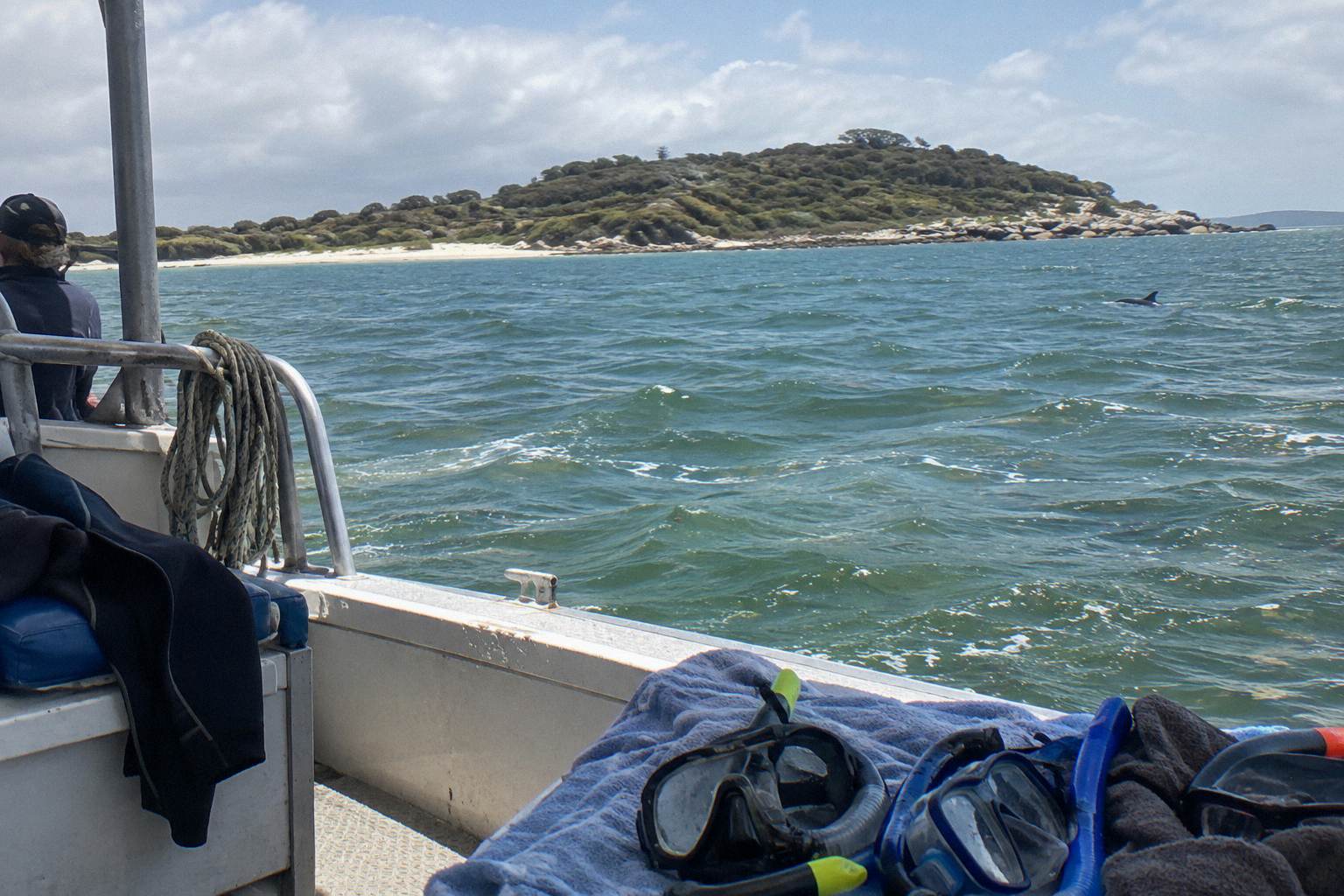
Prices are shown as "from" figures, they change, and the current price is the one on the calendar when you check. What the fare buys on the whale express is the boat, the crew, and the 12 month return voucher if no whales are seen; food and drink are not part of it, and the boat has no snack facilities, so budget a water bottle. On the sailing dolphin cruise, tea and coffee self-service is included and there is a bar on board; on the snorkel cruise, tea, coffee and water are included while wetsuits and towels are not.
A rough planning budget for a visit in whale season, using from-prices only:
| Item | Planning figure |
|---|---|
| Whale express, adult | from A$99 |
| Dolphin Watch Express, adult | from A$55 |
| Marine Discovery snorkel cruise | from A$100 |
| Parking at d'Albora Marina | paid up to 4 hours between 8:30am and 4:30pm, check the signs |
| Free street parking | Laman, Church and Magnus streets, unlimited |
Parking is worth knowing before you drive in. Port Stephens Council runs number-plate Smart Parking across Nelson Bay with time limits and possible fines, so check the signs and the Park'nPay app; the number plate is the ticket, payable by card, coin or the app. Victoria Parade parking is limited to 8 hours, which matters if you are combining a cruise with a full day in town. For a fuller parking and boarding walkthrough, the d'Albora Marina guide covers where each boat leaves from and how the docks are laid out.
Getting there is part of the cost picture for city visitors. Nelson Bay is about 2.5 hours by car from Sydney, an operator figure, and Port Stephens Coaches runs a Sydney express service stopping at Central, Chatswood, Pymble and Hornsby, with fares and journey times best checked with the coach operator. Local buses link Newcastle and Port Stephens; check Transport NSW for times. The getting there from Sydney guide works through the options in detail, including the trade offs of driving versus the coach for a day trip.
What Is The Best Time Of Day To Go Whale Watching?
The operators run morning and afternoon departures in season; the answer is to ask the operator when you book, since crews read the conditions daily. What you can plan around is the light and the weather, both of which follow the season rather than the clock.
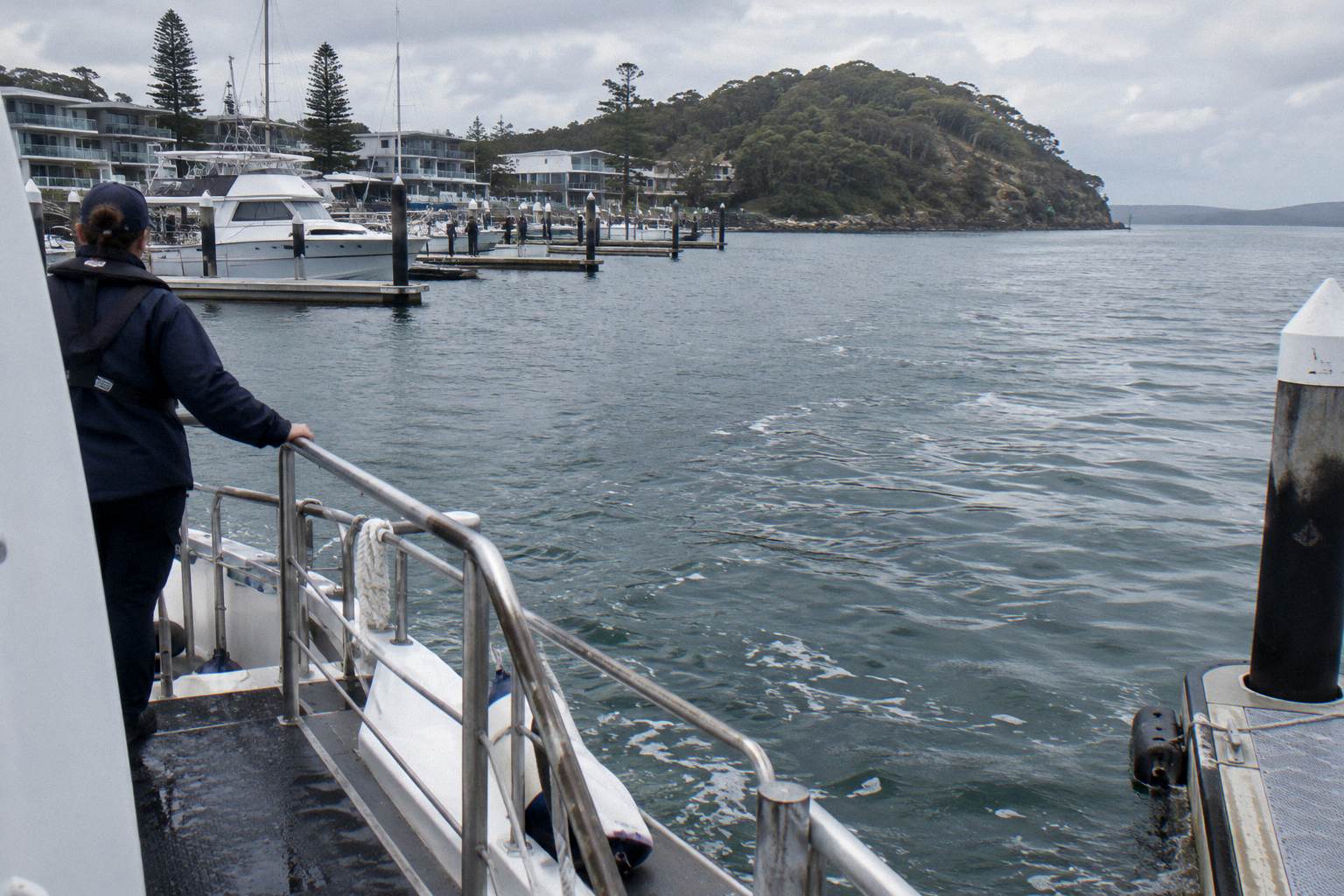
Start times are chosen on the booking calendar and they change, so no clock time is worth printing here. What the calendar does show is which slots remain, and in peak season, when the southern migration is at its busiest and school holidays stack on top of it, the popular departures fill first. Booking early in your stay rather than on your last day gives you the option to rebook if weather turns, and the 24 hour free cancellation window means an early booking carries little risk.
The other planning tool is daylight. Computed sunrise and sunset figures for Nelson Bay (an approximate calculation, not an official timetable) show the whale season spanning the shortest and the longest days of the year: about 10.0 hours of daylight in June against about 14.3 hours in December. In June the sun rises about 6:51am and sets about 4:52pm; by October it rises about 6:12am and sets about 7:02pm. A morning departure in midwinter starts in full daylight but ends early; the same departure in October has hours of light behind it. Neither is better for whales, but both change what the trip feels like.
Common Mistakes People Make Whale Watching In Port Stephens
The five mistakes that cost people their whale trip: booking outside the May to November window, arriving at the wrong marina dock, expecting a guaranteed sighting, bringing children under 5 on the whale express, and budgeting for food the boat does not sell. Each one is avoidable in a few minutes of planning before you pay.
Booking out of season is the most common and the least fixable. The whales are not in Port Stephens in December through April, and no boat can take you to them then; a dolphin cruise is the right product for those months. Second, boarding: the dolphin boats leave d'Albora Marina, Nelson Bay, and your dock is on your booking confirmation, so read it rather than guessing at the marina. Moonshadow asks its guests aboard about 15 minutes before departure, and a missed departure means no refund or transfer under its terms.
Third, expectations. No cruise guarantees whales; the operators say the animals are wild and sighting success is not certain. What you hold is a return voucher, on the express valid 12 months on standby, which is insurance for another day rather than a promise for this one. Fourth, ages: the whale express is not suitable under 5 years, so check the whole party before booking, and remember the Newcastle day tours carry their own minimums of 6 and 7 years. Fifth, provisions: no snacks on the power catamaran, no BYO alcohol on Imagine's boats, and wetsuits and towels are not included on the snorkel cruise. Ask a pharmacist about motion-sickness options before a longer offshore trip, and speak to a doctor if you are pregnant or have a health condition; the Sydney day trip is flagged as not suitable for pregnant women.
One final mistake is subtler: treating the weather forecast as a reason to skip the season entirely. The whale window is the cooler half of the year by necessity, and the whales do not wait for a sunny Saturday. Dress for the climate averages in the table above, pick a departure with a fallback day behind it, and the weather becomes a wardrobe problem instead of a booking problem. If conditions are genuinely poor, the operator makes the call and you get a full refund or a transfer.
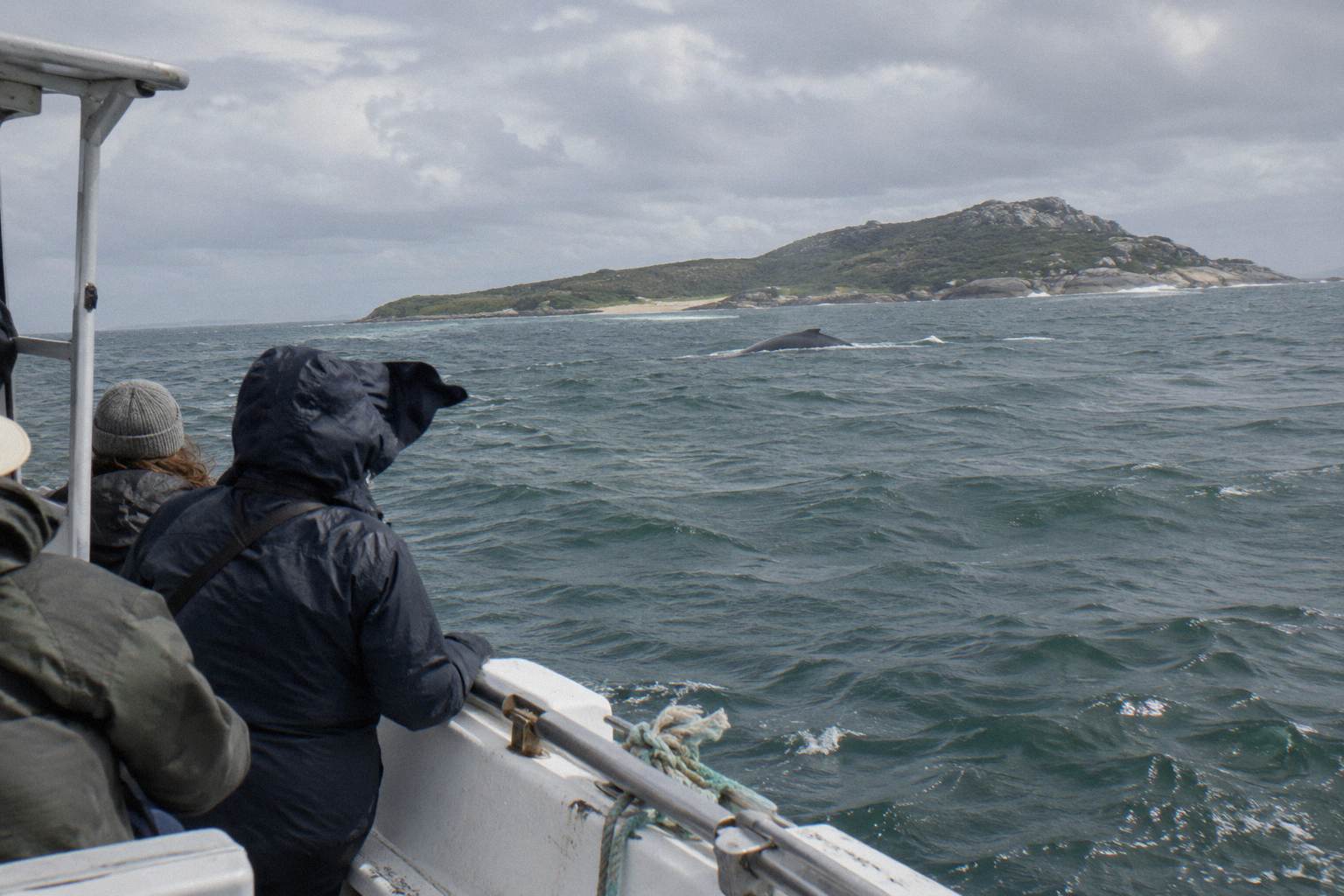
So, is it worth going whale watching in Port Stephens? If your dates fall inside May to November, your party is 5 and over, and you are dressed for the season, the whale express from A$99 with a 12 month return voucher is a reasonable bet on one of the largest animals on earth passing a headland two and a half hours from Sydney. The rest of the year, the resident dolphins hold the stage, and Port Stephens Dolphin Cruises covers both calendars, month by month, boat by boat.
Common Questions About Whale Watching In Port Stephens
Is It Worth Going Whale Watching In Port Stephens?
For most visitors in season, yes: the whale express is from A$99 for 1.5 hours, rated 4.5 from 87 reviews, with a free return voucher valid 12 months if no whales are seen. The decision hinges on the May to November window and on whether your group meets the ages 5 and over rule.
When Is Whale Season In Port Stephens?
May to November. Humpbacks pass north from May to August and return south from August to November, with up to 40,000 humpbacks migrating along the NSW coast each year. Operators' 2026 whale trips finish in early November.
How Long Is The Whale Watching Cruise?
The Whale Watching Express Cruise runs 1.5 hours on a power catamaran from Nelson Bay. Longer whale cruises of 2.5 and 3 hours are run in season by other operators from their own pages and are not part of the trips on the calendar here.
What Happens If No Whales Are Seen?
The whale express operator provides a free return voucher on a standby basis, valid 12 months. No cruise here guarantees a sighting; the animals are wild and move on their own schedule.
Can Children Go Whale Watching In Port Stephens?
The whale express is not suitable for children under 5. Dolphin cruises take all ages; on the Moonshadow boom net, children under 1.1 m may not use the net unattended and smaller children go with an adult.
Is Whale Watching Or Dolphin Watching Better?
Whale watching is bigger animals on a seasonal migration, May to November. Dolphin watching runs all year against a resident pod of roughly 90 to 120 Indo-Pacific bottlenose dolphins (NPWS), from A$46 to A$55 on the shorter trips. If your dates allow both, the whale window is the rarer event.