
Port Stephens Whale Watching Season: Month By Month
Humpbacks pass Port Stephens between May and November each year, north-bound through winter and south-bound through spring. Here is what each month of the season holds, with local climate averages to help match your travel dates to a departure.
Short answer
The Port Stephens whale watching season runs May to November. Humpbacks head north from May to August and return south with calves from August to November, and up to 40,000 humpbacks pass the NSW coast in a season. The Whale Watching Express Cruise runs in season only, from A$99, and outside those months the year-round dolphin boats keep running.
Nelson Bay sits inside the Port Stephens-Great Lakes Marine Park, and each southern winter the humpback migration passes close enough to its headlands that whale watching became a second season alongside the dolphins. The whales are not residents: they are travellers, moving between Antarctic feeding grounds and tropical breeding waters, so the timing of a visit matters far more for whales than it does for the roughly 90 to 120 Indo-Pacific bottlenose dolphins (NPWS) that live in the port all year. A planner matching travel dates to a boat needs three pieces of the picture: which weeks the whales are actually passing, what the weather in each month tends to do, and what still runs if the dates fall outside the whale window. That is what the month-by-month breakdown below covers, ending with the whale boat itself and the mistakes that cost people their trip.
Quick Facts: Whale Watching Timing At A Glance
The whale season in Port Stephens runs from May to November, with humpbacks heading north from May to August and returning south from August to November, and up to 40,000 humpbacks passing the NSW coast in a season on NSW Government figures. Outside that window, December to April, there are no whale boats, but the dolphin boats keep running every day. The whale watching express runs in season only and is not suitable for children under 5.
| Question | Answer |
|---|---|
| Whale season | May to November |
| North-bound passing | May to August |
| South-bound passing | August to November |
| Humpbacks passing NSW | Up to 40,000 per season |
| Whale boat season | In season only |
| Whale watching express price | From A$99 per person |
| Whale watching express rating | 4.5 from 87 reviews |
| Minimum age on the whale express | Not suitable under 5 years |
| December to April | Dolphin boats only |
| Resident dolphins | Roughly 90 to 120 (NPWS) |
Those are the fixed points. Everything below fills in the monthly detail: which direction the whales are moving in a given month, what the Bureau of Meteorology's Nelson Bay climate averages say about each month's temperatures and rain, and how the boat calendar shifts as the season turns. If your dates are already set, jump straight to your month in the table; if your dates are flexible, the sections on the two halves of the migration explain the real difference between a June trip and an October one.
When Is Whale Watching Season In Port Stephens?
Whale watching season in Port Stephens runs May to November. Humpbacks pass on their way north from May to August and on their way back south from August to November, in Moonshadow's wording, and NSW Government and destination sources put the passing population at up to 40,000 humpbacks. No whale cruise runs outside those months, and the 2026 whale windows on the operator calendars close in early November.
Two distinct waves move through, and they feel different from a boat. The north-bound run through winter is made up of whales travelling toward the breeding grounds: fast-moving adults covering distance. The south-bound run through spring brings the return traffic, including mothers with newborn calves travelling closer inshore and more slowly. Moonshadow, whose whale pages describe both legs, frames it exactly that way, north from May to August, south from August to November. Which half you book into shapes what a trip tends to look like, without anyone able to promise a particular sighting on a particular day.
The month-by-month table below carries the migration direction alongside the Bureau of Meteorology's Nelson Bay climate averages for the same months, because a whale trip is a weather decision as much as a wildlife one. These are land averages from the Nelson Head station, taken from 37 years of temperature records and 114 years of rainfall records, and they describe the shore, not the sea state on the day.
| Month | Migration | What is passing | Max C (avg) | Min C (avg) | Rainfall mm | Rain days 1 mm+ |
|---|---|---|---|---|---|---|
| May | North-bound | Early north-bound adults | 20.8 | 12.5 | 149.7 | 9.6 |
| June | North-bound | Peak of the north-bound run | 18.2 | 10.3 | 157.2 | 9.4 |
| July | North-bound | Late north-bound adults | 17.6 | 9.2 | 136.7 | 9.1 |
| August | Turning | North-bound stragglers, first south-bound whales | 18.9 | 10.0 | 101.5 | 8.1 |
| September | South-bound | South-bound adults | 21.4 | 12.2 | 89.0 | 7.7 |
| October | South-bound | Mothers with calves close inshore | 23.2 | 14.3 | 78.4 | 7.7 |
| November | South-bound | Season closing by early November | 24.7 | 16.1 | 79.7 | 7.5 |
Read the rain columns with care: they count days of 1 mm or more, and a month averaging eight or nine rain days still leaves most days dry. The temperatures matter more for packing, since a July morning on the water starts from an average minimum of 9.2 degrees and an October one from 14.3. Layers solve both, and the operator's whale sightings page describes the passing traffic in its own words for anyone who wants the operator's framing of the two legs.
May To August: The North-Bound Run
From May to August the humpbacks travel north past Port Stephens toward tropical breeding grounds, and this is the leg of the migration that whale skippers describe as the fast one, with adults covering distance rather than lingering. June and July are the heart of it, and they are also the coolest, wettest months in the Nelson Bay climate averages, with June means of 18.2 and 10.3 degrees and 157.2 mm of rain.
May is the opener. The first north-bound whales appear as the month settles, the sea has begun cooling from the April figures, and the whale boats start their season calendars. A May trip is a bet on the front edge of the run: fewer whales in the overall stream, thinner crowds on the docks, and an average maximum of 20.8 degrees that still feels mild on the water with a jacket. It is a month for people whose dates are set by something other than whales, who would rather have a quiet boat in early season than a full one at the peak.
June is the engine room of the north-bound leg. The whales are moving through in numbers now, the operators are running their full season schedules, and the winter school holidays land in the month for NSW families, which is worth knowing for anyone avoiding, or chasing, family crowds. The trade-off is the climate: June carries the highest rainfall average of the season at 157.2 mm across 9.4 rain days, and the lowest average maximum of the winter at 18.2 degrees. None of that describes the sea on your day; it describes what to pack, and it argues for warm layers and a waterproof shell.
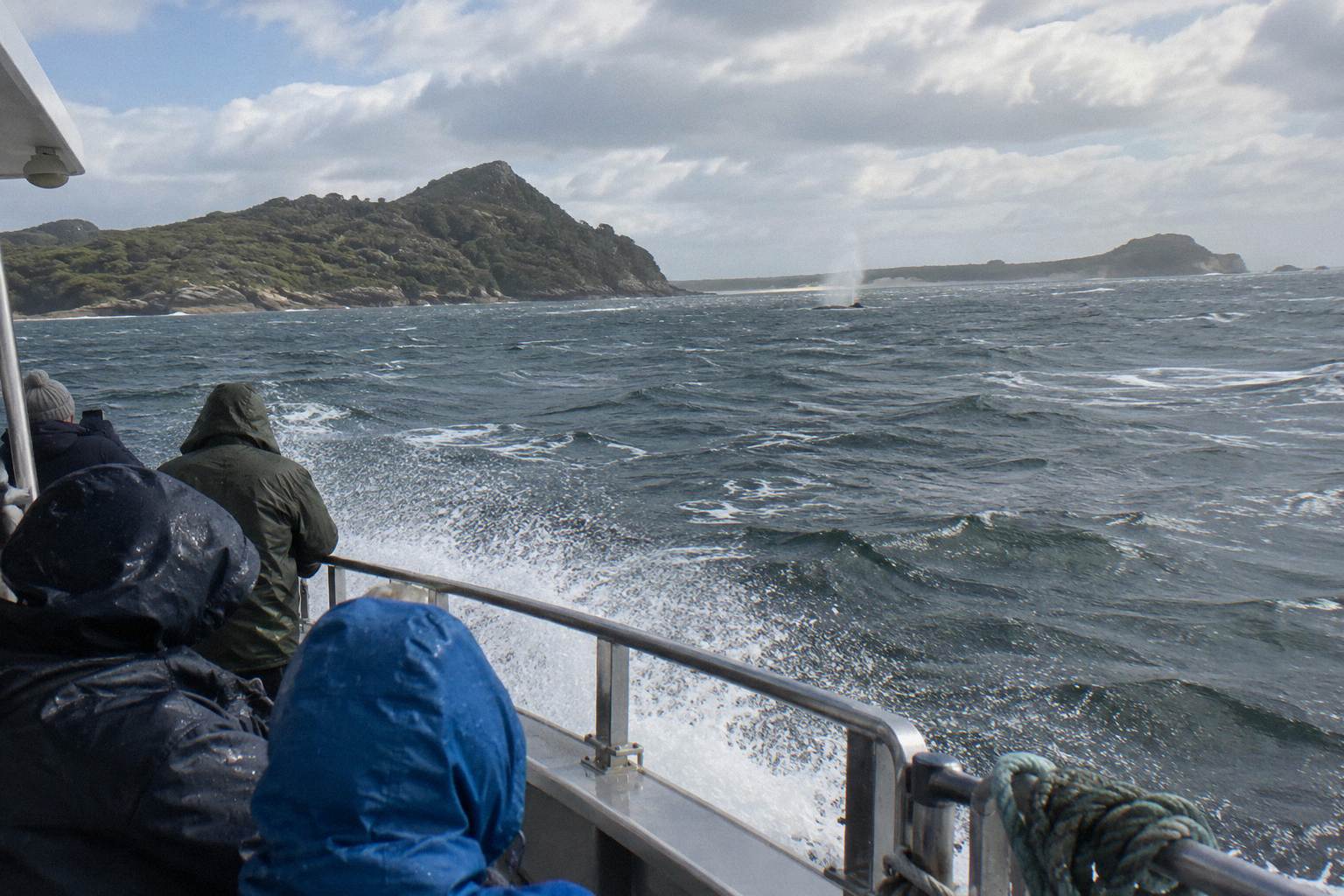
July continues the run with slightly less rain on average, 136.7 mm, and the season's coolest nights at an average minimum of 9.2 degrees. August is the hinge month: the last north-bound whales are still passing in the early weeks, the first south-bound adults can begin appearing late in the month, and the rainfall average drops to 101.5 mm. A late-August trip sits at the turn of the migration, which some planners like precisely because the stream is mixed, and the climate averages are beginning their climb back toward spring.
For the whale boat itself, the operators run morning and afternoon departures, so ask the operator about the time of day when booking. What is fixed is the season, the price and the guarantee, covered in full below.
August To November: The South-Bound Return
From August to November the humpbacks travel back south past Port Stephens, and this leg brings the mothers and newborn calves, travelling more slowly and often closer to shore than the winter run. Spring also brings the driest, warmest months of the whale season, with October averaging 23.2 degrees maximum and just 78.4 mm of rain, and the season closes in early November on the operator calendars.
September is when the south-bound stream settles in. The adults that passed north in winter are returning, the weather averages turn noticeably, 21.4 degrees maximum against August's 18.9, and rainfall averages drop to 89.0 mm. A September boat sits in comfortable conditions with a steady stream of whales moving through, and the spring school holidays at the end of the month are another crowd factor to weigh.
October is the month people book for the calf sightings. Mothers with newborn calves travel the south-bound leg slowly and closer inshore, which is why the operator pages single the spring return out as the family leg of the migration, and October's climate averages are among the friendliest of the season, 23.2 and 14.3 degrees with 78.4 mm of rain. No operator or page can promise a calf on any given day, but the migration pattern itself is what makes October the month people choose when a mother-and-calf sighting is the hope.
November closes the season early. The operator whale windows for 2026 finish in early November, and no date after the end of November should ever be assumed to have a whale boat on it. The south-bound stream is thinning, the last whales of the year are moving through, and by mid-month the calendar has effectively handed back to the dolphins. A first-weeks-of-November trip is a legitimate play: late-season whales, warm weather averaging 24.7 degrees maximum, the lowest rain-day count of the season at 7.5, and none of the winter-cold considerations.
The Whale Watching Express: What Runs In Season
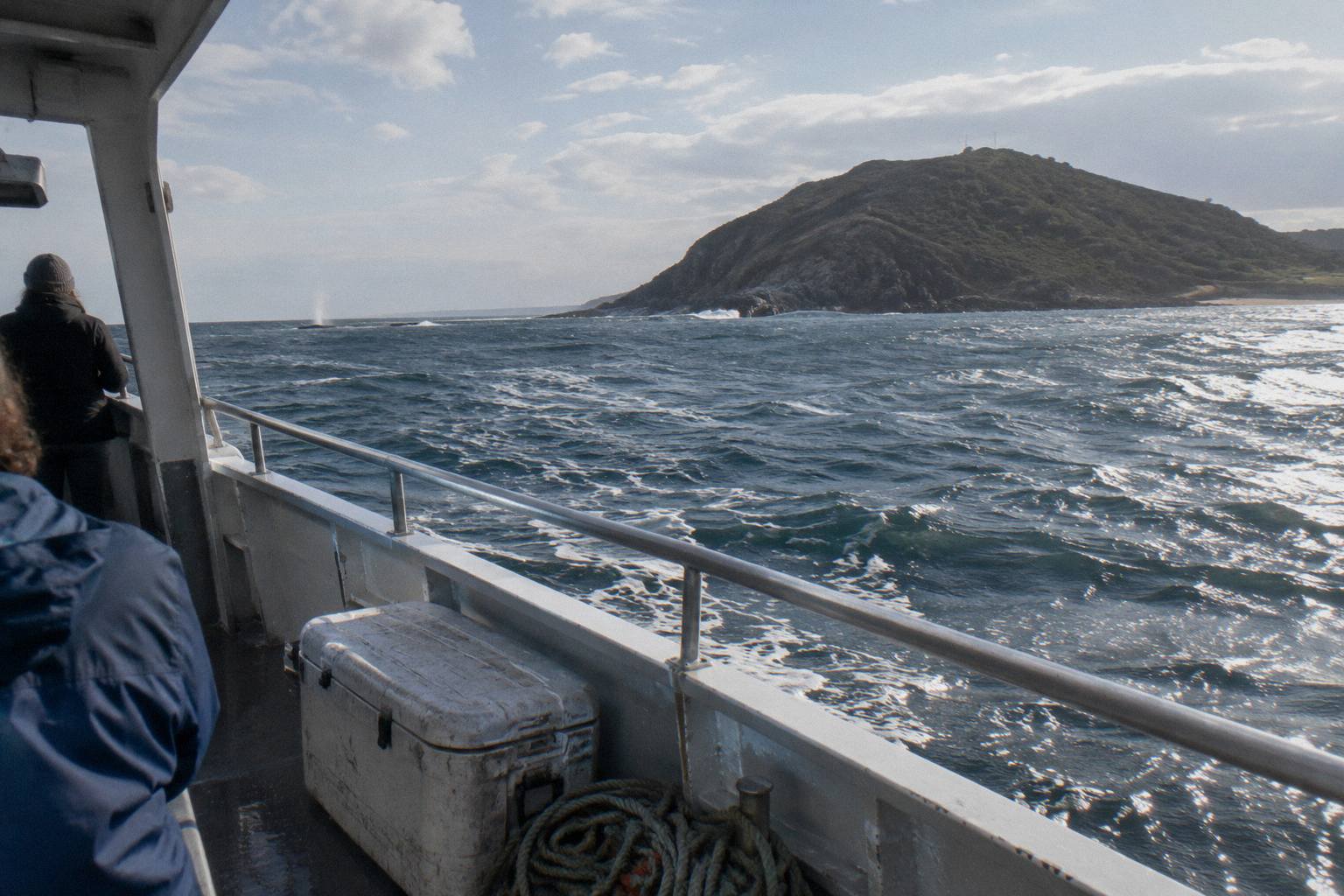
The express format is the short, sharp version of a whale trip: a fast power catamaran out to where the whales are passing, 1.5 hours on the water, and back. Some guests report dolphin sightings on it as well, which is consistent with the port's resident pods rather than luck. It boards from the Teramby Road side of d'Albora Marina in Nelson Bay, as the dolphin boats do, and the specific dock is on the booking confirmation. The guarantee is the detail worth understanding before booking: it is not a refund, it is a free return voucher on a standby basis, valid 12 months, which suits returning visitors and locals far better than a one-week tourist.
Prices are in Australian dollars, and the from price is the operator's from price: child and family fares are set by the operator and shown when booking. Cancellation terms on the trip allow free cancellation up to 24 hours before for a full refund. For anyone weighing whether the whole idea is worth it, the NSW Government's approach distance rules, explained below, are worth reading first, because they set what every whale boat in the state, not just this one, may do around the animals.
Moonshadow and Imagine also run whale cruises in season, longer ones, at 2.5 and 3 hours respectively per their own pages. Those are context for the whale-watching landscape in the port, not products booked here. For a deeper comparison of what each whale trip involves, the guide to the whale boats and what you will see works through the fleet, and the question of whether a whale watching trip is worth it has its own treatment on the blog.
December To April: No Whales, Dolphins Only
From December to April there are no whale cruises in Port Stephens, because the humpbacks have left the coast; the dolphin boats continue, since roughly 90 to 120 Indo-Pacific bottlenose dolphins live permanently in the port's waters (NPWS) and can be seen at any time of year. The warm months are also when the seasonal boats return, including the BBQ and Boom Net cruise from December to April.
A summer or autumn date is not a wasted date in Nelson Bay; it is simply a dolphin date. The Moonshadow dolphin cruises run all year per the operator, and the 1-Hour Dolphin Watch Express by Aquamarine runs its fast, compact format at from A$55, rated 4.9 from 62 reviews. For a fuller picture of how the dolphin months differ from each other, there is a dolphin season month-by-month guide covering the same calendar from the resident pod's side.
The summer calendar adds its seasonal trips on top. The BBQ and Boom Net cruise, 2 hours with a sausage sizzle and a boom net ride, runs December to April and boards at a different place, Wharf 1 at the Cruise Passenger Terminal on Victoria Parade, rather than d'Albora Marina. The Imagine sailing catamaran's dolphin cruise runs November to the end of April only, so the sailing format is a warm-month option too. The whale express itself is the trip that simply stops: it runs in season only, and a May-to-November window is the whole of its calendar.
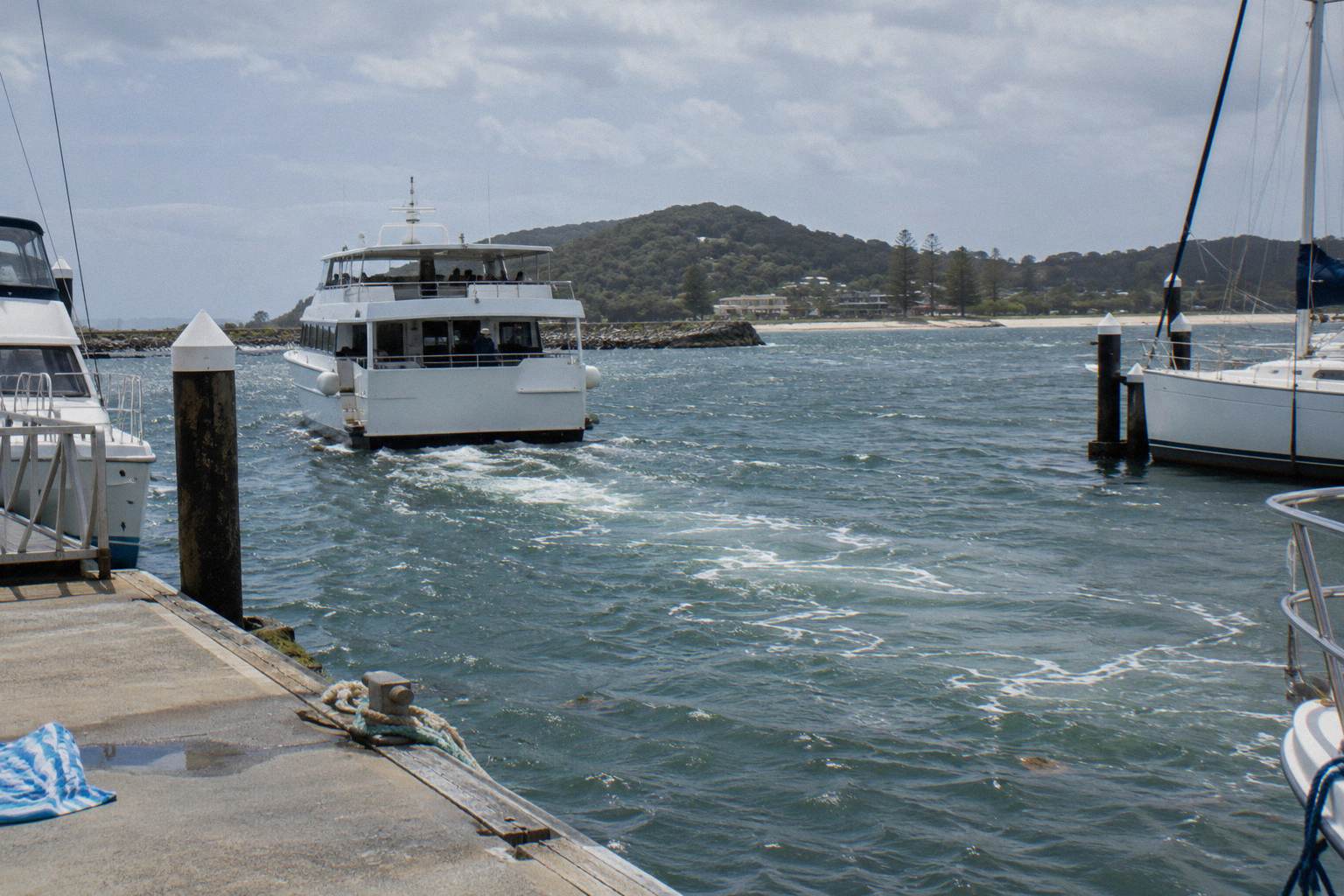
| Trip | Operator | Months | Duration | From price |
|---|---|---|---|---|
| Whale Watching Express | Aquamarine Adventures | May to November | 1.5 hours | A$99 |
| Dolphin Discovery cruise | Moonshadow - TQC Cruises | All year | 1.5 hours | A$46 |
| Wild Port Stephens cruise | Moonshadow - TQC Cruises | All year | 1.5 hours | A$46 |
| 1-Hour Dolphin Watch Express | Aquamarine Adventures | All year | 1 hour | A$55 |
| Dolphin Watch Cruise and Sail | Imagine Cruises | November to April | 1.5 hours | A$50 |
| BBQ and Boom Net cruise | Moonshadow - TQC Cruises | December to April | 2 hours | A$59 |
How Close Does The Boat Get To A Whale?
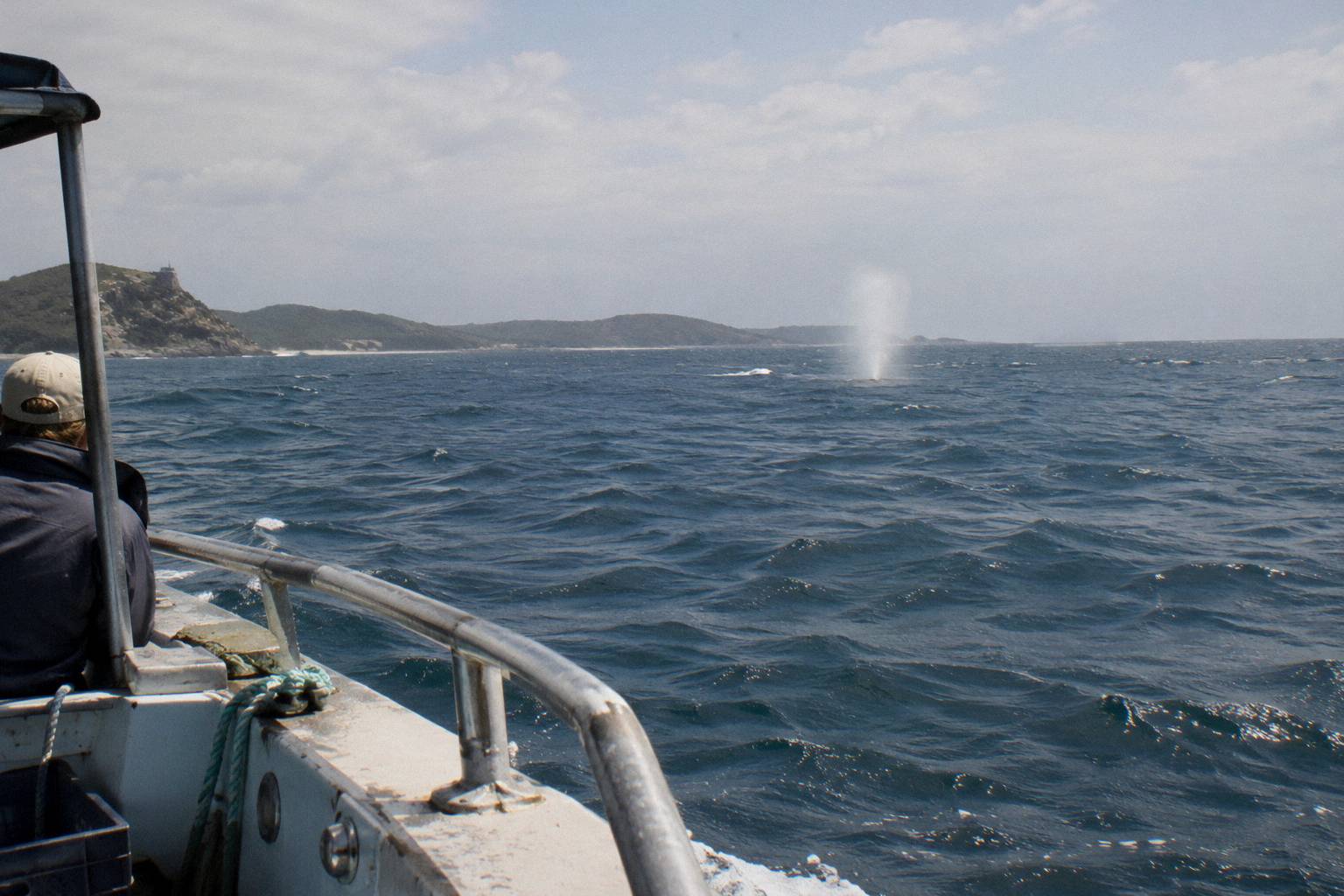
Under NSW Government approach rules, a vessel may move no closer than 100 m to a whale, the caution zone begins at 300 m, with a calf present a boat may not enter the caution zone for closer viewing, and only three vessels may be inside a whale caution zone at once. A mostly white animal always carries a 500 m distance. Every whale boat in Port Stephens operates inside these rules.
The rules matter to a whale watcher because they shape the experience: sightings happen at legal distances, not at arm's length, which is why binoculars and a camera zoom earn their place in the bag. Inside the caution zone a boat approaches from the side at least 30 degrees, at constant slow speed, with a lookout posted when two or more people are on board. If dolphins choose to bow-ride, the vessel maintains course and speed rather than turning toward them. Jet skis must stay 300 m from whales, drones 100 m, and helicopters 500 m.
Moonshadow's own whale page describes a practice of staying 100 m from whales with no more than three boats present, which matches the law's shape; the operator's wording is its practice, and the Government rules above are the standard every operator meets. With a calf present the law is at its strictest, and the spring south-bound leg, the calf months, is exactly when the no-entry calf caution zone does its work. Nothing in the rules permits touching or swimming with whales, and no cruise here offers either.
| Situation | Minimum distance |
|---|---|
| Whale, approach limit | 100 m |
| Whale caution zone | From 300 m |
| Dolphin, approach limit | 50 m |
| Dolphin caution zone | From 150 m |
| Whale or dolphin with a calf | No entry into the caution zone |
| Mostly white animal | 500 m |
| Jet ski | 300 m |
| Drone | 100 m |
Weather, Packing And The Cancellation Question
Whale season overlaps the coolest, wettest months of the Nelson Bay year on average, June at 18.2 and 10.3 degrees with 157.2 mm of rain, through to the driest late season, November at 79.7 mm. Free cancellation up to 24 hours before applies for a full refund, and if the operator cancels you get a full refund or a transfer. Pack layers for the shoulder months and check the departure with the operator on the day.
The climate averages are land figures from the Bureau of Meteorology's Nelson Bay station, not sea conditions. Packing advice is the general kind: non-slip flat shoes, a hat and sun protection, and warm layers for the winter months when an average July morning starts near 9 degrees. The Bureau of Meteorology's Nelson Bay climate averages are the reference behind every figure above. For the full treatment of rough-day decisions and how cancellations work, see weather and cancellations on the Port Stephens boats, and for what to wear, the what to wear on a Nelson Bay boat guide.
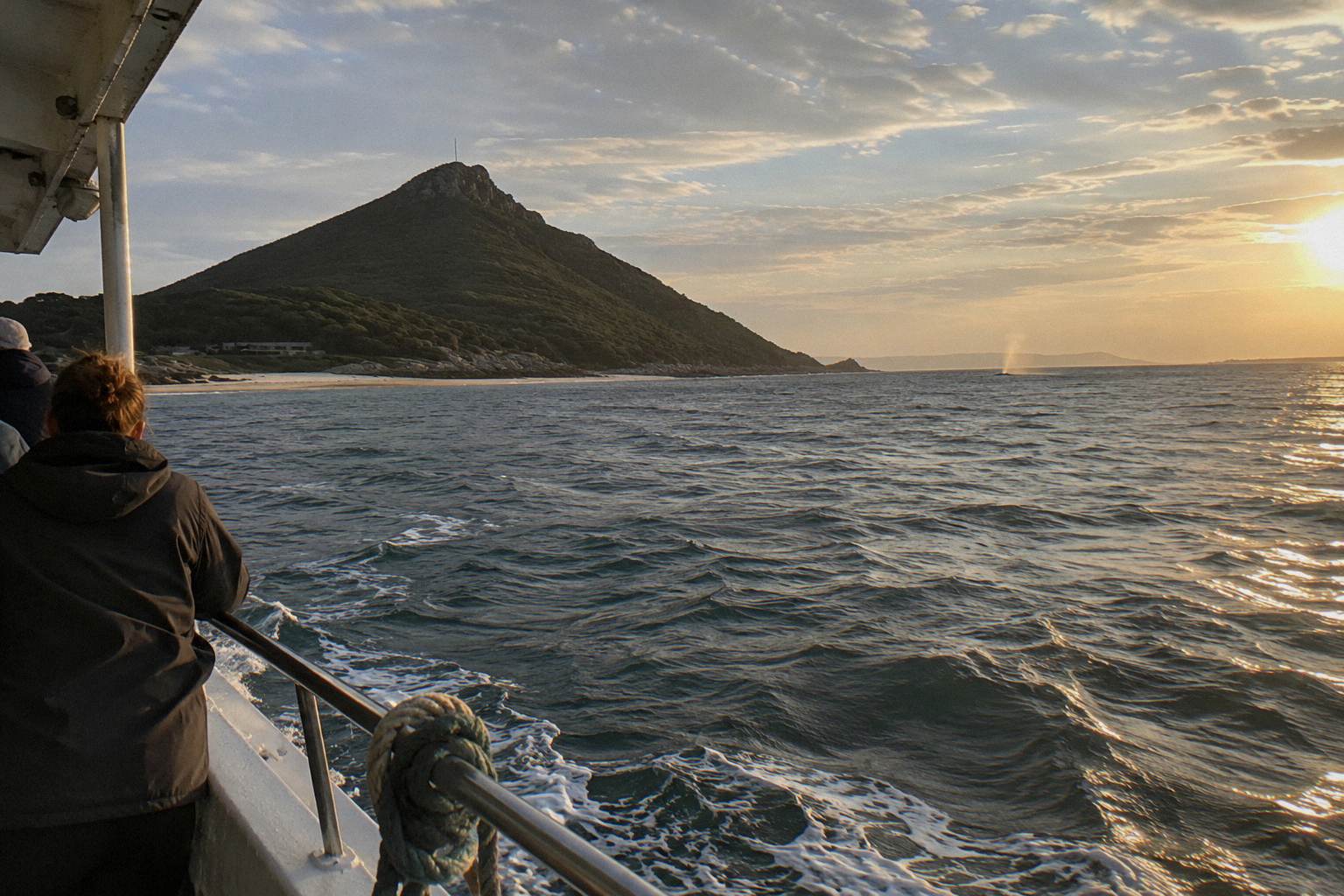
One timing note belongs here rather than anywhere else: sunrise and sunset shift enormously across the season, from about 6:51am and 4:52pm in June to about 5:43am and 7:30pm in November (approximate calculations, Australia/Sydney time), with daylight stretching from about 10.0 hours in June to about 14.3 hours in December. Those are not boat times and say nothing about light quality for viewing, but they frame how different a midwinter departure feels from a late-spring one.
Five Planning Mistakes That Cost People Their Whale Trip
The recurring mistakes are booking a December-to-April date expecting whales, assuming the whale guarantee is a refund, ignoring the under-5 age minimum on the express, arriving at the wrong marina or too late to board, and treating winter averages as a sea-state forecast. Each one is avoidable with a date check, a terms read and a 15-minute buffer before departure.
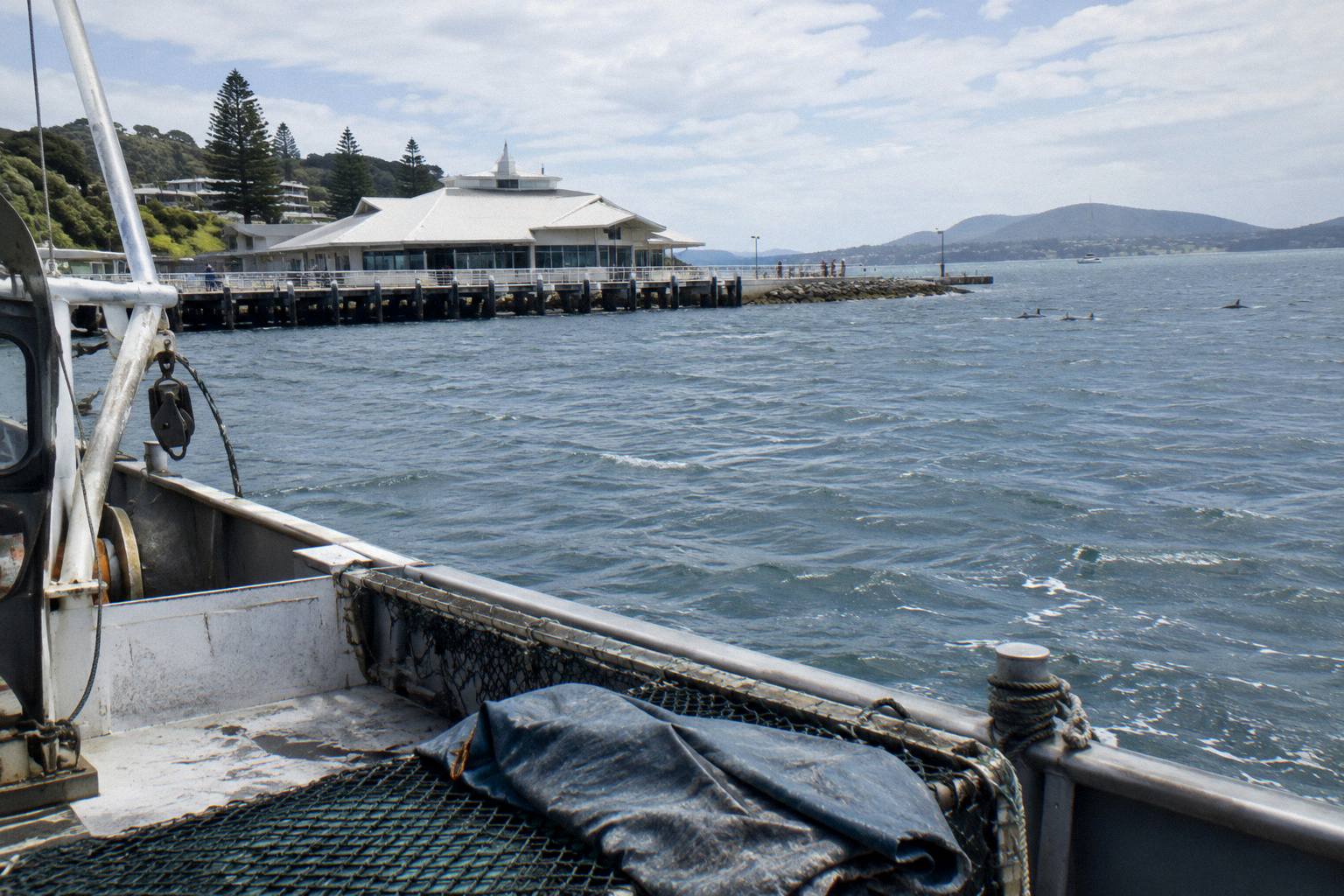
The date mistake comes first because it is the most expensive: whale boats run May to November only, and a summer booking is a dolphin booking whether intended or not. The guarantee mistake follows: a free return voucher on a standby basis, valid 12 months, is a generous policy for anyone who can return and a thin one for a visitor on a single week, so weigh it before booking rather than after a no-show of whales. The age minimum is a hard rule on the whale express, not suitable under 5, and it is set by the operator, so families with younger children should look at the dolphin boats, where Moonshadow's own age bands run child 4 to 14 and infant 0 to 3.
The arrival mistakes are logistical. Moonshadow asks guests to board about 15 minutes before departure, the dolphin and whale boats leave from d'Albora Marina on the Teramby Road side with the dock on the booking confirmation, and the BBQ and Boom Net cruise alone boards elsewhere, at Wharf 1, Victoria Parade. Parking around the marina is paid up to 4 hours between 8:30am and 4:30pm with number-plate ticketing, though some nearby streets, Laman, Church and Magnus, are free and unlimited. And the forecast mistake: climate averages describe the shore across decades, not the swell on your morning, so ask the operator about conditions on the day and check the departure time when booking, since clock times change with the calendar. For the drive itself, Nelson Bay is about 2.5 hours by car from Sydney per operator figures, and the getting-there guide for a boat day covers transport in full.
December To April Alternatives: The Year-Round Boats
When the whale season closes, the Wild Port Stephens Marine Park Cruise from A$46 keeps a 1.5-hour marine park trip running all year on the MV Osprey, a 24 m vessel with panoramic decks, commentary and wildlife watching, though no boom net. It is the closest thing to a whale-boat format in the off-season, aimed at the marine park's resident wildlife rather than a migration.
The distinction matters for anyone whose dates have slipped past November. A marine park cruise is a wildlife and scenery trip: it cruises the park, it watches for whatever is in the eastern harbour and off the headlands, and if offshore conditions are poor the route may stay inside the bay, as the operator notes. It is not a whale trip, and no whale outcome should be read into it. What it offers is the year-round water experience when the migration has gone.
Beyond it, the off-season calendar is the dolphin calendar: the Dolphin Discovery cruise with its boom net at from A$46, the 1-hour express at from A$55, the sailing catamaran from November, the BBQ and Boom Net cruise from December, and the Marine Discovery snorkel cruise at from A$100, 3.5 hours with a dive-master guide. Together they mean no month of the year leaves Nelson Bay without a boat on the water; only the whales keep a schedule. The month-by-month framing across both seasons, dolphins and whales, is the full calendar, and Port Stephens Dolphin Cruises keeps both sides of it covered, including the question of how likely a dolphin sighting is from a Nelson Bay boat.
Common Questions About Whale Watching Months
When Is Whale Watching Season In Port Stephens?
May to November. Humpbacks pass north-bound from May to August and south-bound from August to November, and up to 40,000 humpbacks pass the NSW coast in a season. No whale cruise runs outside those months.
What Is The Best Month For Whale Watching In Port Stephens?
June and July carry the peak of the north-bound run; October brings the south-bound mothers and calves closer inshore, with warmer and drier averages (23.2 degrees maximum, 78.4 mm of rain). No month can promise sightings, and the season closes in early November.
Can You See Whales In Port Stephens In Summer?
No. December to April has no whale cruises, because the humpbacks have left the coast. The dolphin boats run all year, and the seasonal summer trips, like the BBQ and Boom Net cruise, return in that window.
Does The Whale Watching Express Run All Year?
No, it runs in season only, May to November. It is a 1.5-hour trip from A$99, rated 4.5 from 87 reviews, not suitable for children under 5, with a free return voucher valid 12 months if no whales are seen.
Are There Dolphins On The Whale Cruise Too?
Its operator keeps a lookout for dolphin pods en route, and some guests report dolphin sightings on it. Roughly 90 to 120 Indo-Pacific bottlenose dolphins live permanently in Port Stephens (NPWS), so an encounter is plausible at any time of year.
Is June Too Cold For Whale Watching In Nelson Bay?
June averages 18.2 degrees maximum and 10.3 minimum on land, the coolest of the season alongside July, so warm layers and a waterproof shell are the answer. The averages describe the shore, not the sea on your day.