
What Is The Best Time Of Day To See Whales On A Whale Watching Tour?
Here is what actually differs between departure slots, and how to pick one.
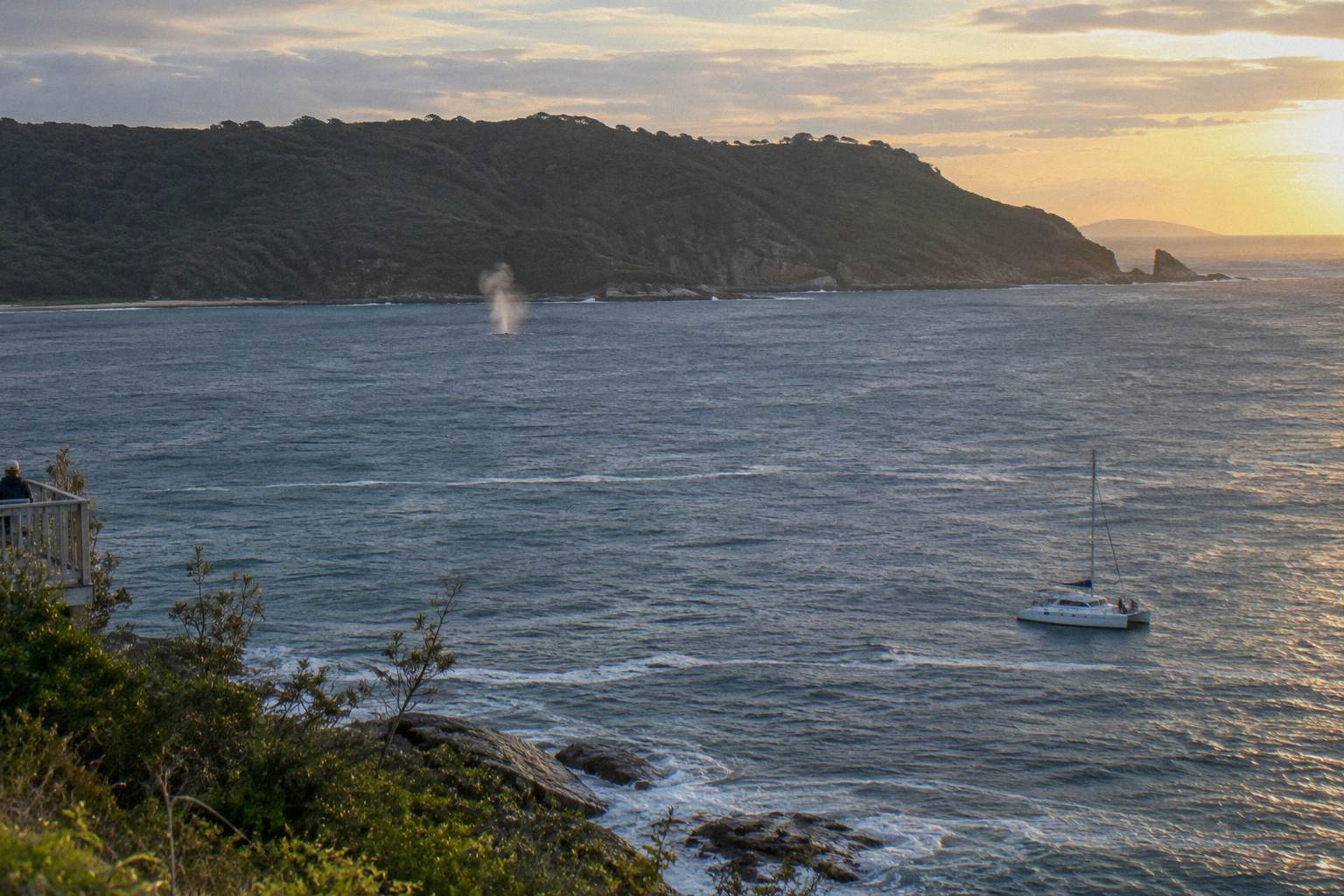
Whale watching in Port Stephens runs from May to November, when humpbacks migrate past the coast, and the boats that chase them leave in the morning and the afternoon. Whales move when they move, and the pods passing a headland at 9am are the same population passing it at 2pm. What actually differs between departures is daylight, sea breeze patterns you can plan clothing for, and how the trip fits the rest of your day.
That does not make the choice random. A 1.5 hour express trip and a longer cruise behave differently at different hours, the season you travel in matters more than the clock, and the daylight window in June is half of what it is in December. The breakdown below covers what is known, what is not, and how to pick a departure with confidence rather than folklore.
Do Whales Follow A Daily Pattern You Can Plan Around?
Humpbacks migrate on a seasonal clock, not a daily one. The NSW Government and the operators agree the migration runs May to November, with up to 40,000 humpbacks passing. Sightings depend on where the animals are on the day, which is why operators run morning and afternoon departures and let you choose between them.
The seasonal rhythm is the one that matters. Humpbacks pass Port Stephens on their way north from May to August, then back south from August to November, per Moonshadow's whale season information. A whale in July is a whale heading to breeding grounds in Queensland; a whale in October is a whale heading back to Antarctica with a calf possibly alongside. Whether you sail at breakfast or after lunch, you are looking at whichever leg of that migration is passing the heads that week.
What no one can tell you is a daily peak. The sighting log Moonshadow publishes records which days produced whales, not which hours, and the official NSW approach rules say nothing about daily behaviour. Anyone who tells you "whales are calmer in the morning" or "afternoon is when they breach" is repeating folklore, not data. The practical takeaway: pick the departure that suits your sleep, your seasickness tolerance and your schedule, and let the guarantee terms handle the risk.
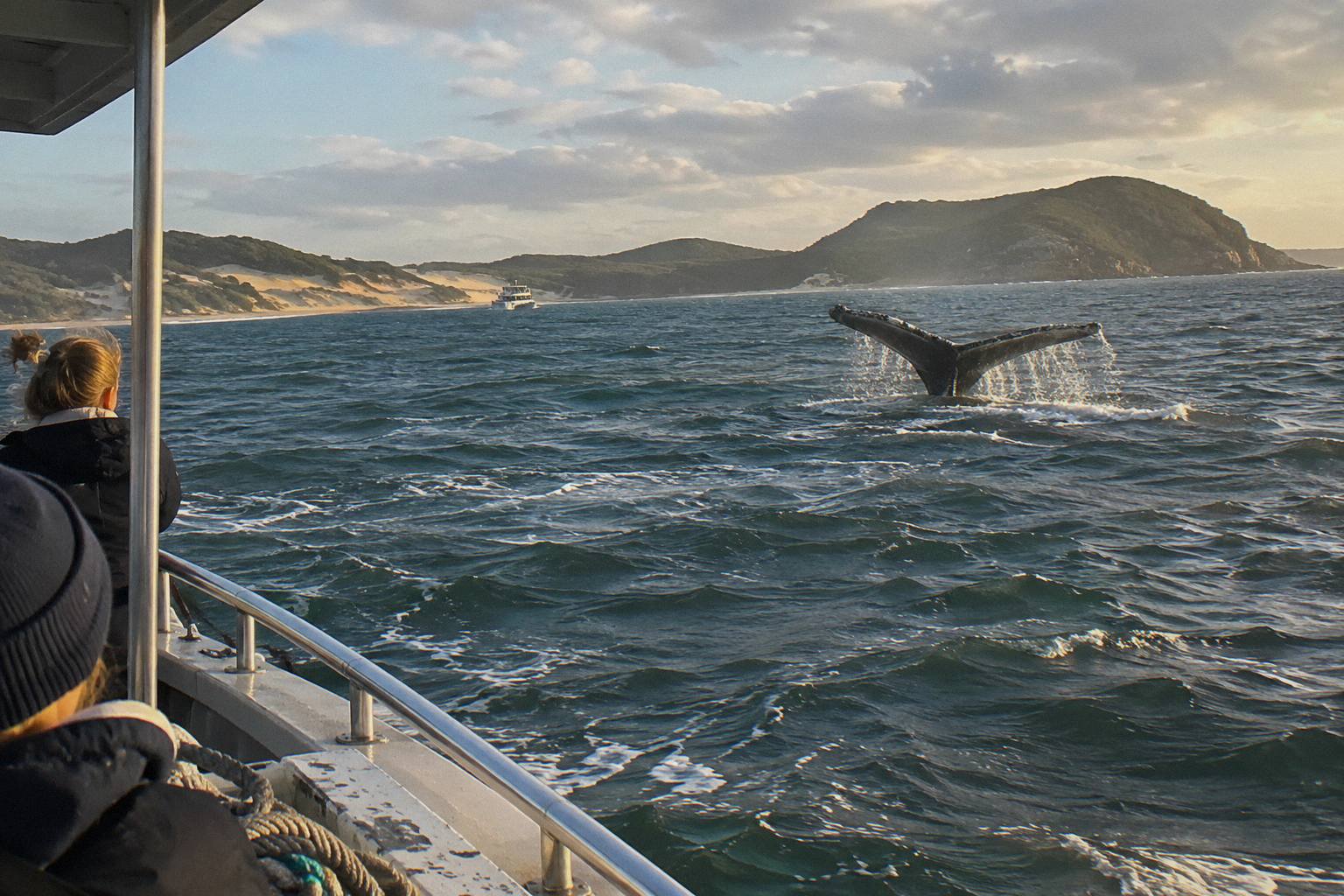
That risk handling is real and worth understanding before you choose a slot. The Whale Watching Express Cruise from Aquamarine Adventures carries a whale guarantee: if no whales are seen, you receive a free return voucher on a standby basis, valid 12 months. Moonshadow takes the same approach with its dolphin cruises, offering a free return voucher rather than cash when dolphins are not located. A guarantee does not put a whale beside the boat, but it changes the arithmetic of picking an "unlucky" hour, because an empty morning is not a lost ticket.
If the time-of-day question is really about not wasting money, the express format is the cleanest answer for most first-timers.
Morning Or Afternoon: What Actually Differs Between The Slots?
The differences between morning and afternoon whale departures are practical, not biological: the sun's angle and glare change, daylight is longer or shorter depending on the month, and afternoon trips let you drive to Nelson Bay in the morning. Sightings are not proven better in either slot, so treat the choice as a planning decision and ask the operator which departure suits your month.
Start with light. In the middle of whale season the sun sits low, and glare off the water shifts through the day. Photographers often prefer a departure where the sun is behind them rather than ahead, and in a bay flanked by headlands that can flip between morning and afternoon depending on which side the boat works. This is general advice, not an operator rule, but it is the kind of thing that makes one departure feel very different from another even when the whales cooperate equally.
Then there is your own body. If you are prone to motion sickness, an early departure after a bad night's sleep and no breakfast is a worse combination than the same sea state after a relaxed morning. Ask a pharmacist about motion-sickness options before you travel, and speak to a doctor if you are pregnant or have a health condition.
Finally, logistics. Nelson Bay is about 2.5 hours by car from Sydney, per the operators, which makes a late-morning departure an easy same-day drive from the city but pushes an afternoon one into an early start or a night before. Our guide on getting to Nelson Bay from Sydney for a boat trip covers the drive, the coach option and parking around the marina, all of which bend the time-of-day decision more than whale behaviour does.
Which Months Matter More Than The Clock?
Month choice beats hour choice, full stop. Humpbacks pass Port Stephens from May to November, northbound from May to August and southbound from August to November, with up to 40,000 humpbacks migrating along the NSW coast. Peak flow sits mid-season, while early May and late November are shoulder weeks at the edges of the operators' windows.
The two legs of the migration feel different on the water. The northern run early in the season is full of adults travelling hard to breeding grounds, often in small groups. The southern run from August onward includes mothers with calves moving more slowly down the coast, and a calf beside a mother is the sighting most visitors remember. Neither leg is "better", but if your dream photo is a mother-and-calf pair, the later months are when that becomes possible.
| Months | Migration leg | What tends to pass Port Stephens |
|---|---|---|
| May to August | Northbound to breeding grounds | Adult humpbacks travelling north, often steadily |
| August to November | Southbound to Antarctica | Adults and mother-calf pairs returning south |
Operators' 2026 whale windows close in early November, so a late-season trip means checking dates carefully. The month-by-month detail, including what the dolphin boats do outside whale season, is covered in our guide to the whale watching season month by month. The short version for a time-of-day reader: fix the month first, then the departure slot, because an hour either side of noon in peak July will outperform a perfectly chosen morning in the first week of May.
A dolphin fallback exists too. Around 90 to 120 Indo-Pacific bottlenose dolphins live permanently in the waters of Port Stephens within the marine park, per the NSW National Parks and Wildlife Service, so even a whale trip in a quiet week has a genuine chance of dolphin activity. Some guests report dolphin sightings on the whale express, whose crew keeps a lookout for pods. That is a reviewer report, not a promise, but it is consistent with a resident population that never leaves.
How Much Daylight Does Each Departure Get?
Daylight in Nelson Bay swings from about 10.0 hours in June to about 14.3 hours in December, which reshapes what a morning or afternoon departure feels like through the whale season. In midwinter both the morning and afternoon trips sit inside a compressed daylight window, while in October and November the afternoon runs long into evening light.
The table below is a computed calculation of sunrise and sunset for Nelson Bay on the 15th of each month, approximate and not official, in Australia/Sydney time. Use it to picture what your departure slot looks like: a June morning trip starts in the light barely two hours after sunrise, while a November afternoon trip still has hours of daylight in front of it when it departs. Everything else covered here is indexed on Port Stephens Dolphin Cruises.
| Month | Approximate sunrise | Approximate sunset | Daylight feel |
|---|---|---|---|
| May | About 6:33am | About 5:02pm | Short afternoons, early dusk |
| June | About 6:51am | About 4:52pm | The shortest days of the season |
| July | About 6:52am | About 5:02pm | Compressed window, cold mornings |
| August | About 6:30am | About 5:23pm | Daylight returning to the afternoon |
| September | About 5:51am | About 5:42pm | Noticeably longer evenings |
| October | About 6:12am | About 7:02pm | Daylight saving begins, long evenings |
| November | About 5:43am | About 7:30pm | The longest daylight of whale season |
Two planning notes follow from those numbers. First, a winter afternoon departure finishes close to dusk, so if you want photos in good light, the morning slot buys you more margin in June and July. Second, the shoulder months give you the luxury of choosing purely on comfort, because either departure sits in generous daylight. These are not boat times and say nothing about light quality for seeing whales, only about how much lit day you have to work with.
Clothing follows the same calendar. The Bureau of Meteorology's Nelson Bay climate averages put the July mean maximum at 17.6 degrees and the mean minimum at 9.2, versus 21.4 and 12.2 in September. Layers for the cooler months, non-slip flat shoes, a hat and sun protection are plain common-sense suggestions for any offshore trip, not operator rules, but the July numbers tell you why the layers matter more than the hour does.
How Close Will The Boat Get, Morning Or Afternoon?
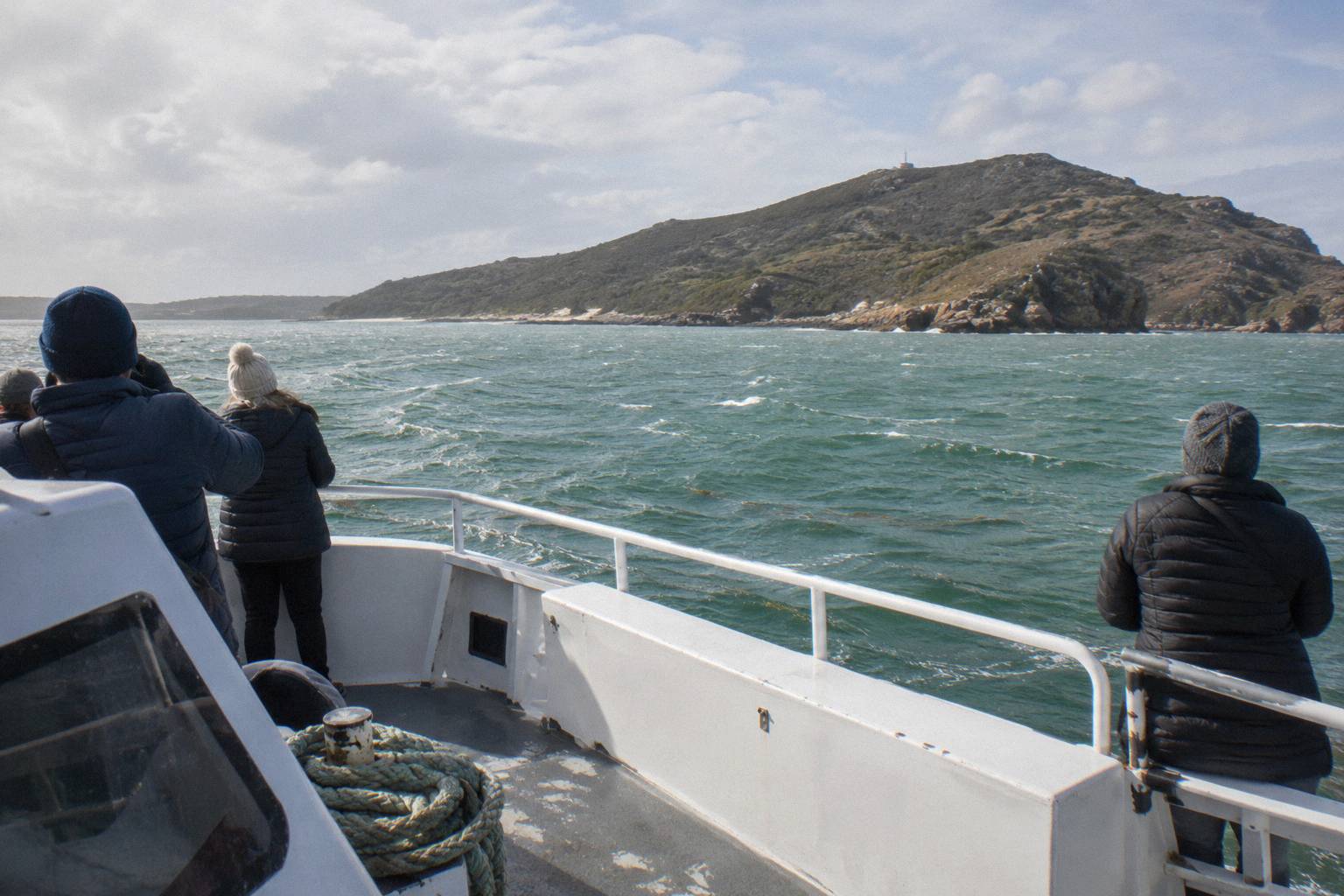
Approach distances are fixed by NSW law and do not change with the time of day: a vessel may go no closer than 100 m to a whale, the caution zone starts at 300 m, a calf present means no closer viewing, and a mostly white animal is protected at 500 m at all times. The rules shape every departure equally.
The full set of official approach distances, from the NSW Government's approach distances for whales, dolphins and dugongs, is worth knowing before you board, because it explains why boats behave the way they do around a pod.
| Situation | Official rule |
|---|---|
| Distance a vessel may approach a whale | No closer than 100 m |
| Caution zone for a whale | Begins at 300 m |
| Whale with a calf present | Vessel may not enter the caution zone for closer viewing |
| Mostly white animal | Always 500 m |
| Inside the caution zone | Approach from the side at least 30 degrees, constant slow speed, lookout posted |
| Vessels allowed in a caution zone | Only three at once |
| If dolphins bow-ride | Vessel maintains course and speed |
Within those limits, skippers work with what the day gives them. Moonshadow describes its own practice of staying 100 m from whales with no more than three boats present, which mirrors the law rather than exceeding it. Whales, for their part, sometimes approach vessels on their own terms, and when dolphins choose to bow-ride the rule is that the boat holds course and speed. The practical read for a time-of-day shopper: no departure gets you closer than the law allows, so proximity is not a reason to prefer one slot over another.
What Mistakes Do People Make Picking A Departure Slot?
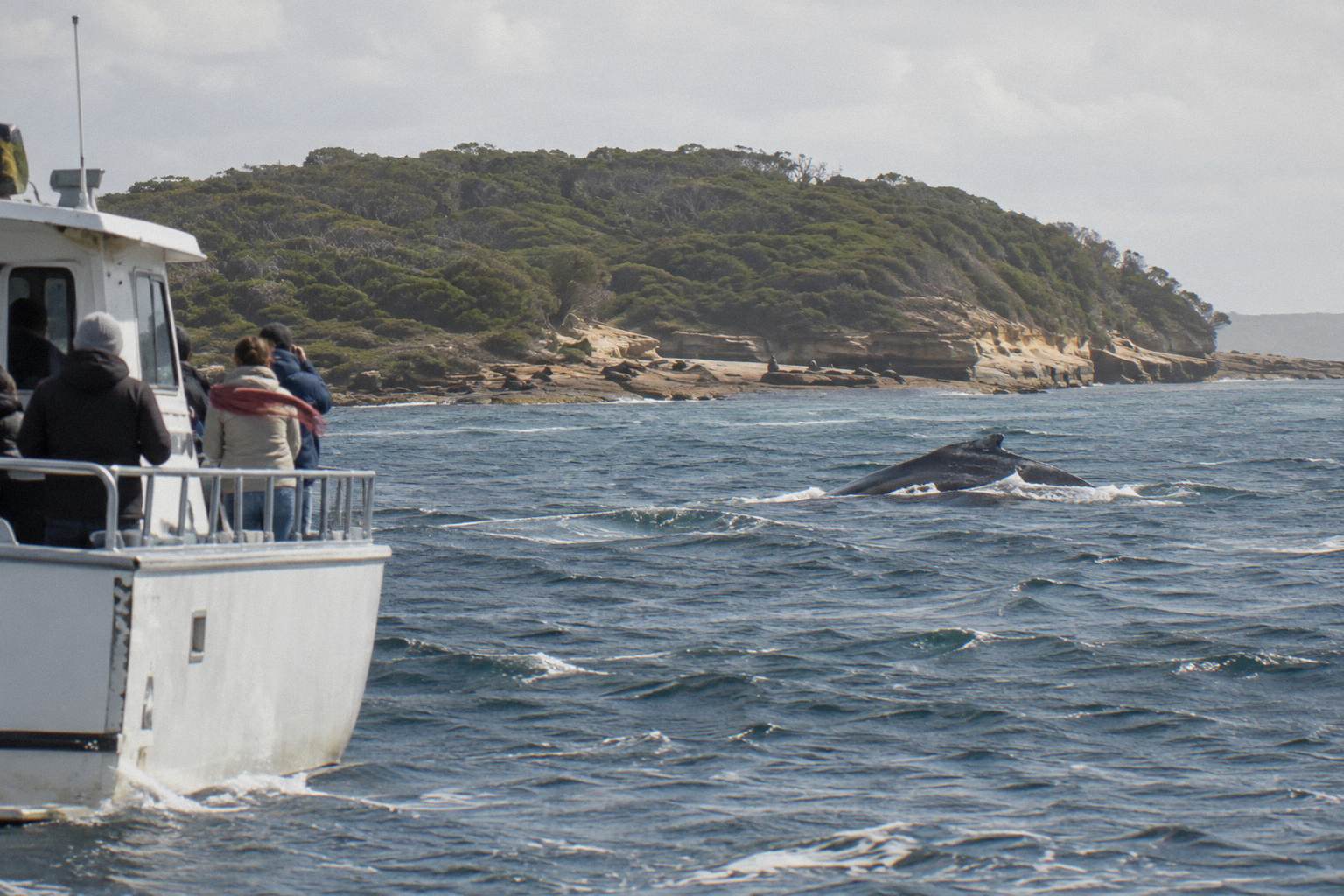
The common mistakes are choosing an hour based on folklore instead of the calendar, ignoring the daylight window in midwinter, booking a shoulder-season date without checking the operator's season end, and arriving with no plan for the guarantee terms. Each is avoidable in a few minutes of planning, and none of them requires a crystal ball about whale behaviour.
The first mistake is treating "morning is better" as fact. Repeating it to yourself while standing in a marina car park at dawn does not make it true. Pick the slot that fits your energy, your travel plans and your stomach, as covered above, and move on.
The second is forgetting how short a June day is. A 1.5 hour cruise in a daylight window of about 10 hours is fine, but if you are combining it with a drive from Sydney or a look around Nelson Bay, the compressed winter day runs out faster than expected. Check the sunset table, not your summer instincts.
The third is booking late November without confirming dates. The operators' 2026 whale windows end in early November, so a hopeful "end of season" booking can land after the boats have stopped running. The current departure calendar is on the operator's page, and the guarantee terms, free cancellation up to 24 hours before on every trip listed here, give you room to adjust if your plans shift. The details are in our guide to booking and rebooking a Nelson Bay boat trip.
The fourth mistake applies to families: not checking ages before choosing. The whale watching express is not suitable for children under 5. If you are travelling with younger kids, the resident dolphins are the year-round alternative, and the dolphin boats have their own age and stroller rules worth five minutes of reading first.
For visitors without a car, the whale question also becomes a logistics question. The Sydney coach day trip leaves Sydney about 7:00am, runs 12 hours and includes a 90-minute dolphin cruise, though its dolphin focus means whales are not the headline. Newcastle travellers have pickup-based tours from A$240. Neither replaces a dedicated whale departure, but both explain why some visitors end up with less choice over their departure hour than they expected.
Putting It Together: Choosing Your Slot With Confidence
Choose the month first, since the migration defines what is in the water; then choose the departure that fits your travel and comfort; then book with the guarantee and free cancellation in mind. Morning suits early risers, photographers chasing particular light and winter days when daylight is scarce. Afternoon suits relaxed travellers, shoulder-season days and anyone driving up from Sydney.
Ask the operator which departure they recommend for your month, once, when you book. Their crews read the water daily and can tell you what the current pattern looks like far better than a fixed article can. Beyond that, the choice is yours to make on your own terms, which is a better position than chasing an hour that no data supports.
Common Questions About Whale Watching Times
What Is The Best Time Of Day To See Whales On A Whale Watching Tour?
Whales follow the seasonal migration from May to November, not a daily clock, and operators run morning and afternoon departures through the season. Pick the slot that suits your schedule and comfort, and rely on the guarantee terms rather than the hour.
What Is The Best Month For Whale Watching In Port Stephens?
Humpbacks pass Port Stephens from May to November, northbound from May to August and southbound from August to November, with up to 40,000 humpbacks migrating along the NSW coast. Mid-season weeks carry the steadiest flow, while the operators' whale windows end in early November.
Do Whale Watching Boats Run Morning And Afternoon Departures?
Yes. The operators run morning and afternoon departures through the whale season, and exact times are chosen on the booking calendar because schedules change. No clock times are fixed in advance for any cruise, so check the current calendar when you book.
What Happens If We Do Not See Whales On Our Cruise?
The Whale Watching Express Cruise carries a whale guarantee: if no whales are seen, you receive a free return voucher on a standby basis, valid 12 months. Cancellation is free up to 24 hours before departure for a full refund on every trip covered here.
Is Morning Calmer Than Afternoon On The Water?
Plan around your own comfort instead: ask a pharmacist about motion-sickness options before travel, and speak to a doctor if you are pregnant or have a health condition.
Can We See Dolphins On A Whale Watching Trip Too?
Sometimes. Around 90 to 120 Indo-Pacific bottlenose dolphins live permanently in Port Stephens within the marine park, per the NSW National Parks and Wildlife Service. Some guests report dolphin sightings on the whale express, whose crew keeps a lookout for pods, though that is a reviewer report rather than a promise.