
What To Wear On A Dolphin Boat At Nelson Bay
Nelson Bay sits on the warm side of the NSW coast, but a dolphin boat is still a boat: the Bureau of Meteorology's Nelson Bay climate averages run from about 17.6 degrees in July to about 27.3 in January, and rain falls on roughly 7 to 10 days every month. Here is what to wear for each season, and what each trip supplies or leaves to you.
Short answer
Wear layers you can shed, non-slip flat shoes and sun protection in any month; add a swimsuit and towel if your trip has a boom net (swimsuits and towels are not supplied), and bring or hire a wetsuit for the 3.5-hour snorkel cruise because wetsuits and towels are not included. Summer days average about 27 degrees; July afternoons about 17.6.
A dolphin cruise from Nelson Bay is a short trip with a long packing list if you get it wrong. The boats run all year, the resident pod of roughly 90 to 120 Indo-Pacific bottlenose dolphins (NPWS) does not migrate away, and the weather swings from humid January afternoons averaging 27.3 degrees to July days averaging 17.6. What you wear decides whether you spend the trip watching dolphins or watching the sky. The Bureau of Meteorology's Nelson Bay climate averages give the month-by-month numbers below, and the operators' own pages say exactly which items each boat supplies and which you carry yourself.
Before anything else, match the outfit to the trip. A 90-minute sail on a catamaran, a fast 1-hour express run and a 3.5-hour snorkel cruise ask for three different bags. The full boat-by-boat picture is in the Nelson Bay dolphin cruise boats and marina guide, and this article sticks to the clothing question.
What Should You Wear On A Dolphin Cruise In Nelson Bay?
Dress in layers you can peel off, with non-slip flat shoes, a hat and sun protection in every season, and add a swimsuit and towel when your trip has a boom net, because the operators do not supply them. Summer months average about 27 degrees at the warm end; July averages about 17.6, and rain falls on roughly 7 to 10 days a month, so a light rain layer earns its place year-round.
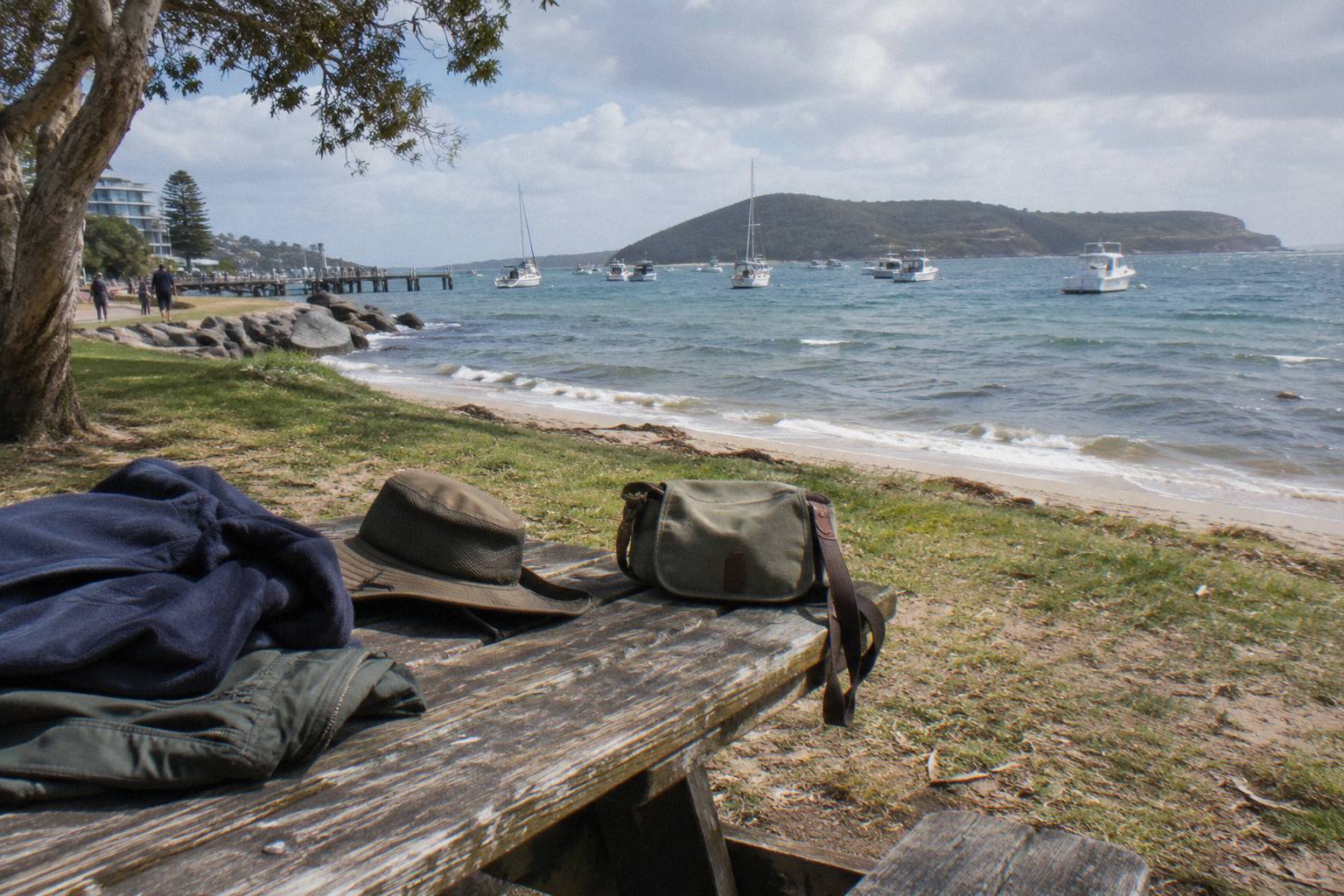
Three principles carry you through every season. First, layers: even a warm January day can turn once the boat is moving, and a fleece or light jacket you can shove in a bag costs nothing to carry. Second, flat shoes with grip: you will be on your feet at the rails more than you expect, and the general suggestion is to ask the crew about where to stand if you want the steadiest spot. Third, sun protection: hats, sunglasses and sunscreen matter even on overcast days, because glare off the water does not care about cloud cover.
None of the operators publish rules about deck surfaces, spray or wind exposure, so treat any advice about specific spots on the boat as a general suggestion to raise with the crew on the day, never as a promise. The same goes for seasickness: ask a pharmacist about motion-sickness options before you travel, and speak to a doctor if you are pregnant or have a health condition. No medicine, brand or dose belongs in a packing list.
What To Wear In Summer And The Boom-Net Season, December To April
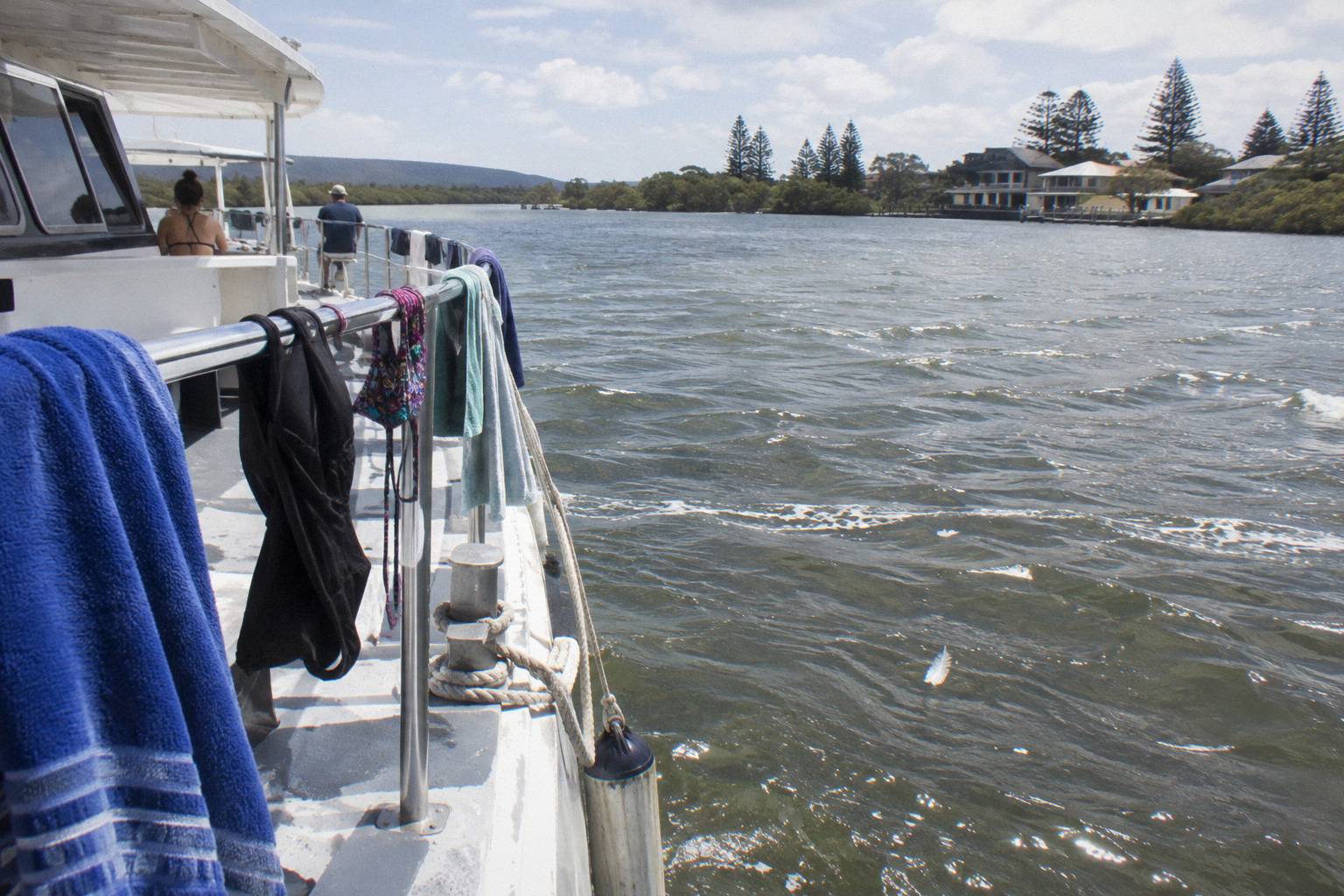
Summer is swimsuit territory: January and February average 27.3 and 27.0 degrees, evenings around 19, and these are also the boom-net months, so pack bathers, a towel and a dry change of clothes because no operator supplies them. A rash shirt beats bare shoulders for sun, and a light rain layer still earns its slot, with 8 to 9 rain days a month through the season.
The boom net matters more than the thermometer. The net is slung off the vessel and you sit in it while the boat moves; you get wet, and it is a net ride, never a swim with dolphins. On the Dolphin Discovery cruise the swimsuit and towels for the net are excluded, which is the operator's way of saying bring your own. The same logic applies to the optional boom net on the Newcastle Animal Lovers day tour: swimmers are yours to pack.
Summer also overlaps the seasonal windows of two trips. Imagine's Dolphin Watch Cruise and Sail runs November to the end of April only, and Moonshadow's BBQ and Boom Net cruise runs December to April, so the warm months are when your clothing choices matter most: dry bow-net or wet boom-net on the sail, a sausage sizzle and drinks (not included) on the barbecue boat. Bring a dry bag or at least a plastic pouch for a phone; that is a common-sense suggestion in the writer's own advice voice, not an operator rule.
| Month | Mean max C | Mean min C | Rain mm | Rain days 1mm+ |
|---|---|---|---|---|
| December | 26.0 | 17.8 | 91.7 | 7.6 |
| January | 27.3 | 19.0 | 99.5 | 7.8 |
| February | 27.0 | 19.1 | 112.5 | 7.9 |
| March | 25.9 | 18.0 | 123.6 | 8.8 |
| April | 23.6 | 15.4 | 129.2 | 9.1 |
March and April are the quiet trap in that table: daytime still reads warm, but the monthly rainfall climbs to 123.6 and then 129.2 mm, the wettest stretch of the year alongside May. A packable rain jacket does more work in early April than in January, and the same jacket doubles as a wind layer on the ride back into the marina.
Choosing between the summer boats comes down to format: a sailing catamaran with tea and coffee included, a twin-level boat with walk-around decks and a sausage sizzle, or a fast express run. The three most-booked options cover that spread.
If you want the net ride as the centrepiece of a warm afternoon, the Dolphin Discovery cruise (from A$46, 1.5 hours) is built around it, with captain's commentary and a bar and snacks to buy on board. It stays inshore, which is the operator's own description of the route. Towels in the bag, dry shirt for the ride back, and you are set.
Footwear deserves a thought too. Thongs or slides work for the deck, but a wet net ladder and a moving floor are easier in something that straps on, and bare feet are the simplest answer of all if the operator allows them. A hat that will survive wind, sunglasses, and sunscreen reapplied after the net ride round out the kit, since salt water and spray undo the morning's application faster than you would expect.
Two small logistics points help the day run smoother. Put the dry change of clothes in the car or a locker rather than the bag you carry on board, so it stays dry, and leave a towel where you can reach it the moment you climb out of the net rather than buried under everything else. A plastic pouch for the phone is cheap insurance, and cash or a card for the bar and snacks saves the walk back down the gangway.
On the sail and the express run the net situation differs: the catamaran's net at the bow is a dry lounging spot, so bathers there are for comfort rather than immersion, while the express run is a short watch-only outing best treated as a sightseeing trip with a breeze, not a swimming one. Dressing for the boat you actually booked, not the one you imagined, is the whole trick.
What To Wear In Winter And The Shoulder Months, May To November
Winter packing is about wind layers: July averages 17.6 degrees by day and 9.2 overnight, June 18.2 and 10.3, so think fleece, a windproof outer layer, long trousers and a beanie rather than a heavy coat. Rain peaks in May, June and July at 149.7, 157.2 and 136.7 mm, so a proper rain shell matters more here than in any other season.
Winter is not a dead season for the boats. Moonshadow's dolphin cruises run all year, every day except Christmas Day, and the resident pod stays in the estuary, so the only change is what you wear. The 1-Hour Dolphin Watch Express (from A$55) is the short-format winter-friendly choice: a fast power-catamaran run to see the resident bottlenose dolphins, 4.9 from 62 reviews, one hour on the water instead of ninety minutes. Note that Imagine's sailing dolphin cruise does not run in winter; it finishes at the end of April.
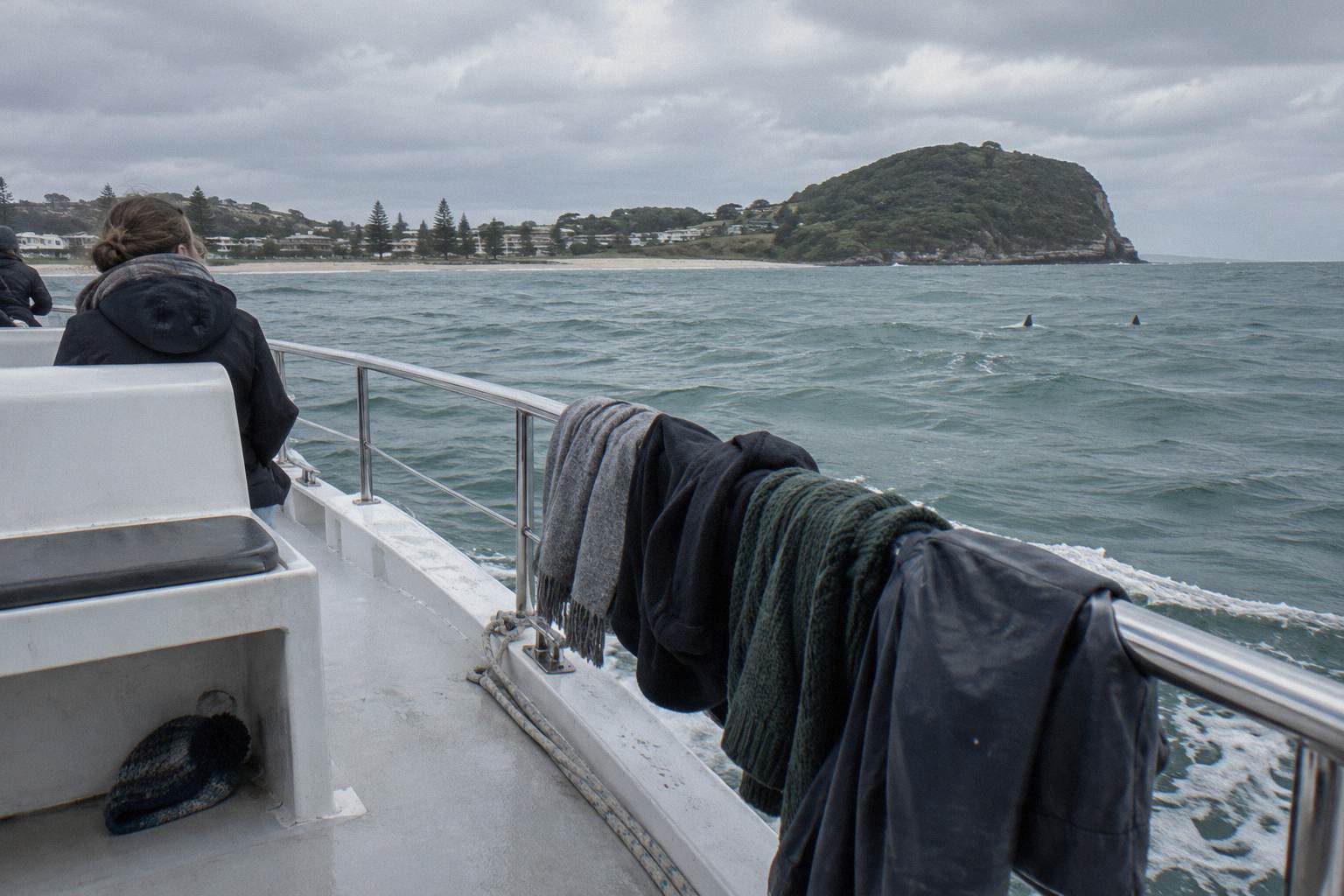
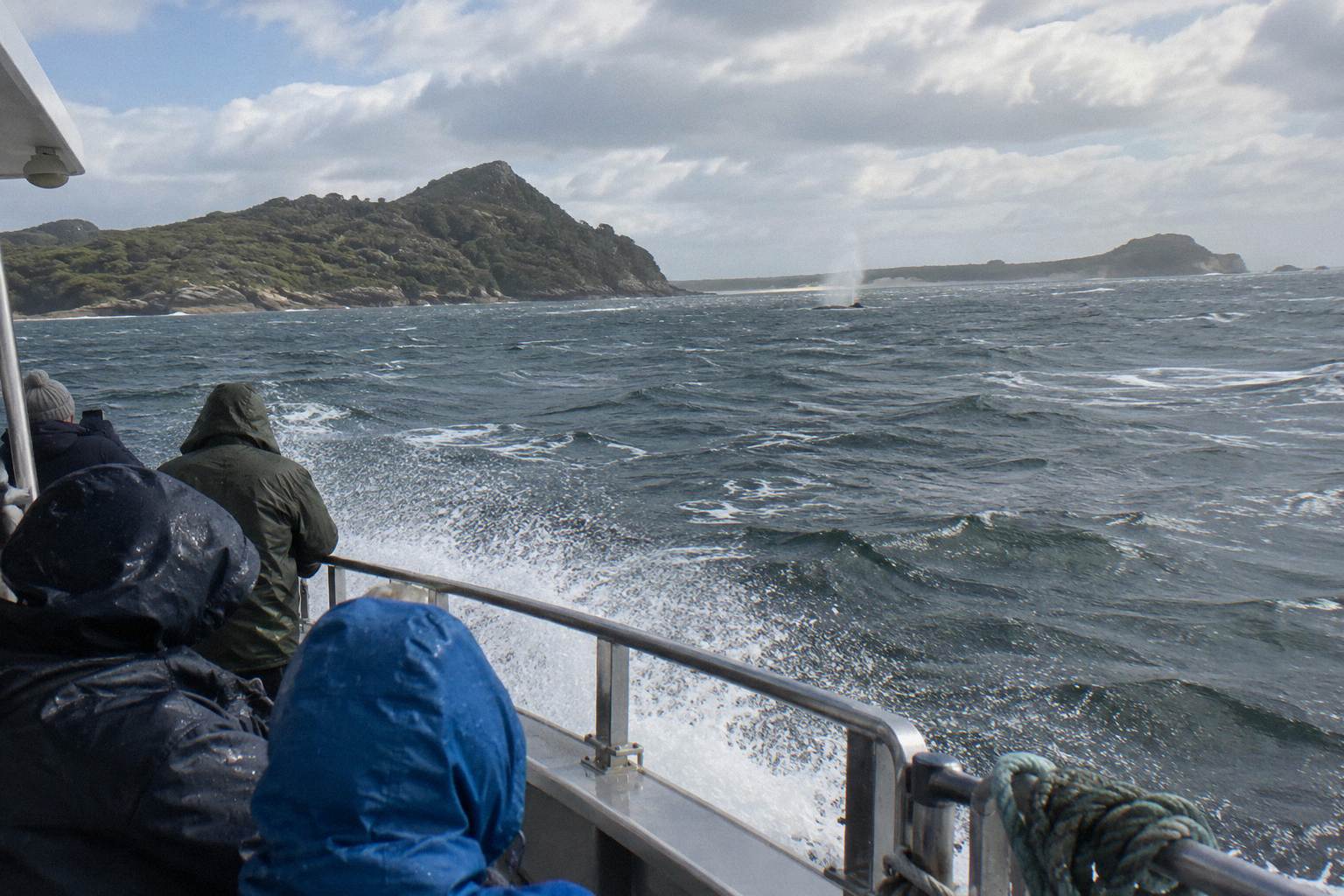
Winter is also whale season, May to November, with up to 40,000 humpbacks passing the NSW coast on the migration. If a dolphin trip doubles as a whale run, the same clothing logic applies, and the month-by-month breakdown is in the Port Stephens whale watching season guide.
| Month | Mean max C | Mean min C | Rain mm | Rain days 1mm+ |
|---|---|---|---|---|
| May | 20.8 | 12.5 | 149.7 | 9.6 |
| June | 18.2 | 10.3 | 157.2 | 9.4 |
| July | 17.6 | 9.2 | 136.7 | 9.1 |
| August | 18.9 | 10.0 | 101.5 | 8.1 |
| September | 21.4 | 12.2 | 89.0 | 7.7 |
| October | 23.2 | 14.3 | 78.4 | 7.7 |
| November | 24.7 | 16.1 | 79.7 | 7.5 |
September through November is the payoff stretch: 21.4 rising to 24.7 degrees, rainfall dropping to under 90 mm, and the sailing catamaran back on the water from November. Layers still apply; spring mornings on the water feel closer to the winter column than the summer one.
Are you leaning toward the quick winter run rather than a long sail? Check availability for the express and see the calendar before you finalise your bag: the shorter the trip, the less your clothing has to carry you through.
What To Pack For The Boom Net And The Wet Options
Pack a swimsuit, a towel and a dry change of clothes for any trip with a boom net, because the operators exclude all three from what they supply: the Dolphin Discovery cruise lists swimsuit and towels as excluded, and the Newcastle Animal Lovers day tour asks you to bring swimmers for its optional net ride. A rash shirt adds sun cover, and a waterproof pouch for keys and phone is basic sense.
The boom net appears on the Dolphin Discovery cruise, the BBQ and Boom Net cruise, the Dolphin Watch Cruise and Sail (a dry bow-net and a wet boom-net), the Marine Discovery snorkel cruise, and as an option on two day trips. It is only on the trips named here, and it never becomes a swim with dolphins; the boom net dolphin experience guide explains the difference in full. The MV Osprey, which runs the Wild Port Stephens marine park cruise, has no boom net at all, so that trip is a dry-clothes trip by design.
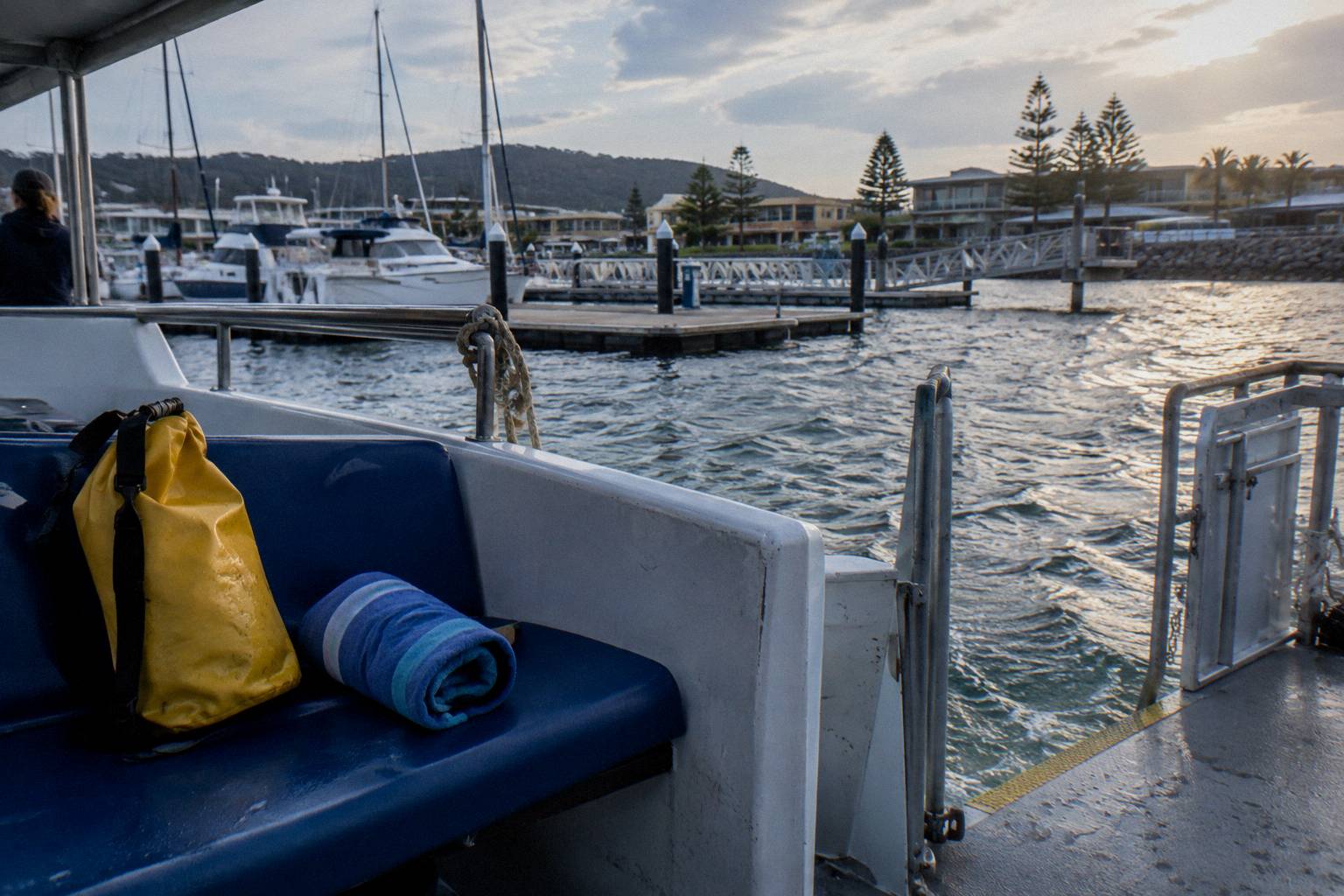
A practical order for the bag: swimwear on under your clothes so a net ride does not need a full costume change, towel on top, dry layer underneath it, phone pouch last. On the Moonshadow boom net, children under 1.1 m may not use the net unattended and smaller children go with an adult, per the operator, so a child's packing list mirrors an adult's. Prams are not allowed on Moonshadow vessels and collapsible strollers are stored by the crew.
What To Wear And Bring On The Snorkel Cruise
For the 3.5-hour Marine Discovery snorkel cruise, bring or hire a wetsuit and bring your own towel, because the operator includes neither, while snorkel, fins and mask are supplied and a qualified dive-master guides the trip. Tea, coffee and water are included; wetsuits and towels are not, so decide hire versus bring before you arrive at d'Albora Marina.
The snorkel cruise is the one trip where clothing is equipment. Guests must be able to swim to snorkel; non-swimmers are welcome as observers, which changes the bag again (observers need layers and sun cover, not bathers). The cruise sails when conditions permit, includes a bow-net and boom-net, and runs commentary with dolphins en route per the operator. It is a 3.5-hour commitment, the longest boat trip on the Nelson Bay docks, so whatever the season, your dry bag earns its keep. Other pages covering the same trip are gathered on Port Stephens Dolphin Cruises.
Wetsuit hire versus your own suit is a cost decision to raise when booking; the operator handles hire and the current price sits on the calendar. Footwear for boarding is the same as any boat: flat, non-slip, easy to slip off if the crew asks.
Footwear, Food And The Small Items
Wear flat, non-slip shoes you can stand in for an hour or more, bring a hat, sunglasses and sunscreen in every month, and plan food around your boat: the sailing cruise includes self-service tea and coffee, the express catamaran Envision has no snack or drink facilities at all, and no Moonshadow vessel allows BYO alcohol because the boats have bars. A filled water bottle and a light snack cover the gaps.
Each boat treats food differently, and it is worth knowing before you zip the bag. Imagine welcomes reasonable own food and non-alcoholic drinks on its sailing cruise, but no BYO alcohol; Moonshadow vessels have a bar on board with snacks to buy, toilets on all vessels and no smoking or e-cigarettes. The Aquamarine power catamaran Envision has no snack or drink facilities, so the express runs are strictly bring-your-own. The full food picture, including the day trips, sits in the comparison below.
| Trip | Food and drink on board | What to bring yourself |
|---|---|---|
| Dolphin Discovery (Moonshadow, 1.5 hrs) | Bar on board, snacks to buy | Swimsuit and towel for the boom net; money for snacks |
| Dolphin Watch Cruise and Sail (Imagine, 1.5 hrs) | Tea and coffee self-service included; bar and snacks to buy | Own food and non-alcoholic drinks welcome; no BYO alcohol |
| 1-Hour Dolphin Watch Express (Aquamarine, 1 hr) | None; the Envision has no snack or drink facilities | Water bottle and anything you want to eat |
| BBQ and Boom Net (Moonshadow, 2 hrs) | Sausage sizzle, bar and snack food; drinks not included | Towel and change of clothes; money for drinks |
| Marine Discovery snorkel (Imagine, 3.5 hrs) | Tea, coffee and water included; snacks and drinks to buy | Wetsuit (bring or hire) and towel; both excluded |
Daylight, Departure Timing And When To Aim Your Trip
Departure times sit on the booking calendars, but daylight frames your day: about 14.3 hours of daylight in December against about 10.0 in June, with sunrise about 5:38am in mid-December and about 6:52am in mid-July, approximate calculations for Nelson Bay. Moonshadow describes late-morning and early-afternoon departures daily, with an extra afternoon departure in school holidays except winter.
The sunrise and sunset figures are approximate, a NOAA-style calculation, and they are not boat times and not light-quality claims; they just tell you how much day you have to work with. A winter trip packs into a 10-hour window; a December trip has from before 6am to nearly 8pm. If a golden-hour photograph is the goal, the December figures give you an evening sunset near 7:55pm to aim at, and the month-by-month table below shows how that moves.
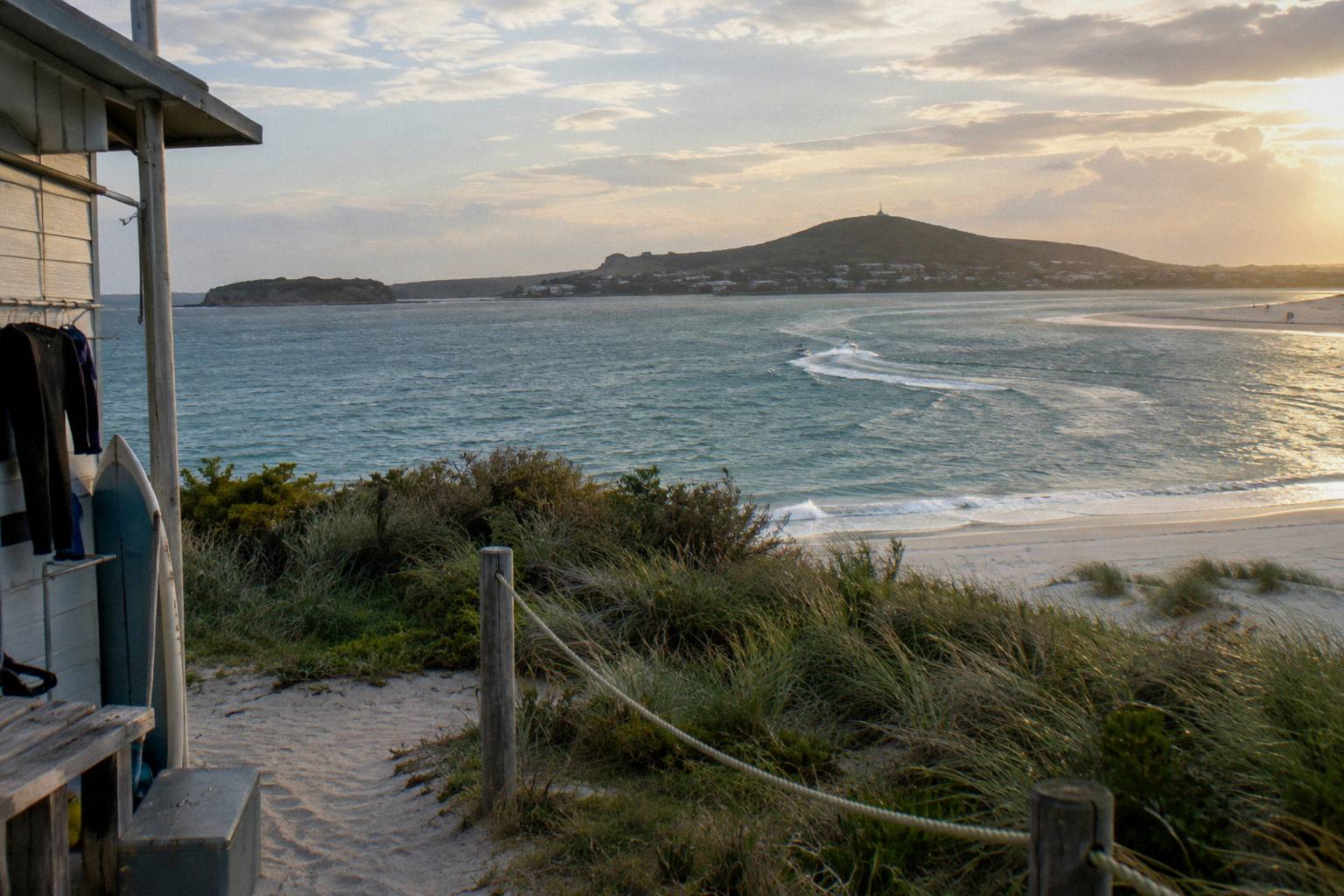
| Mid-month | Approx. sunrise | Approx. sunset |
|---|---|---|
| January | 5:58am | 8:02pm |
| March | 6:51am | 7:11pm |
| June | 6:51am | 4:52pm |
| September | 5:51am | 5:42pm |
| December | 5:38am | 7:55pm |
Dressing for timing is simple: morning departures in the cooler months read like the overnight minimum column, not the daytime maximum, so a June trip at 10 degrees needs a real jacket, not a cardigan. The operators run morning and afternoon departures; ask the operator about which suits your plans.
Common Packing Mistakes On A Dolphin Boat
The recurring mistakes are packing for the daily maximum instead of the water, skipping the towel on boom-net trips, forgetting that wetsuits and towels are excluded on the snorkel cruise, wearing shoes that slip, and assuming food and drinks appear on board when the express catamaran carries none. Each one is avoidable with the operator's own inclusion list and the climate table above.
Five mistakes cover most of the field. First, dressing for the maximum temperature: a 23-degree April day can still hand you a cold hour at the rails, so layers. Second, no towel on a boom-net trip; the operators exclude them, every time. Third, arriving at the snorkel cruise without a wetsuit plan; hire exists, but decide in advance. Fourth, wrong shoes; flat and non-slip is the whole brief. Fifth, showing up to the express run hungry: the Envision has no snack or drink facilities, per the operator.
A sixth is subtler: assuming accessibility or facilities that are not there. Moonshadow says its vessels are not easily suited to wheelchairs, crew cannot lift a wheelchair guest aboard, and restrooms are down a flight of stairs; Imagine says it may help guests who can manage about five stairs. If steps are a factor, raise it when booking, and the accessibility on Nelson Bay dolphin boats guide covers the detail. And if the sea itself is the worry rather than the wardrobe, start with seasickness on a Nelson Bay dolphin boat and ask a pharmacist about options before the day.
Getting To The Marina Dressed And On Time
Leave room for parking and boarding: Moonshadow asks guests to board about 15 minutes before departure, d'Albora Marina and Victoria Parade parking is paid up to 4 hours between 8:30am and 4:30pm (Victoria Parade capped at 8 hours), and some streets including Laman, Church and Magnus are free and unlimited, paid by card, coin or the Park'nPay app with the number plate as the ticket.
Dressing for the boat starts at the car. Paid parking windows mean many guests walk five or ten minutes to the dock, which is another argument for flat shoes and a layer you can carry. Port Stephens Council runs number-plate Smart Parking across Nelson Bay with time limits and possible fines, so check the signs and the app rather than guessing a fee. The boarding point itself is d'Albora Marina, Nelson Bay for the dolphin boats, with the dock on your booking confirmation, except the BBQ and Boom Net cruise, which boards at Wharf 1, the Cruise Passenger Terminal, 40 Victoria Parade, a different place altogether. Moonshadow's office on Stockton Street is not the boarding point. If you are driving up on the day, Nelson Bay is about 2.5 hours by car from Sydney, an operator figure, and the getting there from Sydney guide works through the options.
The 15-minute boarding request and the parking details are on Moonshadow's FAQ, the vessel particulars on its vessels page, and the climate figures are the Bureau of Meteorology's Nelson Bay climate averages. Behind the clothing rules sits a regulatory frame too: NSW approach distances keep vessels 50 m from a dolphin and 100 m from a whale, per the NSW Government's approach-distance rules, which is why the boats hold their distance and your binoculars, a common-sense suggestion, do the closing.
With the bag sorted, the remaining decision is which boat earns your outfit. The three most-booked dolphin trips from Nelson Bay, each with free cancellation up to 24 hours before for a full refund:
Common Questions About Dolphin Boat Clothing
What Should You Wear On A Dolphin Cruise?
Layers you can shed, flat non-slip shoes, a hat and sun protection in any month. Add a swimsuit and towel for boom-net trips and a wetsuit for the snorkel cruise; neither is supplied. Summer months average about 27 degrees, July about 17.6.
Do You Need A Swimsuit On A Dolphin Cruise?
Only on trips with a boom net: the Dolphin Discovery cruise, the BBQ and Boom Net cruise, the Dolphin Watch Cruise and Sail, the Marine Discovery snorkel cruise, and as an option on two day trips. Swimsuits and towels are excluded from what the operators supply, so bring your own.
Is A Dolphin Cruise Cold In Winter?
It can be. July averages 17.6 by day and 9.2 overnight, June 18.2 and 10.3, and those are land averages, not sea conditions. A fleece plus a windproof or rain shell, long trousers and a beanie are the sensible winter kit.
Can You Bring Food And Drinks On A Dolphin Cruise?
It depends on the boat. Imagine welcomes reasonable own food and non-alcoholic drinks on the sailing cruise, with no BYO alcohol; Moonshadow vessels have a bar on board and snacks to buy; the Aquamarine express catamaran Envision has no snack or drink facilities, so bring your own water.
Do You Need A Wetsuit For The Snorkel Cruise?
Yes, bring one or hire one. The Marine Discovery snorkel cruise (3.5 hours) includes snorkel, fins and mask and a dive-master guide, but wetsuits and towels are not included. Guests must be able to swim to snorkel; non-swimmers can come as observers.
What Shoes Are Best On A Dolphin Boat?
Flat, non-slip shoes you can stand in comfortably for an hour or more. That is a general suggestion, not an operator rule; no operator publishes advice about deck surfaces, so ask the crew on the day if you want the steadiest spot.