
Can You See Whales In Port Stephens?
Yes, humpbacks pass Port Stephens between May and November each year. Here is when to go, which boats run whale trips from Nelson Bay, what they cost and how close the rules let them get.
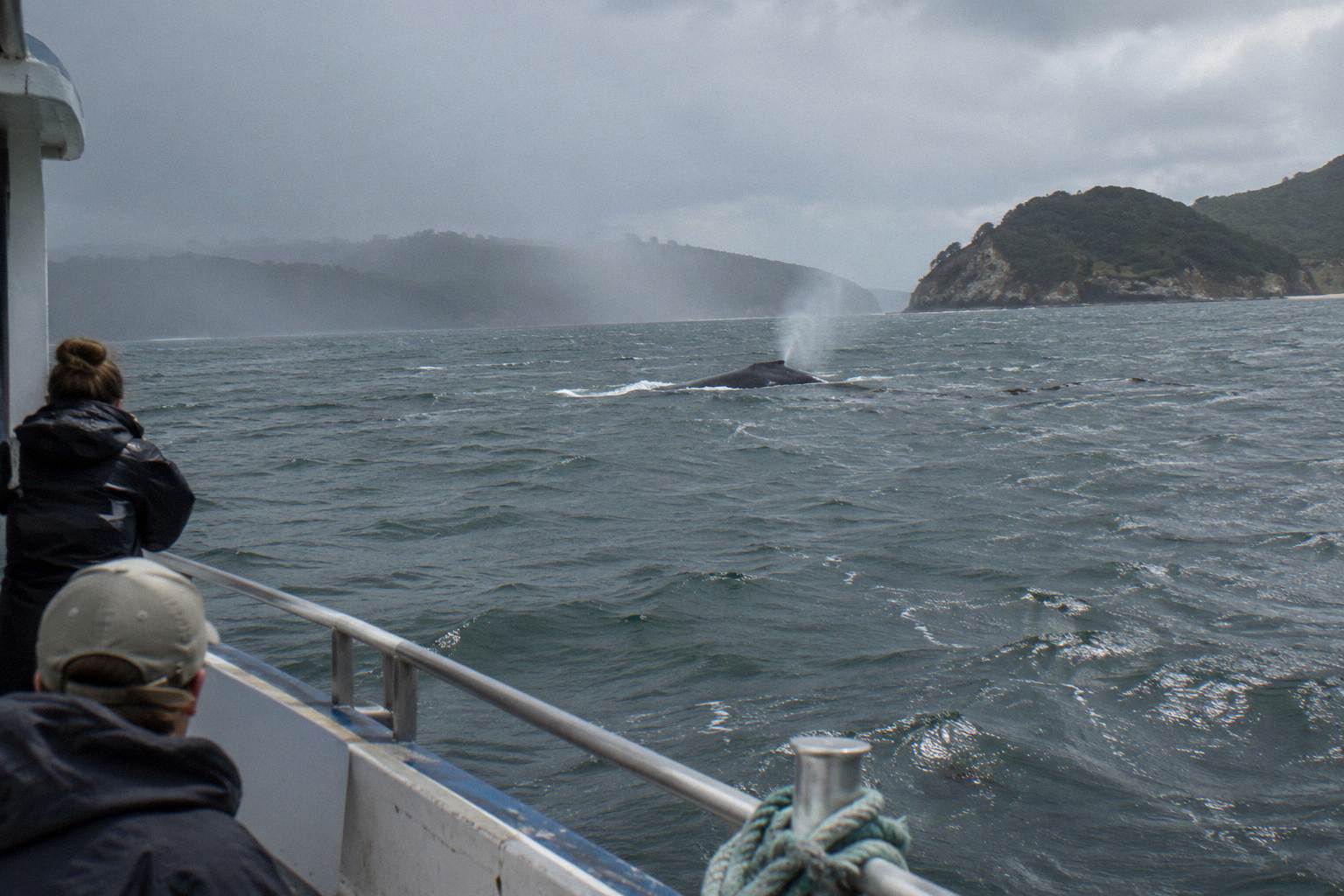
Yes. Humpback whales pass Port Stephens every year between May and November, travelling north to the Queensland breeding grounds and back south to the Antarctic feeding grounds. NSW Government and destination sources put the coastal migration at up to 40,000 humpbacks. Whale watching boats run from Nelson Bay through that season, and no trip is allowed to promise a sighting.
The whales that pass here are almost entirely humpbacks on the great east coast migration. Moonshadow, one of the local operators, describes the northbound leg from May to August and the southbound return from August to November, and that window lines up with the season the NSW Government and destination sources describe. Outside those months the whales are gone, but the port keeps its other drawcard: roughly 90 to 120 Indo-Pacific bottlenose dolphins live permanently in the waters of Port Stephens within the marine park, according to the NSW National Parks and Wildlife Service, and you can visit Nelson Bay at any time of the year to see them.
That dual season shapes every boat decision in the port. From late autumn to early spring a whale boat is the trip that goes offshore looking for the migration. From spring onwards, and all through summer, the dolphin boats carry the water-based wildlife watching, because the resident pod does not leave. Some guests report dolphin sightings even on the whale trips, since Aquamarine's crew keeps a lookout for dolphin pods as well as whales. That overlap is worth knowing when you plan, because a single winter morning on the water can deliver both the migration offshore and the resident pod working the bay on the way back through the Heads.
Geography does a lot of the work here. Port Stephens is a large drowned river valley that opens to the ocean between two long headlands, and the migrating whales funnel along that stretch of coast on both legs of their journey. The boats have a short run from the marina at Nelson Bay out to open water, which is why a 1.5-hour whale trip is long enough to reach the migration at all. The same layout is what keeps the dolphins resident: sheltered inner waters, seagrass beds and the feeding grounds of the marine park give the pod everything it needs year round.
If whales are what brought you to Port Stephens, timing matters more than anything else you can control. The operators' 2026 whale windows close in early November, so a visit from mid-November to late April is a dolphin trip, full stop. The whale boats stop running, and no amount of wishful booking changes what is in the water. For more on how the two seasons overlap, see the month-by-month breakdown in the Port Stephens whale watching season guide.
When Is Whale Season In Port Stephens?
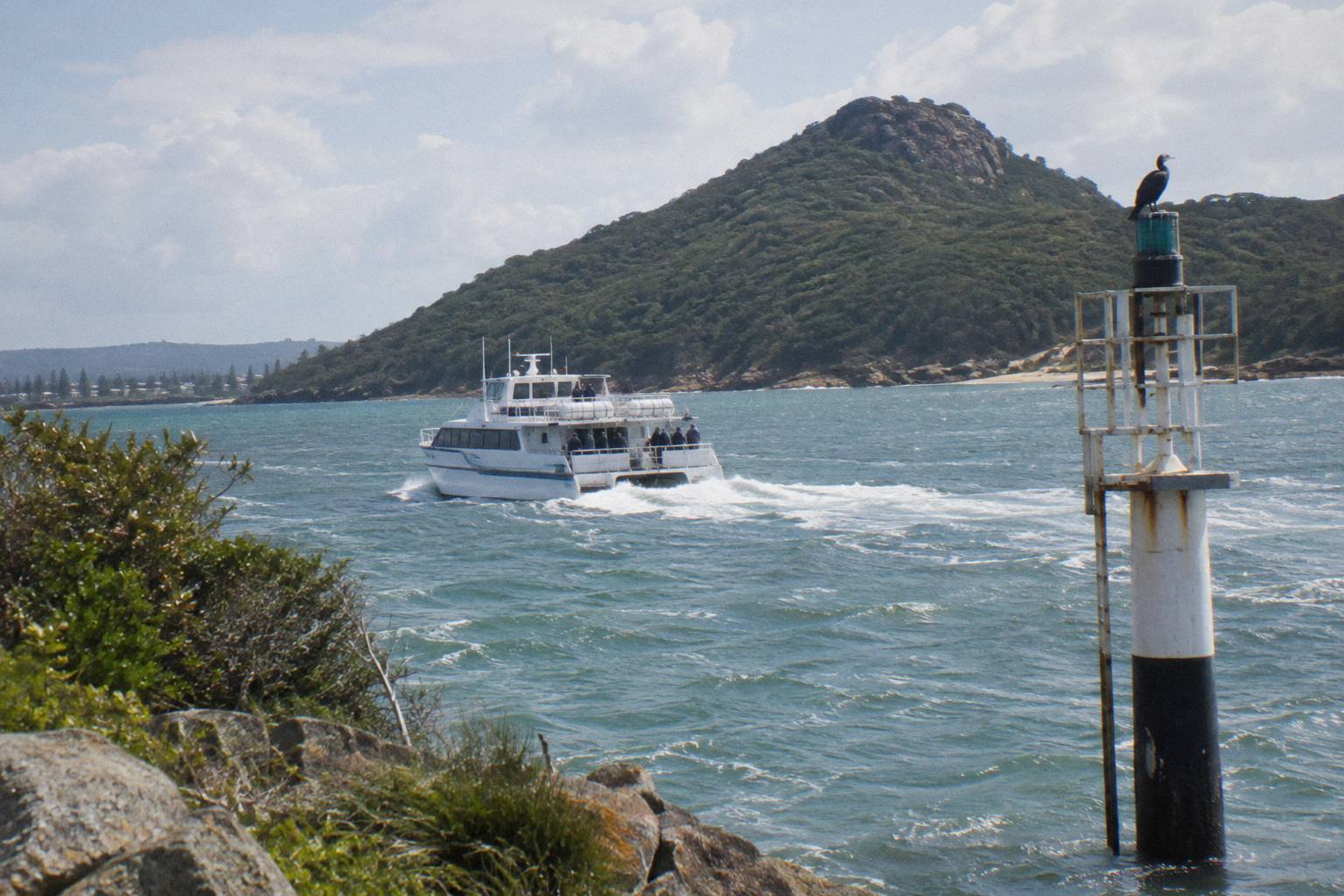
Whale season in Port Stephens runs from May to November. Humpbacks pass on their way north from May to August, then pass again heading south from August to November, according to local operator Moonshadow. The peak of activity sits in the middle of that window, when the southbound whales travel with calves close to the coast.
The two legs of the migration feel different from a boat. The northbound run in winter carries adult whales moving fast towards the breeding grounds off Queensland. The southbound return from August onwards is the leg most operators point families towards, because mothers travel with newborn calves and move more slowly, hugging the coastline. The same pass that delivers the whales twice also delivers them close: the boats leaving Nelson Bay head out through the Heads and work the waters offshore where the migration funnels along the coast.
Within the season, the shoulder months do different things. May can be patchy, with the first animals still stringing through. June and July are solid northbound months. September and October are the heart of the southbound calf traffic, and by late October the stream thins. Operators' 2026 whale windows ended in early November, so treat November as closing time rather than a full month of running. If you want a month-by-month read including the dolphin boats that fill the summer gap, the whale season month-by-month guide breaks it down.
| Months | What is passing | What runs from Nelson Bay |
|---|---|---|
| May to August | Humpbacks northbound to breeding grounds | Whale trips in season, dolphin boats all year |
| August to November | Humpbacks southbound, mothers with calves | Whale trips in season, dolphin boats all year |
| Mid-November to April | No humpback migration | Dolphin boats only; the sailing cruise runs November to April |
One planning note that catches summer visitors: the reverse question has an easy answer too. Dolphins never leave, so a Christmas or Easter trip is a dolphin trip, and a good one. The winter question is the one with a deadline, and the deadline is the end of the whale window in early November. Booking inside the season but outside the peak still works; the boats run, the whales pass, and the free return terms described below soften a quiet day.
Daylight and weather are worth weighing when you pick your month, because whale season sits across the coldest and shortest days of the NSW year. A computed sunrise and sunset table for Nelson Bay puts sunrise about 6:51am and sunset about 4:52pm in mid-June, against about 5:43am and 7:30pm in mid-November, so late-season trips sail with noticeably more light. The Bureau of Meteorology's Nelson Bay climate averages show the winter months are mild rather than bitter: July averages a maximum of 17.6 degrees and a minimum of 9.2, with about 9.1 rain days of a millimetre or more. Those are land averages, not sea conditions, but they tell you what to wear on the quay. For the clothing question in full, what to wear on a dolphin boat at Nelson Bay transfers directly to a cooler-month whale boat.
Which Whale Boats Run From Nelson Bay?
The whale watching express cruise from Aquamarine Adventures is the whale trip on the tour list here: 1.5 hours on a power catamaran, from A$99 per person, rated 4.5 from 87 reviews, for ages 5 and over. Moonshadow and Imagine also run whale cruises in season. If the express sees no whales, you get a free return voucher valid 12 months.
The express is built around speed to the whales. Aquamarine runs it on a power catamaran, which suits the offshore run out past the Heads where the migration passes. The 1.5 hour duration is shorter than the whale cruises other local operators describe on their own pages, 2.5 hours for Moonshadow and 3 hours for Imagine, and those longer trips are context here rather than options to book. The express suits visitors who want whales without giving up half a day, including families with school-age children, since the minimum age is 5.
The sighting terms matter as much as the duration. The express carries a whale guarantee in the operator's own words: if no whales are seen, you receive a free return voucher on a standby basis, valid 12 months. It is a return trip, not a cash refund, and it is specific to this operator. Every trip on the tour list also carries free cancellation up to 24 hours before for a full refund. No cruise guarantees you will see whales in the sense of promising the animals themselves; the guarantee is about what happens afterwards if the day stays quiet. The voucher is non-transferable in spirit as well as letter, so plan the return around your own travel, not someone else's.
What The Whale Express Includes
The express is a watching trip, not a swim or a feed. The crew maintains a lookout for dolphin pods as well as whales, and some guests report dolphin sightings on the same run. The vessel Envision has no snack or drink facilities, so bring water and anything you want to eat; that single detail separates it from the Moonshadow and Imagine boats, which have bars and snacks on board. Boarding is from Teramby Road in Nelson Bay, and the trip is not suitable for children under 5. Moonshadow's whale sighting notes on its own pages are a useful habit to check while you plan, and the operator's whale sightings page is the place to look.
Getting to the departure point is straightforward. Nelson Bay is about 2.5 hours by car from Sydney, an operator figure quoted by Moonshadow, and the whale boats leave from the Teramby Road side of Nelson Bay. Parking around the marina is paid up to 4 hours between 8:30am and 4:30pm, with some nearby streets free and unlimited, and payment is by card, coin or the Park'nPay app with your number plate as the ticket, so check the signs before you leave the car. If you would rather not drive, the getting to Nelson Bay for a dolphin boat guide covers the coach and driving options in detail.
How Close Do The Boats Get To The Whales?
The full set of approach distances is published by the NSW Government for whales, dolphins and dugongs: the official approach distance rules apply statewide. A boat must stay at least 100 m from a whale and 50 m from a dolphin. The caution zone, where boats must slow and behave carefully, starts at 300 m from a whale and 150 m from a dolphin. Inside a caution zone the vessel approaches from the side at an angle of at least 30 degrees, at constant slow speed, with a lookout posted when two or more people are on board, and no more than three vessels may be inside the whole caution zone at once. A mostly white animal always gets 500 m. Jet skis must stay 300 m away, drones 100 m and helicopters 500 m.
| Animal or craft | Minimum approach distance | Caution zone starts at |
|---|---|---|
| Whale | 100 m | 300 m |
| Dolphin or dugong | 50 m | 150 m |
| Mostly white animal | 500 m | 500 m |
| Jet ski near a whale | 300 m | Applies to the vessel |
| Drone near a whale | 100 m | Applies to the craft |
Two consequences follow for a visitor. First, the operators' own conduct rules, such as Moonshadow's practice of no more than three boats with a pod, are consistent with the law but are the operator's wording, not the statute. Second, and more usefully, whales at 100 m fill the view. A humpback is a large animal, and the legal distance still puts breaching, tail slapping and spy-hopping well inside comfortable sight range from a twin-deck or walk-around vessel. Binoculars are not essential on a boat the way they are from a headland, but flat non-slip shoes and a hat are sensible on any offshore run.
The rules also protect the dolphin side of the port. The resident pod lives inside the Port Stephens-Great Lakes Marine Park, where the NSW Department of Primary Industries runs two 4-knot speed areas at Middle Grounds and across the Jimmys Beach sanctuary zone, identified as important resting and feeding areas for the bottlenose dolphins. The park was created in 2005 and uses four zone types: sanctuary, habitat protection, general use and special purpose. Boating, snorkelling and diving are allowed in sanctuary zones, but collecting is not. The approach rules say nothing about touching or swimming, and no trip here offers either with a whale. For the dolphin side of that line, what is allowed when swimming near dolphins explains the boundary.
What Does A Whale Cruise Cost From Nelson Bay?
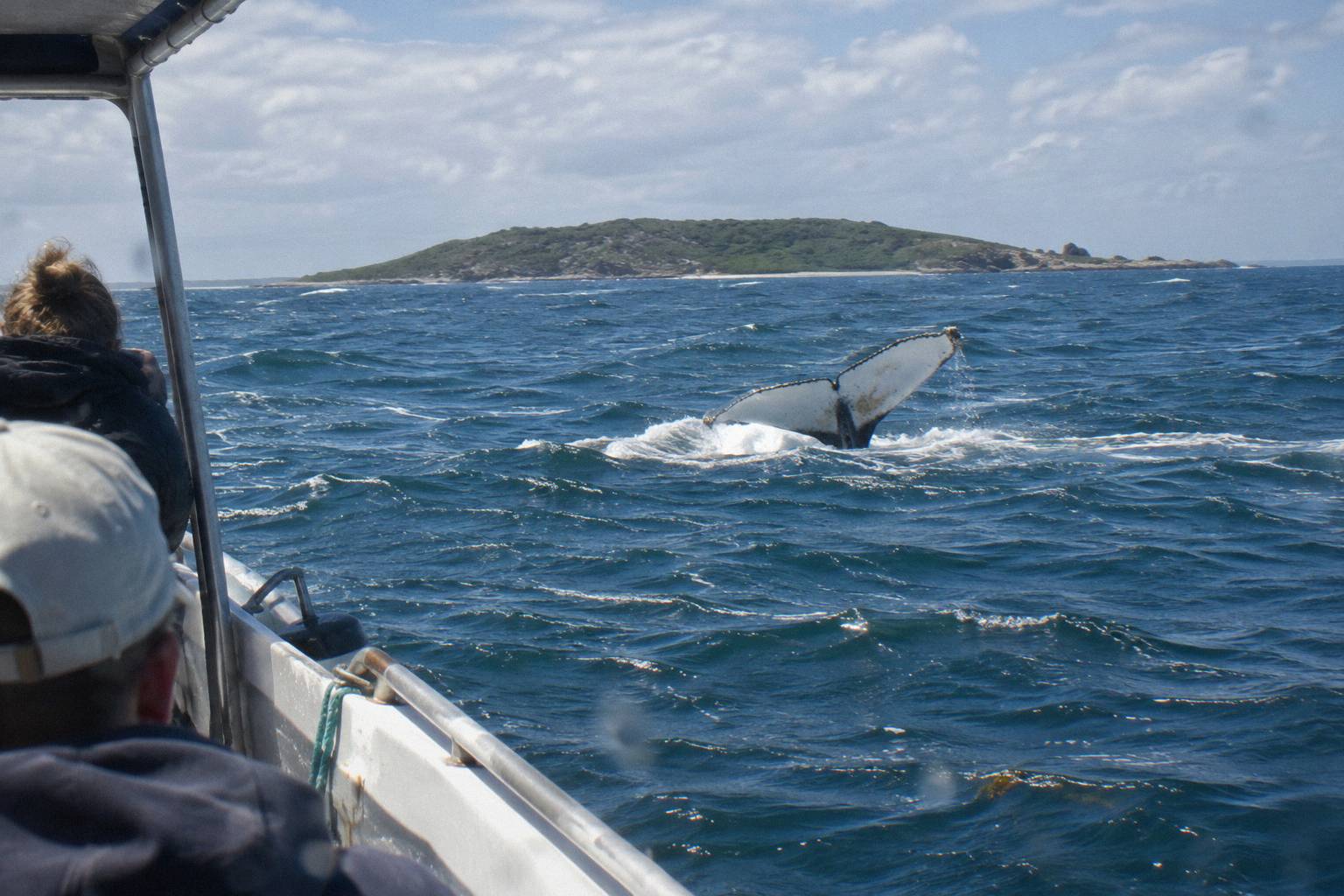
The Whale Watching Express Cruise costs from A$99 per person for its 1.5 hour trip. For comparison within the trips you can book here, the dolphin boats run from A$46 to A$100 depending on length and style, all in Australian dollars. Prices change, so check the current price when you book.
The whale express sits at the upper end of the local per-trip range, which reflects the offshore run rather than the duration. It shares its price bracket with none of the dolphin boats: the closest in dollars is the Marine Discovery snorkel cruise at from A$100, a 3.5 hour sailing and snorkelling trip. Below that, the dolphin watching options step down from A$59 for the 2-hour BBQ and Boom Net cruise to A$46 for the 1.5-hour Dolphin Discovery cruise, the 1.5-hour Wild Port Stephens cruise and the 1-hour express at from A$55.
| Trip | Duration | From (per person) | Rating |
|---|---|---|---|
| Whale Watching Express Cruise | 1.5 hours | A$99 | 4.5 from 87 reviews |
| Dolphin Discovery Cruise | 1.5 hours | A$46 | 4.4 from 1,047 reviews |
| 1-Hour Dolphin Watch Express | 1 hour | A$55 | 4.9 from 62 reviews |
| BBQ And Boom Net Cruise | 2 hours | A$59 | Ask the operator |
| Marine Discovery Snorkel Cruise | 3.5 hours | A$100 | Ask the operator |
Child and family fares are set by each operator and shown at the time of booking, so treat the from-prices as the adult floor. The whale express is the one trip in that table with an age floor: not suitable under 5 years. Free cancellation up to 24 hours before applies across the tour list, which matters in a season where weather can turn, and if the operator cancels you get a full refund or a transfer. The other terms are stricter once you are inside 24 hours, so a same-day booking is a firm one. For the full decision picture on tickets and rebooking, the booking a Nelson Bay dolphin boat guide covers the mechanics, including the free return vouchers.
One comparison worth making before you pay: the two express trips from the same operator. The whale express at from A$99 and the 1-hour dolphin express at from A$55 share a power catamaran, a fast-out-and-back format and the same boarding point on Teramby Road. The difference is season and target. In whale season you can reasonably pick either, because the whale crew watches for dolphins too; out of season the choice disappears with the whales, and the dolphin express is the trip that runs.
Whales Or Dolphins: Which Boat Should You Book?
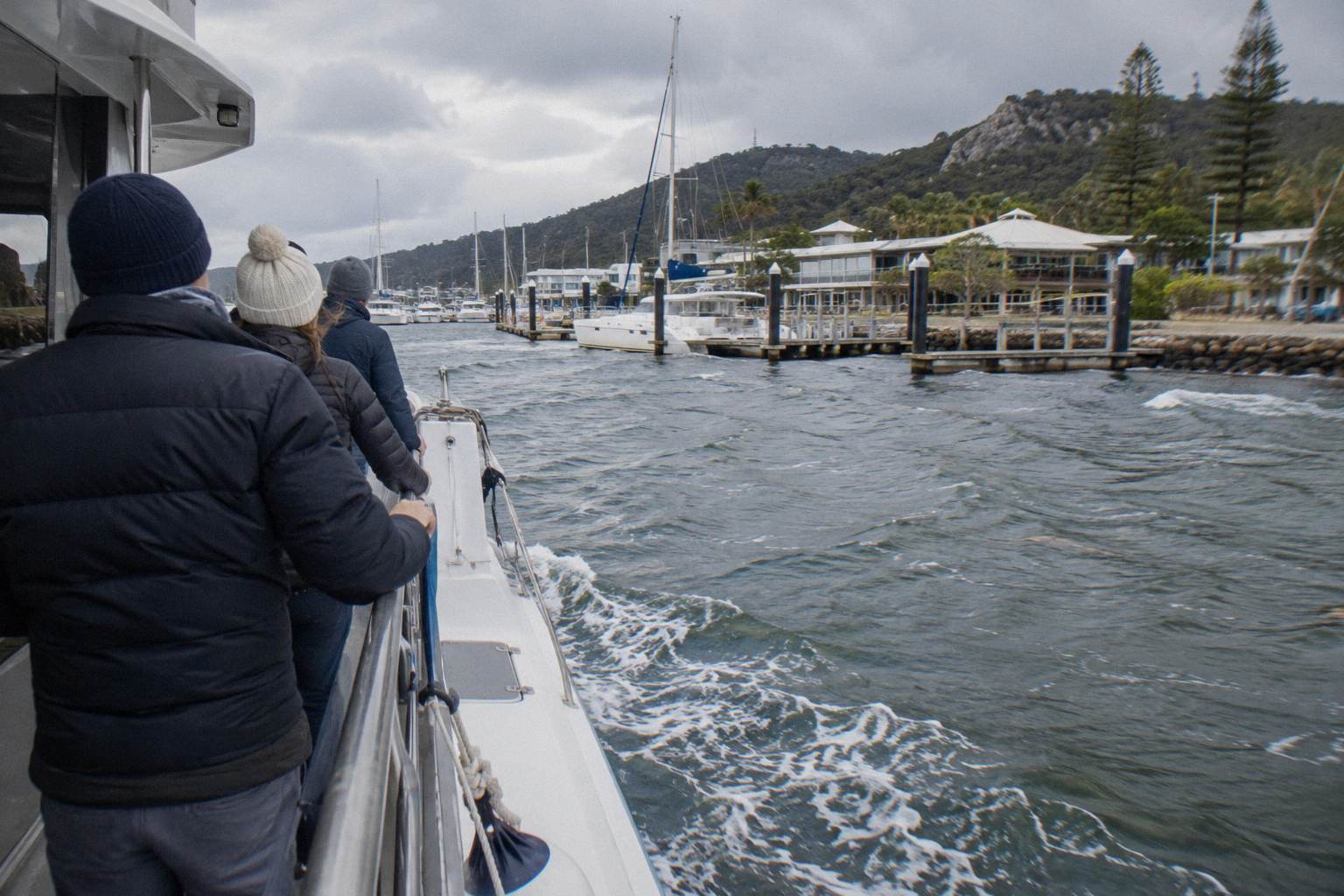
Book the whale boat if you are visiting between May and November and whales are the reason you came; the express costs from A$99 and carries a free return voucher if none appear. Outside that window, book a dolphin boat: the resident pod of roughly 90 to 120 animals stays all year, with trips from A$46.
The decision is mostly a calendar decision, and both halves of it are good trips. In season, the whale express gives you the migration, offshore water and the possibility of dolphins on the same run, since the crew watches for pods and some guests report sightings. Out of season, from mid-November through April, the dolphin boats are the wildlife option, and they are not a consolation prize: the Dolphin Discovery cruise pairs its 1.5-hour dolphin watch with a boom net ride and has drawn 4.4 from 1,047 reviews, the deepest review pool of any trip in the port.
Travellers short on time have a middle path. The 1-Hour Dolphin Watch Express from Aquamarine, the same operator as the whale express, is a fast cruise to the resident bottlenose pod at from A$55, rated 4.9 from 62 reviews. It is the same power-catamaran formula as the whale trip, pointed at animals that are always home.
A few practical points close the comparison. The whale express is not suitable under 5 years; the dolphin boats have their own age bands, with Moonshadow's child band running 4 to 14 and infants 0 to 3. The dolphin boats leave from d'Albora Marina in Nelson Bay, with the dock shown on your booking confirmation, and Moonshadow asks guests to board about 15 minutes before departure. Warm layers matter more offshore in winter than on an inshore summer dolphin run, so plan for the month you are actually sailing, and if you are prone to seasickness, ask a pharmacist about motion-sickness options before an offshore run; the operator flags its own longer trips accordingly. If you are combining both halves of the year's wildlife in one visit, the combined dolphin and whale cruise question sets out what a single trip can and cannot cover. For everything else on the water, Port Stephens Dolphin Cruises keeps the full set of boats, prices and seasons in one place.
Common Questions About Whales In Port Stephens
Can You See Whales In Port Stephens?
Yes, between May and November. Humpbacks pass on their way north from May to August and back south from August to November, with up to 40,000 humpbacks migrating along the coast. Whale watching boats run from Nelson Bay through that window.
When Is The Best Month For Whales In Port Stephens?
September and October sit in the heart of the southbound migration, when mothers travel with calves close to the coast. The operators run morning and afternoon departures through the season; ask the operator about the day that suits you.
How Much Does A Whale Cruise Cost?
The Whale Watching Express Cruise costs from A$99 per person for 1.5 hours. Prices change, so check the current price when you book.
Do Whale Boats Guarantee A Sighting?
No cruise guarantees you will see whales. The whale express carries a whale guarantee in the operator's terms: if no whales are seen, you receive a free return voucher on a standby basis, valid 12 months.
Can You See Whales And Dolphins On The Same Trip?
You can see both. The whale express crew keeps a lookout for dolphin pods as well as whales, and some guests report dolphin sightings on the whale run. The resident pod of roughly 90 to 120 bottlenose dolphins lives in the port all year.
How Close Do The Boats Get To The Whales?
NSW rules set the distances: a vessel may come no closer than 100 m to a whale, with the caution zone starting at 300 m, and 500 m for a mostly white animal. With a calf present, boats may not enter the caution zone.