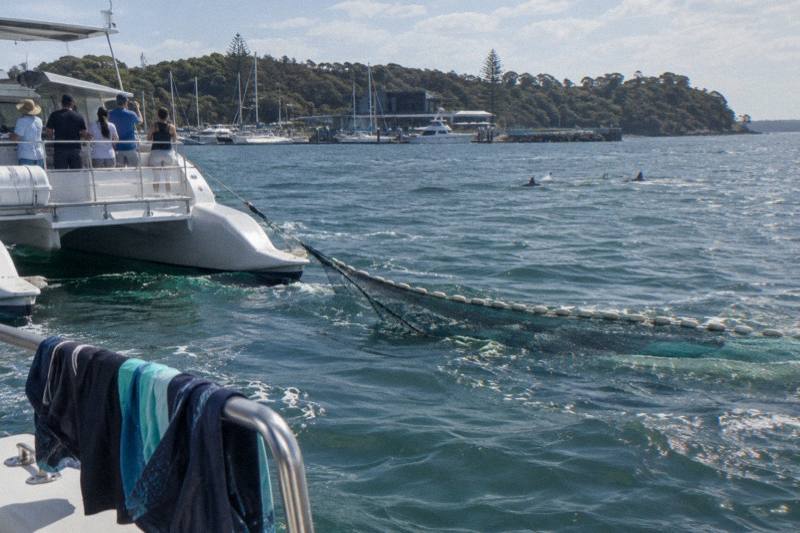
What Month Is Best For Dolphin Watching?
Dolphins live in Port Stephens all year, so the best month depends on which cruise you want, the weather and whether whales overlap. A month-by-month breakdown of seasons, cruises and climate.
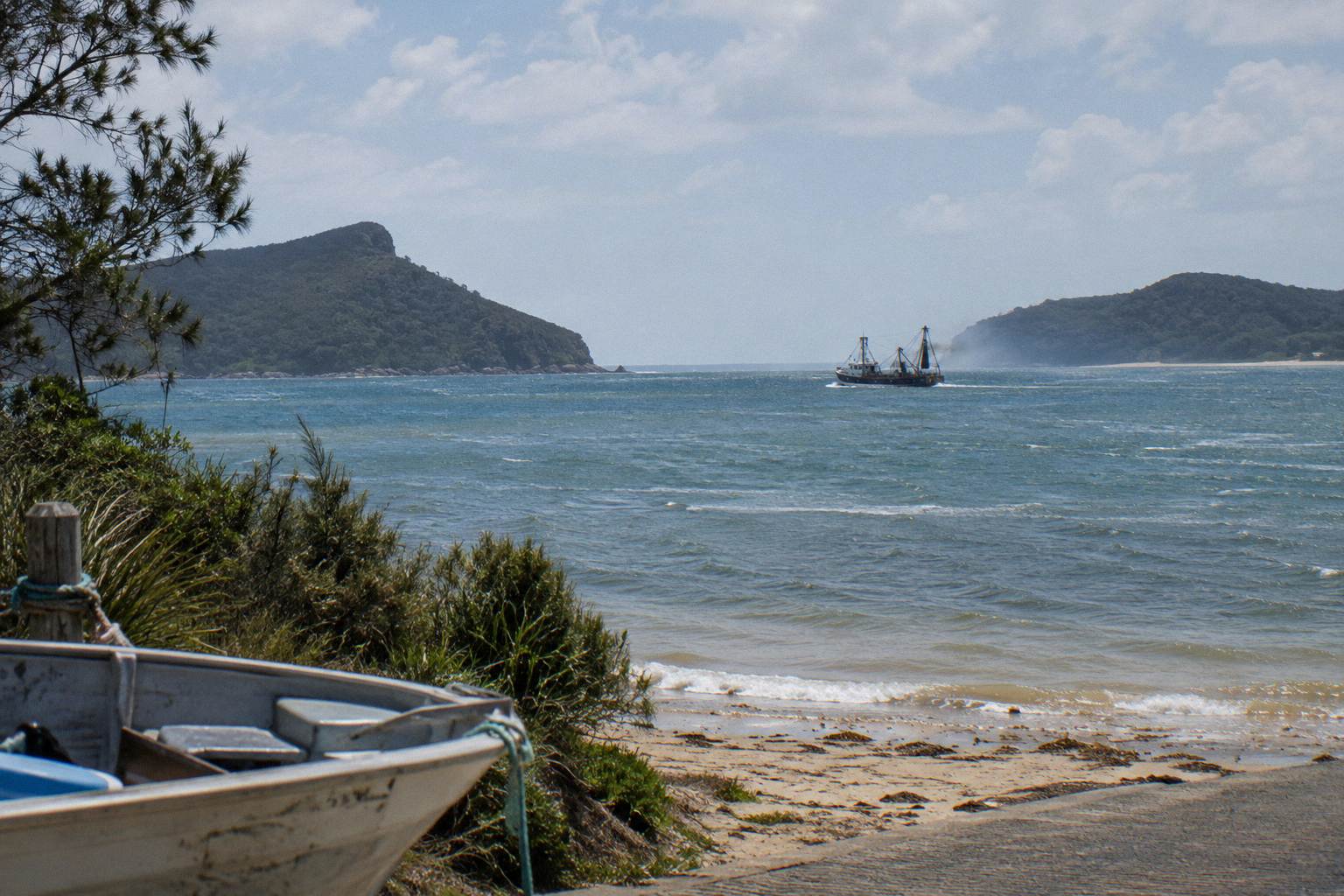
There is no single best month for sightings, because the dolphins do not leave. Around 90 to 120 Indo-Pacific bottlenose dolphins live permanently in Port Stephens within the marine park, according to the NSW National Parks and Wildlife Service, and you can visit Nelson Bay at any time of year to see them. The real month-by-month differences are which cruises are running, the weather on the day and whether whale season overlaps.
That answer surprises people who assume dolphin watching is seasonal like whale watching. It is not. The resident pod is genetically distinct, according to Macquarie University research cited by NPWS, and seldom interbreeds with coastal dolphins; some animals travel outside the Heads, and a second dolphin community lives at Broughton Island about 20 km away, but the core population stays in the port through every month of the year. These animals live 30 to 40 years, so many of the dolphins a boat draws up alongside this summer are the same individuals a winter cruise will find a few months later, working the same feeding grounds their pod has used for generations. A second point matters just as much: no operator ranks one month above another for sightings, and no cruise guarantees dolphins at any time of year. Moonshadow says plainly that the dolphins are totally wild and that 100 percent sighting success is not guaranteed.
So the month you choose should follow the trip you want, not a sighting forecast. Moonshadow's dolphin cruises, including the Dolphin Discovery cruise from A$46 per person (4.4 from 1,047 reviews), run all year. Imagine's Dolphin Watch Cruise and Sail, from A$50 per person (4.8 from 106 reviews), runs only from November to the end of April. The BBQ and Boom Net cruise, from A$59 per person, runs December to April. If you want the sailing catamaran or the sausage sizzle, summer and autumn are your window; if any dolphin boat will do, every month works.
Dolphins in the eastern section of the port are often seen off Shoal Bay beach, which is one reason the boats work that stretch of water so regularly. The eastern harbour sits close to the docks at Nelson Bay, so even the shorter cruises reach good viewing water quickly, and that geography does not change with the season. In other words, the search area, the pod and the departure point are constants; the variables in your planning are the calendar of seasonal cruises, the temperature you enjoy and whether humpbacks are passing.
If you are weighing one trip against another, the companion piece on dolphin watching season in Port Stephens month by month breaks the calendar out in more detail, and the question of how likely you are to see dolphins from a Nelson Bay boat covers the odds side. For a quick comparison of the seasonal options:
Which Cruises Run In Which Months?
Only one operator runs dolphin cruises in every month: Moonshadow, whose Dolphin Discovery cruise operates all year. Imagine's sailing catamaran cruise runs November to the end of April, the BBQ and Boom Net cruise runs December to April, and the Marine Discovery snorkel cruise is a warmer-months trip. Anyone fixed on a specific boat should pick the month around the boat, not the other way round.
The seasonal pattern is easiest to read as a grid. What it shows is that winter narrows your choices rather than closing dolphin watching down: through the middle of the year the Moonshadow boats and the Aquamarine express are the options, and the summer months open up the sail, the snorkel and the barbecue trip.
| Cruise | Months it runs | Duration | From (per person) |
|---|---|---|---|
| Moonshadow Dolphin Discovery | All year | 1.5 hours | A$46 |
| Dolphin Watch Cruise and Sail (Imagine) | November to end of April | 1.5 hours | A$50 |
| BBQ and Boom Net (Moonshadow) | December to April | 2 hours | A$59 |
| 1-Hour Dolphin Watch Express (Aquamarine) | Year-round short cruise | 1 hour | A$55 |
| Marine Discovery snorkel (Imagine) | Warmer months | 3.5 hours | A$100 |
A few practical notes sit behind that table. Moonshadow runs every day except Christmas Day, with late morning and early afternoon departures described by the operator, plus an extra afternoon departure in school holidays except winter. Imagine's Dolphin Watch Cruise and Sail carries a Dolphin Guarantee (Free Return) on its operator's terms, and Moonshadow gives a non-transferable free return voucher on a standby basis if dolphins are not located. Neither is a promise of dolphins; both are second-chance mechanisms, and the voucher terms differ between operators, so read the terms attached to the trip you actually book.
Each seasonal cruise has its own character, which is worth weighing before you fix a month. The Dolphin Watch Cruise and Sail runs on a sailing catamaran with 360-degree viewing, a dry bow-net and a wet boom-net, self-service tea and coffee included, and Imagine welcomes reasonable own food and non-alcoholic drinks while barring BYO alcohol. The BBQ and Boom Net cruise is a 2-hour twin-level boat with walk-around decks, a classic sausage sizzle, live captain's commentary and a boom net, running to the headlands and eastern harbour; drinks are not included and the operator flags the trip as unsuitable for people prone to seasickness. The Marine Discovery snorkel cruise, at 3.5 hours the longest of the three, includes a qualified dive-master guide with snorkel, fins and mask supplied, sailing when conditions permit, and tea, coffee and water on board; wetsuits and towels are not included, so bring your own or hire one. Non-swimmers are welcome as observers, which makes it a workable mixed-group choice.
Planning around the shoulder months pays off here. November is the first month of the sailing season and the last month of whale season, which makes it the one month where almost everything on the water is running at once. April is the mirror image: the sail and the barbecue trip finish at the end of the month while whales are still passing. If your heart is set on the catamaran under sail, booking early in the November-to-April window gives you fallback weeks if a departure is blown out; free cancellation up to 24 hours before applies on every trip, so an early booking costs you little. Boarding for the sailing cruise and the dolphin boats is at d'Albora Marina, Nelson Bay, with the dock on your booking confirmation, while the barbecue trip boards at Wharf 1, the Cruise Passenger Terminal on Victoria Parade, a different place entirely; worth knowing before you choose a parking spot.
Curious whether the sail trip earns its price? Check availability beside the Dolphin Watch Cruise and Sail tour page for the months you have in mind.
What Is The Weather Like Month By Month?
The Bureau of Meteorology's Nelson Bay climate averages put summer maxima around 26 to 27 °C and winter maxima around 17.6 to 18.9 °C, with rainfall peaking in June at a monthly mean of 157.2 mm and bottoming in September at 89.0 mm. These are land averages, not sea conditions, and they say nothing about wind or swell on the day.
Weather shapes comfort rather than sightings. A winter dolphin cruise runs in air that averages a maximum of about 18 °C, which is perfectly workable with layers, while a January departure averages about 27 °C and asks for a hat and sun protection. Rain is worth a glance but not a panic: even the wettest month, June, averages 9.4 rain days of 1 mm or more across 114 years of records, which leaves most days dry. The annual picture is a mean maximum of 22.9 °C and a mean minimum of 14.5 °C, with 1,345.7 mm of rain spread over 100.3 rain days across the year, so Nelson Bay is a mild-seasons port rather than a tropical one or a cold one.
| Month | Mean max (C) | Mean min (C) | Mean rainfall (mm) | Rain days 1 mm+ |
|---|---|---|---|---|
| January | 27.3 | 19.0 | 99.5 | 7.8 |
| February | 27.0 | 19.1 | 112.5 | 7.9 |
| March | 25.9 | 18.0 | 123.6 | 8.8 |
| April | 23.6 | 15.4 | 129.2 | 9.1 |
| May | 20.8 | 12.5 | 149.7 | 9.6 |
| June | 18.2 | 10.3 | 157.2 | 9.4 |
| July | 17.6 | 9.2 | 136.7 | 9.1 |
| August | 18.9 | 10.0 | 101.5 | 8.1 |
| September | 21.4 | 12.2 | 89.0 | 7.7 |
| October | 23.2 | 14.3 | 78.4 | 7.7 |
| November | 24.7 | 16.1 | 79.7 | 7.5 |
| December | 26.0 | 17.8 | 91.7 | 7.6 |
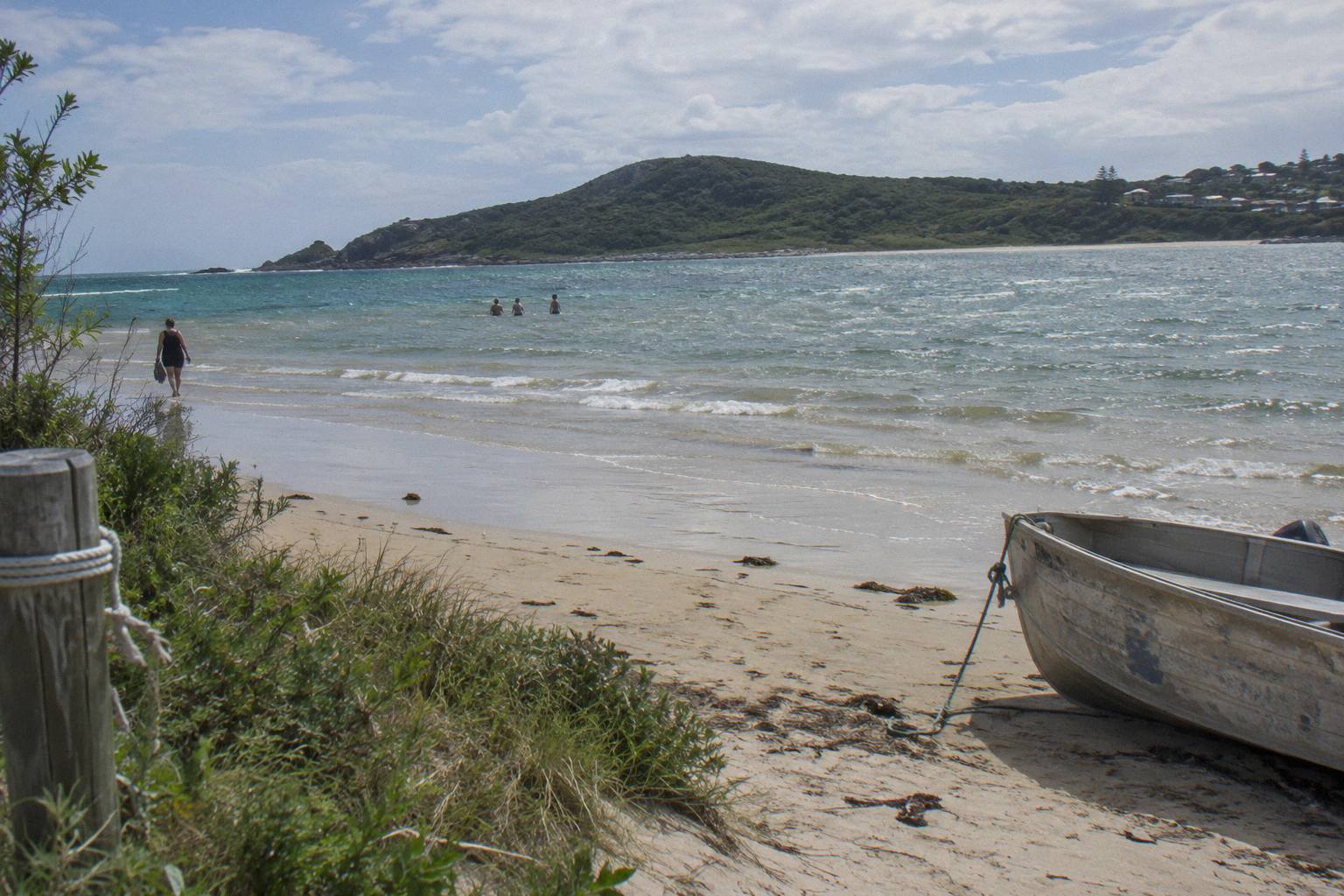
Read the table as a packing guide rather than a go-or-stay-home guide. The autumn months of March to May carry the highest rain means, 123.6 to 149.7 mm, but spread over roughly nine rain days each, and the equinox months stay warm, with March still averaging a 25.9 °C maximum. October and November are the driest stretch, 78.4 and 79.7 mm respectively, and combine that with the return of the sailing season and you have a strong case for late spring. Winter mornings are cool, 9.2 °C on average at its coldest in July, so an early departure in the middle of the year wants a jacket you can shed by lunchtime. The full Bureau of Meteorology Nelson Bay climate averages sit behind every figure above; they describe the land station at Nelson Head, not the sea state.
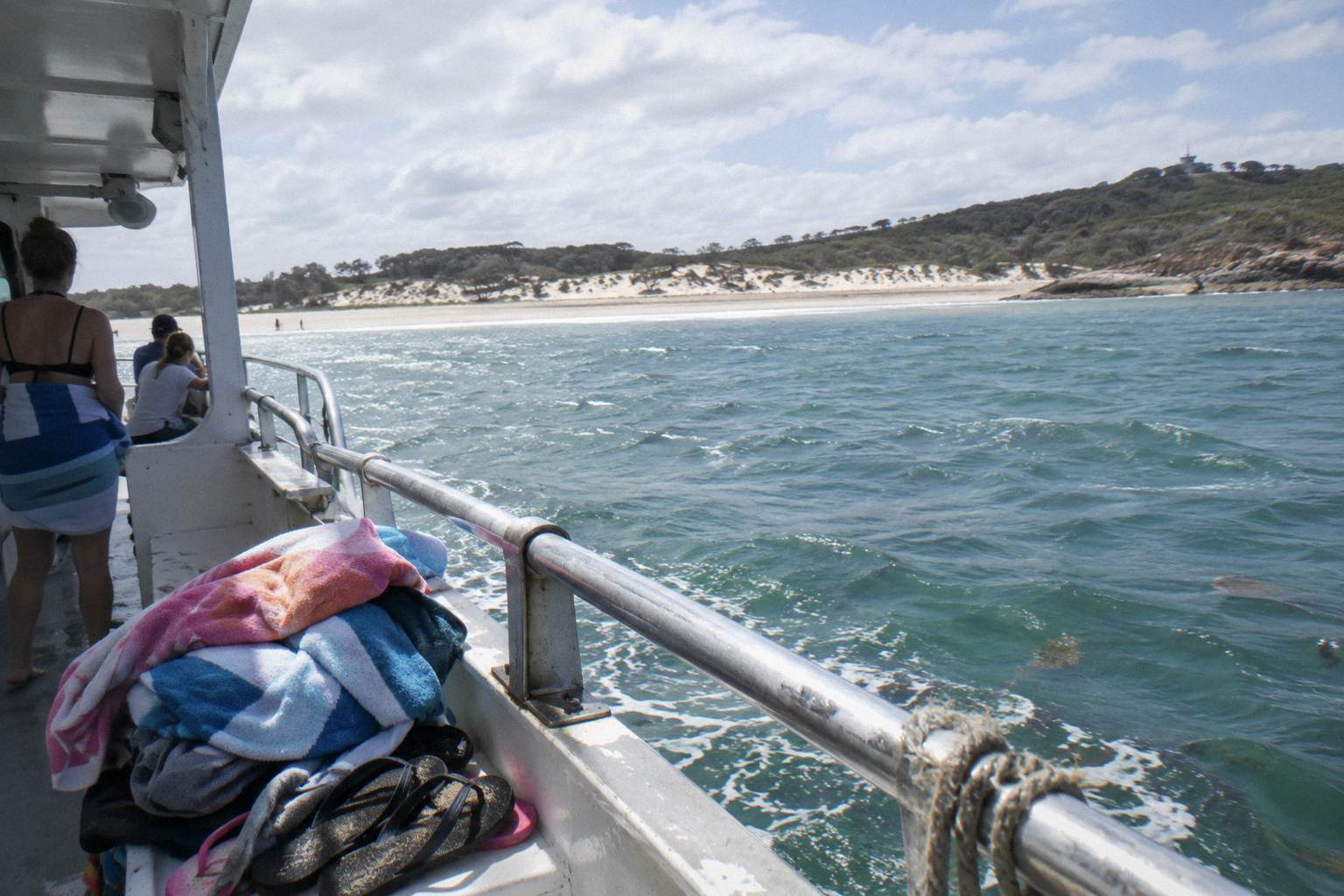
The practical packing logic follows directly from the numbers. For a summer-month cruise, think hat, sun protection and non-slip flat shoes; for a winter-month cruise, think layers, a windproof outer and the same flat shoes. If you are prone to motion sickness, ask a pharmacist about options before any month of the year, and speak to a doctor if you are pregnant or have a health condition; the operator's guidance is to plan for it rather than to avoid any particular season. If sea conditions turn poor, the operators have their own responses: Moonshadow's Dolphin Discovery cruise stays inshore, and the Wild Port Stephens route may stay inside the bay when offshore conditions are poor.
When Can You Combine Dolphins With Whales?
Whale season runs May to November, with up to 40,000 humpbacks passing NSW waters in a season, and humpbacks head north from May to August and back south from August to November per Moonshadow. That means every winter and spring month overlaps dolphin and whale watching, while the summer-only cruises never do.
The overlap months are where a two-wishlist trip becomes possible. May through November, the Moonshadow dolphin cruises run as always, and Aquamarine's Whale Watching Express, from A$99 per person (4.5 from 87 reviews, ages 5 and over), heads out on the same marina; its operator keeps a lookout for dolphin pods, and some guests report dolphin sightings on the whale trip. September and October are the double-season sweet spot: whales heading south, dolphins resident, and spring rainfall near its annual minimum. Note that operators' whale windows close in early November, so treat November as the tail of the season rather than its heart.
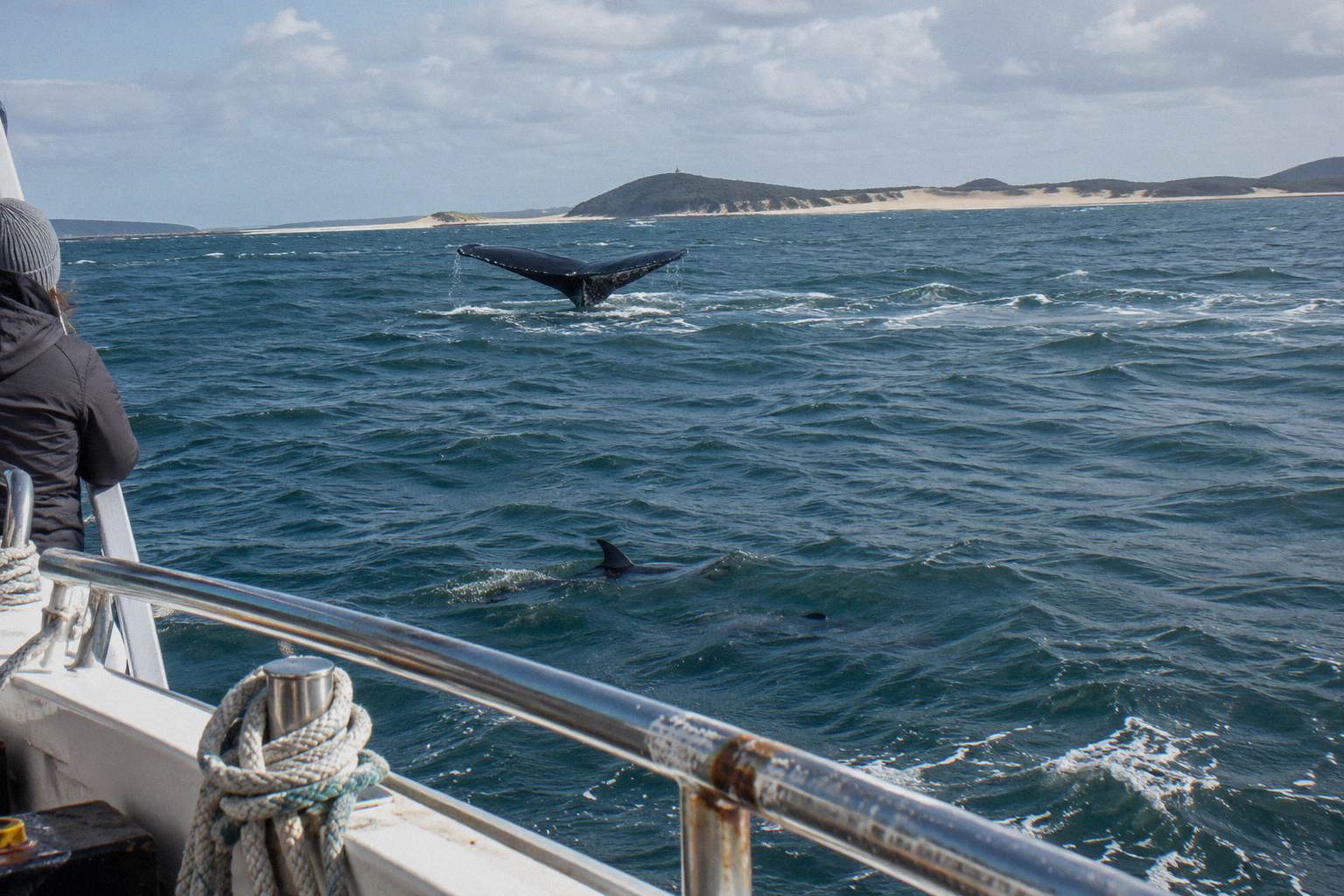
The winter months deserve a second look for exactly this reason. June and July are the weakest months for cruise choice, since the sail, the barbecue trip and the snorkel are all off, but they sit in the middle of the northern humpback migration. A June itinerary can pair a morning Dolphin Discovery cruise with a whale departure and see two species in one day. Port Stephens Dolphin Cruises covers the whale-side planning in more depth, including the guide to whale watching season month by month.
For travellers without a car, the guided day trips slot into the same calendar. The Sydney coach day trip, 12 hours from A$199 per person (4.6 from 354 reviews), leaves Sydney about 7:00am and builds in a 90-minute Moonshadow dolphin cruise, a koala sanctuary visit and Stockton Beach 4WD with sandboarding instruction; it runs as a year-round product, so it works even in the months when the seasonal boats are off. The Newcastle day tours, 8 hours from A$240 and A$295 per person, both include a dolphin cruise with Newcastle accommodation pickup. That makes the winter months friendlier than they first look: even with the catamaran in dry dock, a visitor from Sydney or Newcastle can still reach the pod.
The rules that govern all of this are set by NSW law rather than by the operators: a vessel may move no closer than 50 m to a dolphin and 100 m to a whale, caution zones begin at 150 m and 300 m respectively, and only three vessels may be inside a dolphin caution zone at once, per the official NSW approach distances for marine mammals. With a calf present, a vessel may not enter the caution zone for closer viewing, and a mostly white animal always carries a 500 m distance. If dolphins choose to bow-ride, the vessel maintains course and speed, which is why close passes happen on the dolphins' terms.
Does Daylight Or Time Of Day Matter?
Daylight varies more than most visitors expect: an approximate calculation for Nelson Bay puts sunrise about 5:38am in December against about 6:52am in July, with sunset from about 4:52pm in June to about 7:55pm in December. Cruises run in daylight hours regardless, so the month changes how much day you have around your departure, not whether dolphins are about.
The operators run morning and afternoon departures rather than dawn or dusk trips, so the table below is about the rest of your day: a January departure leaves you a long warm evening on the waterfront, while a June departure lands you back at the marina near sunset with time for an early dinner. The figures are a calculation, approximate, for the 15th of each month in Australia/Sydney time, with daylight saving from early October to early April.
| Month | Approx. sunrise | Approx. sunset |
|---|---|---|
| January | 5:58am | 8:02pm |
| March | 6:51am | 7:11pm |
| June | 6:51am | 4:52pm |
| September | 5:51am | 5:42pm |
| December | 5:38am | 7:55pm |
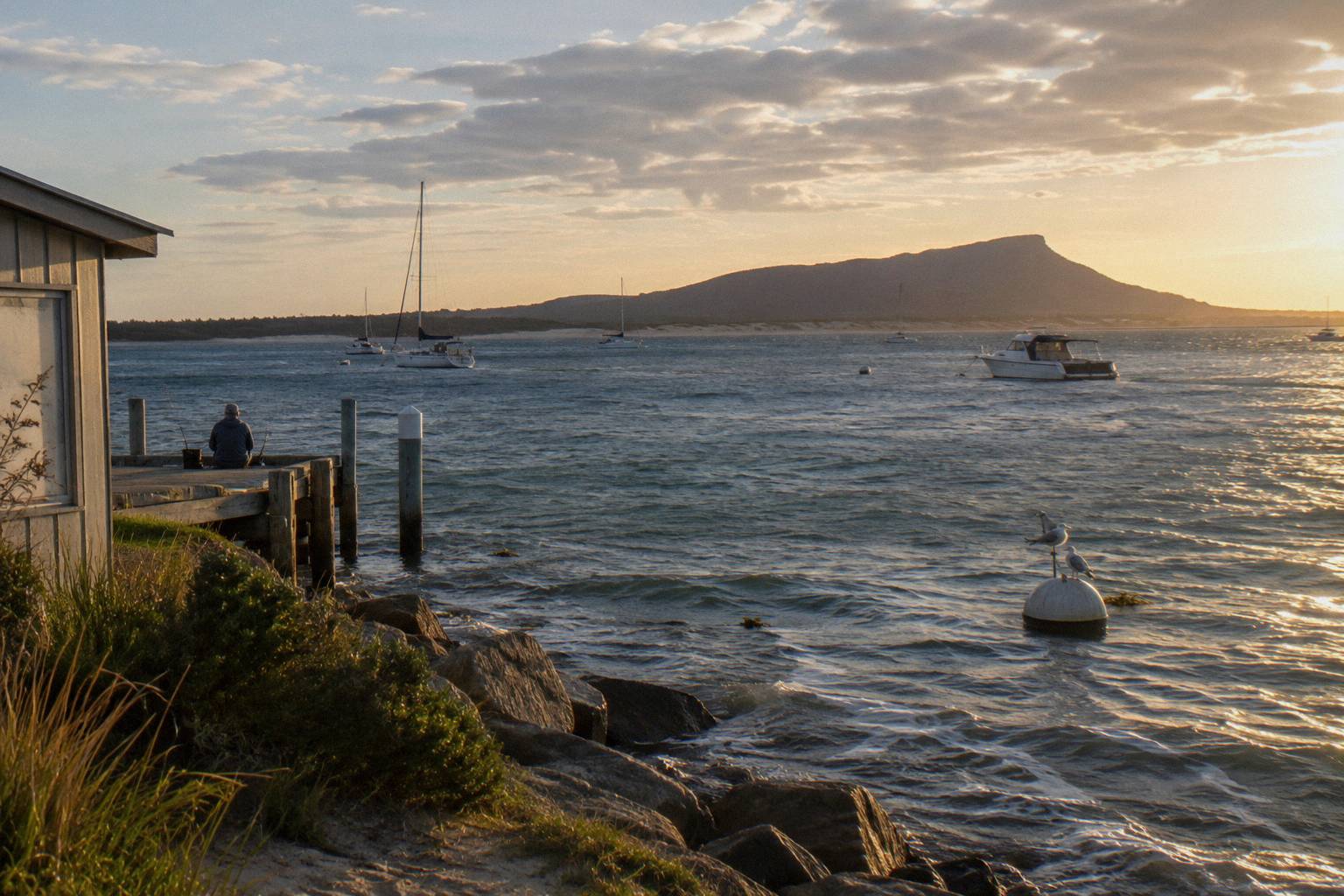
Departure patterns are stable: Moonshadow describes late morning and early afternoon departures daily all year, with an extra afternoon departure in school holidays except winter. The company asks guests to board about 15 minutes before departure, which is a small detail that matters more in winter, when standing on an exposed dock at 9 °C is a different experience from doing it at 19 °C in January. Practical timing decisions, like whether the boom net is worth it before lunch, are covered in the guide to morning or afternoon dolphin boat departures, and questions about rough weather have their own treatment in weather and cancellations on the dolphin boats.
One more daylight nuance belongs in a month-picking discussion. The long December and January evenings pair naturally with the summer-only cruises: an afternoon sailing departure in January still gives you hours of light afterwards for a swim or a fish-and-chips dinner by the marina. In June, the same afternoon departure effectively ends your day, which suits travellers who like an early night before a whale trip the next morning. Neither month is better; they simply structure your day differently around the same dolphins.
Common Mistakes When Picking A Month
The recurring mistakes are assuming dolphin watching closes in winter, booking the sailing cruise for a June visit, treating whale season as a dolphin season, and picking a month purely on rainfall averages. The dolphins are present in all twelve months, the seasonal cruises are seasonal.
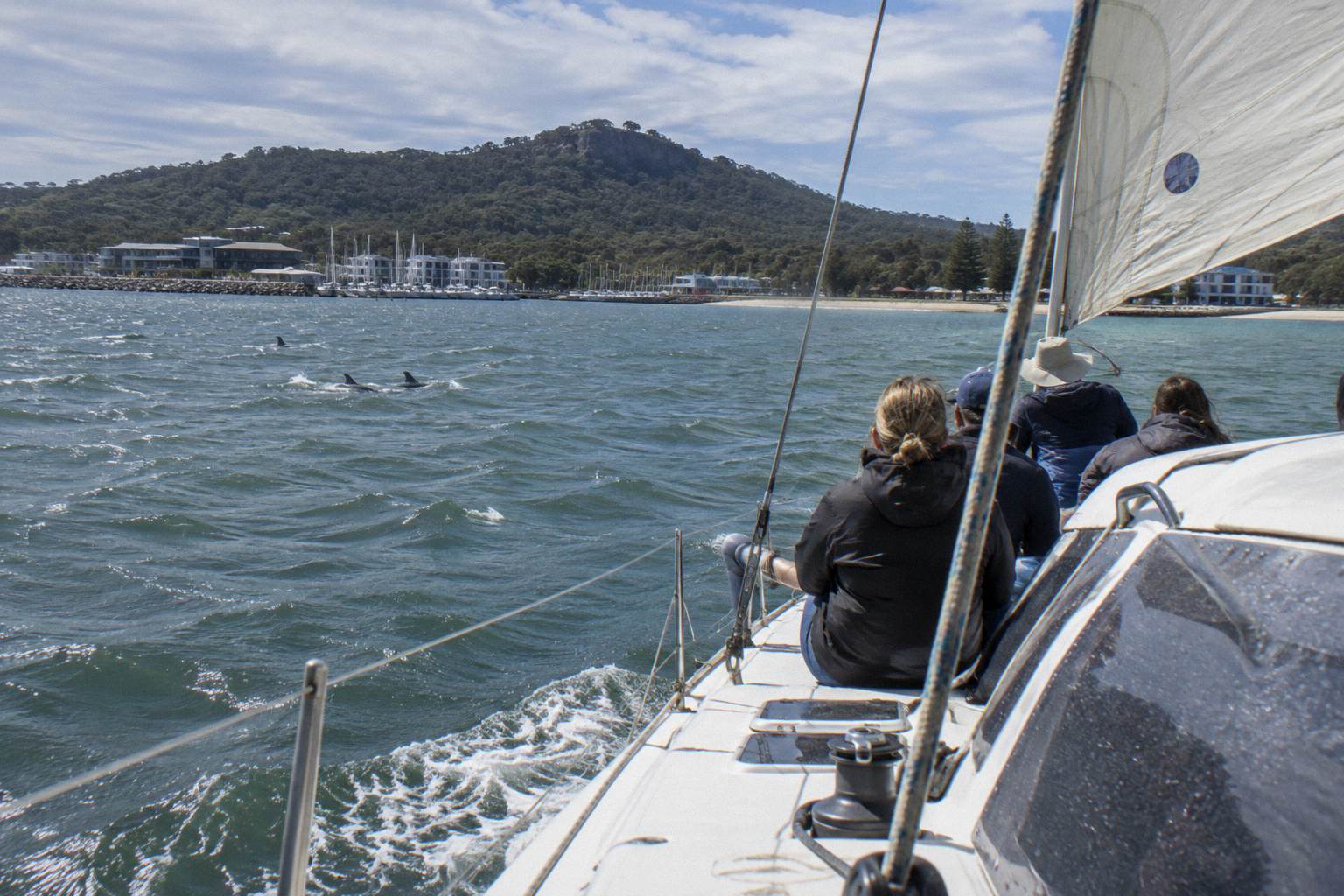
The first mistake is the most common. Visitors transfer what they know about whale watching, which is genuinely seasonal from May to November, onto the dolphins, and write off winter entirely. In fact a winter trip runs against the same resident pod, often with fewer people on the water and a from-price of A$46 on the Dolphin Discovery cruise. Bring layers for a mean maximum around 17.6 to 18.9 °C in July and August, ask a pharmacist about motion-sickness options if you are prone, and winter becomes a perfectly good dolphin month.
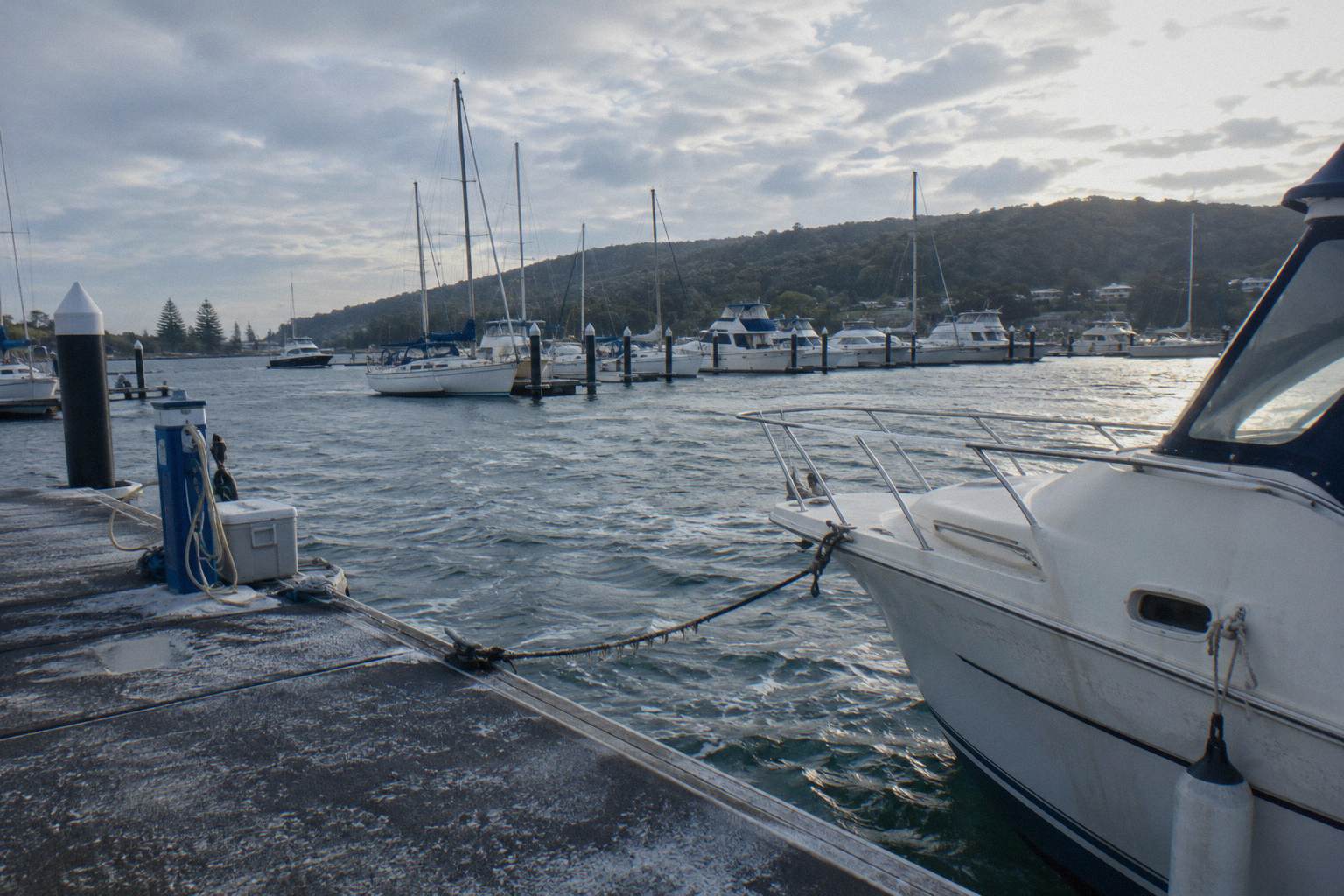
The second mistake is calendar blindness in the other direction: falling in love with the Imagine sailing catamaran and then arriving in August. The Dolphin Watch Cruise and Sail runs November to the end of April, full stop, and the BBQ and Boom Net cruise runs December to April. Anyone planning around school holidays should also note that the barbecue trip's season and the Australian summer holidays coincide, so December and January dates fill first, and the extra school-holiday departures Moonshadow adds stop for winter. The short Aquamarine express, 1 hour from A$55 per person (4.9 from 62 reviews), is the year-round fallback when time is tight; its boat has no snack or drink facilities, so bring what you need.
The third mistake is trusting a single number. A monthly rainfall mean of 157.2 mm in June sounds damp until you notice it averages 9.4 rain days, and none of the climate figures describe sea conditions. The fourth mistake is forgetting the guarantee small print: a Moonshadow return voucher is non-transferable and standby-based with no cash refund, and Imagine's Dolphin Guarantee is Imagine's own term, so the two are not interchangeable. The only reliable way to buy the trip you want in the month you have: pick the cruise first, confirm the month fits its season, and hold your weather nerves for the 24-hour cancellation window, which applies on every trip for a full refund.
Common Questions About Dolphin Watching Months
What Month Is Best For Dolphin Watching?
None stands above the rest for sightings, because roughly 90 to 120 Indo-Pacific bottlenose dolphins live permanently in Port Stephens year round per NPWS. Choose by cruise instead: the sailing catamaran runs November to April, the barbecue trip December to April, and Moonshadow's dolphin cruises run all year.
Are Dolphins In Port Stephens In Winter?
Yes. The resident pod stays in the port through every month, and Moonshadow's dolphin cruises operate all year, running every day except Christmas Day. Pack layers: winter mean maxima at Nelson Bay are about 17.6 to 18.9 °C.
Which Dolphin Cruises Stop In The Cooler Months?
Imagine's Dolphin Watch Cruise and Sail finishes at the end of April and returns in November, and the BBQ and Boom Net cruise runs December to April. The Moonshadow dolphin cruises and the 1-hour Aquamarine express keep running.
Can You See Whales And Dolphins In The Same Month?
Yes, from May to November, when whale season overlaps the year-round dolphin boats. September and October are strong overlap months, with humpbacks heading south and spring rainfall near its annual minimum.
Is There A Month With More Dolphins?
The pod is resident, an annual Community Dolphin Census tracks it, and operators make no month-by-month sighting claims. No cruise guarantees dolphins in any month.
What Happens If We Do Not See Dolphins?
It depends on the operator. Moonshadow gives a non-transferable free return voucher on a standby basis if dolphins are not located, and Imagine's sailing cruise carries a Dolphin Guarantee (Free Return). Every trip allows free cancellation up to 24 hours before for a full refund.