
Why Can't You Touch A Dolphin?
The official approach distances that keep boats 50 m from dolphins in NSW, why Port Stephens' resident pod stays wild, and what a boom net ride actually is.
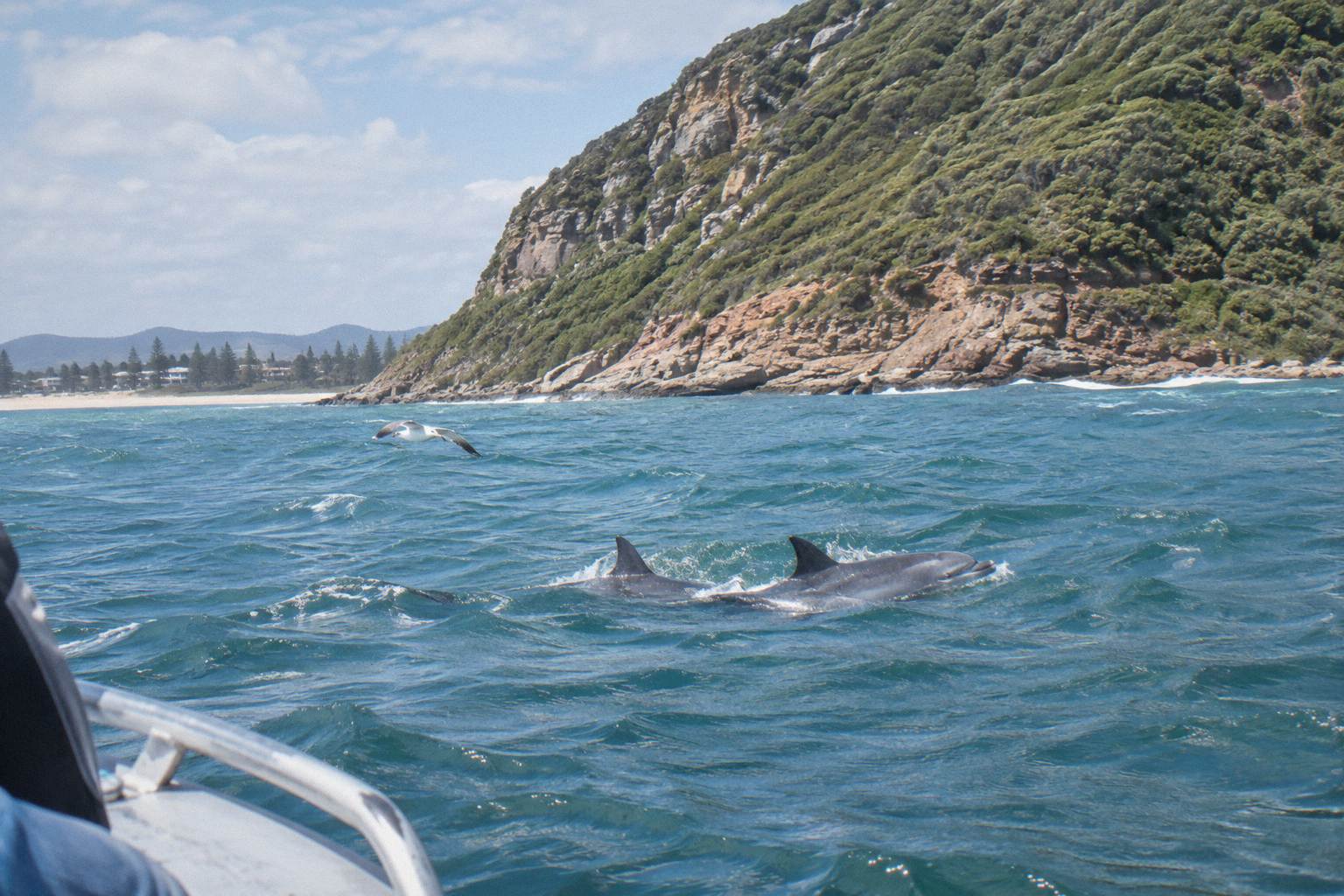
Dolphins in Port Stephens live free, roughly 90 to 120 of them (NPWS), Indo-Pacific bottlenose, resident all year inside the Port Stephens-Great Lakes Marine Park. Every boat that goes out to watch them works inside NSW approach-distance rules written for vessels, and every operator here describes its dolphins as totally wild. Put those three facts together and the touching question answers itself, but the details are worth knowing before you board, because they change how you judge a boom net, a sighting guarantee and a tour that promises to get you "close".
You can't touch a dolphin because wild dolphins in NSW are protected by approach distance rules: vessels must stay at least 50 m away at all times, with a 150 m caution zone around them, and no dolphin cruise in Nelson Bay is permitted to close that gap for contact. The rules protect wild animals by controlling where the boat goes, not what passengers' hands do.
That last clause matters more than it sounds. The NSW Government's approach-distance rules, published at Approach distances for whales, dolphins and dugongs, regulate vessels, aircraft and drones. They set how close a boat may travel to a dolphin, how it must behave inside a caution zone, and what happens when a calf is present. They do not write a sentence about a passenger reaching out, because the distances make the scenario close to impossible on a legal trip: a boat 50 m away is half a football field away, and the dolphins choose whether to come nearer. If they do choose to bow-ride, the rule is that the vessel maintains course and speed; the boat does not chase, stop or drift in to shorten the gap.
So the practical answer for anyone planning a Nelson Bay trip is simple. You watch from a deck, sometimes from a net slung off the side while the boat is moving, and the dolphins remain wild animals making their own decisions. Moonshadow says on its own dolphin watching page that the dolphins are totally wild and that "100% sighting success isn't guaranteed"; if dolphins are not located it gives a non-transferable free return voucher on a standby basis, with no cash refund. Imagine's Dolphin Watch Cruise and Sail carries a "Dolphin Guarantee (Free Return)" of its own. Neither wording promises contact, and neither could.
Wild is not a marketing word here, it is a description of the population. Macquarie University research summarised in the NPWS Port Stephens Bottlenose Dolphins Visitor Guide found the resident pod is genetically distinct and seldom interbreeds with coastal dolphins; some travel outside the Heads, and a second dolphin community lives at Broughton Island about 20 km away. These animals live 30 to 40 years in the same waters, are counted by an annual Community Dolphin Census, and are often seen off Shoal Bay beach without any boat involved at all. A population with that kind of history is exactly the kind the approach rules were written around.
If you are weighing which trip to take, the three below cover the range: a snorkel voyage into the marine park, the classic boom net cruise, and a sailing trip under catamaran.
How Close Can A Boat Actually Get?
Under NSW rules a vessel may come no closer than 50 m to a dolphin and 100 m to a whale, with caution zones starting at 150 m for dolphins and 300 m for whales. If a calf is present, a boat may not enter the caution zone at all for closer viewing, and a mostly white animal always carries a 500 m distance. Inside a caution zone, boats must approach from the side at constant slow speed.
Those figures come from the NSW Government's approach-distance page, and they are the ones to remember, not any operator's summary. Moonshadow's own material describes its practice of a vessel staying 100 m from whales with no more than a few boats near a pod; that is the operator describing its habits, not the law, and the two should never be confused. The rules also cap vessel behaviour in other ways: a lookout is required when two or more people are on board, only three vessels may be inside the whole caution zone at once, and if dolphins choose to bow-ride, the boat holds its course and speed rather than slowing to keep them near. Jet skis must stay 300 m away, drones 100 m and helicopters 500 m.
| Situation | Minimum distance for a vessel | What the boat must do |
|---|---|---|
| Dolphin or dugong, open water | 50 m | Stay outside the animal's path at constant speed |
| Dolphin caution zone | Starts at 150 m | Approach from the side at least 30 degrees, slow and steady |
| Dolphin with a calf present | No entry to the caution zone | No closer viewing at all |
| Whale | 100 m | Caution zone begins at 300 m |
| Mostly white dolphin or whale | 500 m, always | Applies regardless of behaviour |
| Bow-riding dolphins | Distance closes by their choice | Vessel maintains course and speed |
Read the table one more way: every distance in it is a limit the boat obeys, not a promise to you. When a pod comes to ride the bow, the dolphins have closed the gap themselves, and the law's response is to make the boat predictable so the animals stay in control. That is why guests on the water sometimes end up nearer to dolphins than 50 m, and why a photograph of that moment is never evidence that a crew bent a rule.
The marine park adds its own layer on top. The Port Stephens-Great Lakes Marine Park, created in 2005, runs four zone types, sanctuary, habitat protection, general use and special purpose, with boating, snorkelling and diving allowed in sanctuary zones and no collecting in them. Two areas, Middle Grounds and all of the Jimmys Beach sanctuary zone, carry 4-knot speed limits because they are identified as important resting and feeding areas for the resident bottlenose dolphins. A cruise that slows right down in those patches is obeying the park, not losing its nerve.
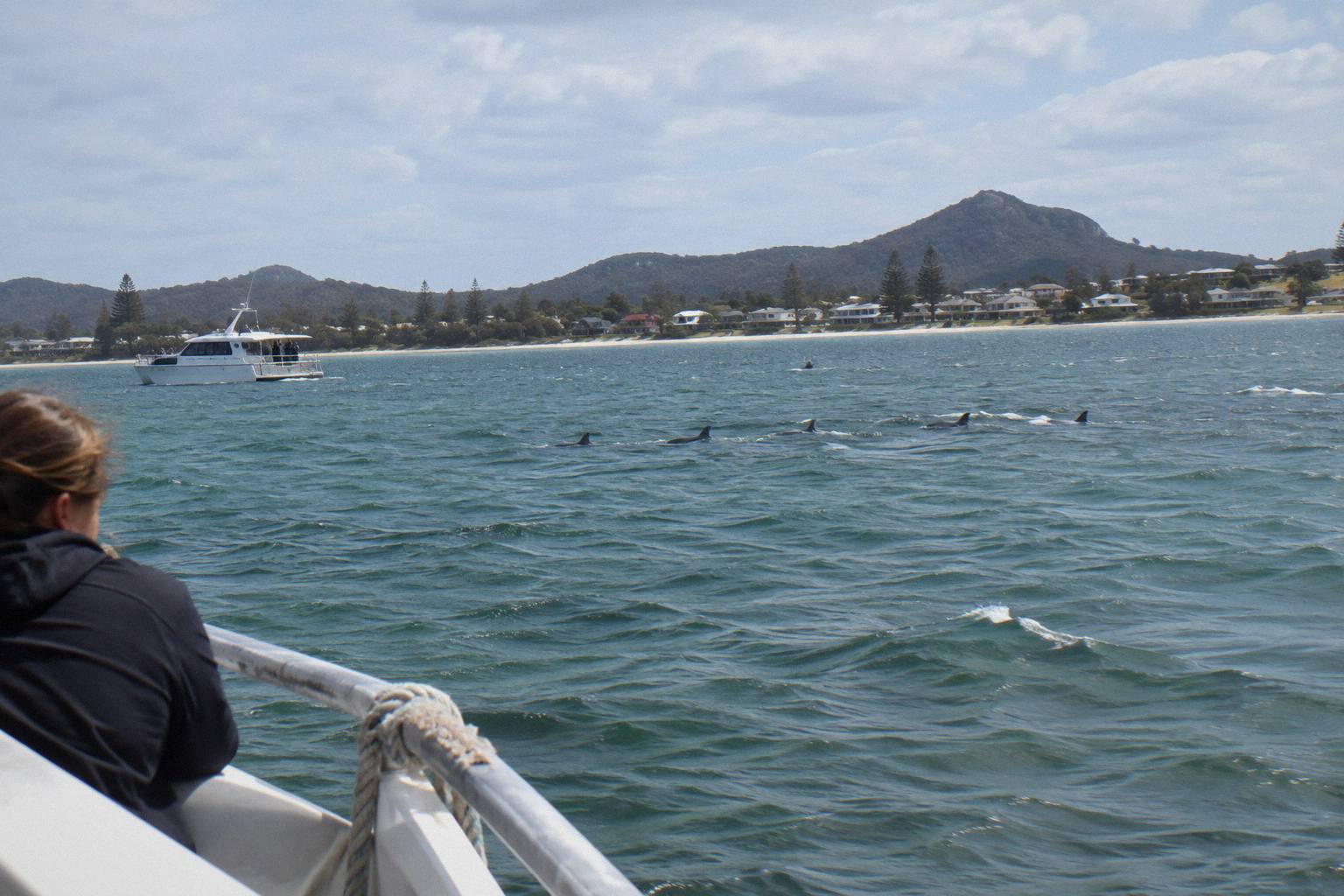
Do dolphins come close enough for a photo? Frequently, and on their own terms. The 1-Hour Dolphin Watch Express from Aquamarine, 4.9 from 62 reviews and from A$55, is built entirely around reaching the resident pod fast, and the shorter you are on time, the more that format earns its keep. Free cancellation applies up to 24 hours before for a full refund, as it does on every trip in the area's calendars.
Why The Rules Protect Dolphins, Not Just People
A 2012 Journal of Environmental Management study (Steckenreuter, Moller and Harcourt), using boat surveys from August 2008 to August 2009, found that while dolphin-watching boats were present, dolphins fed and socialised less, and groups with newborns came closer than the minimum distances in nine of ten encounters. The data predates today's rules, so it records a before, not a now.
Treat that study carefully, the way the dates demand. It is a snapshot of boat behaviour more than fifteen years before the current approach distances and the marine park's slow zones, and it cannot be stretched into a claim about any cruise running now. What it does show is why regulators bothered: dolphins disturbed during feeding and socialising, and mothers with newborns pressed toward boats, are a pattern worth designing rules around. The 50 m distance, the caution-zone behaviour codes and the calf prohibition all read as direct responses to exactly the behaviour the survey measured.
For a passenger, the welfare logic changes what "close" means. Being in the water near wild dolphins, watching them pass on their own course, is a different act from any attempt to reach them, and it is the closest thing the rules allow. The Marine Discovery Snorkel Cruise from Imagine runs 3.5 hours with a qualified dive-master guide, snorkel, fins and mask included, sailing when conditions permit, with dolphins en route per the operator; it starts from A$100, boards at d'Albora Marina, Nelson Bay, and includes tea, coffee and water, while wetsuits and towels are not included. Guests must be able to swim to snorkel, and non-swimmers are welcome as observers. It is the closest you can get to the pod's world while the pod keeps its distance.
The same thinking runs through the companion question of swimming; if that is what brought you here, read why you can no longer swim with dolphins on these trips, and the full profile of Port Stephens' resident bottlenose pod for the biology behind the rules.
What The Boom Net Actually Is
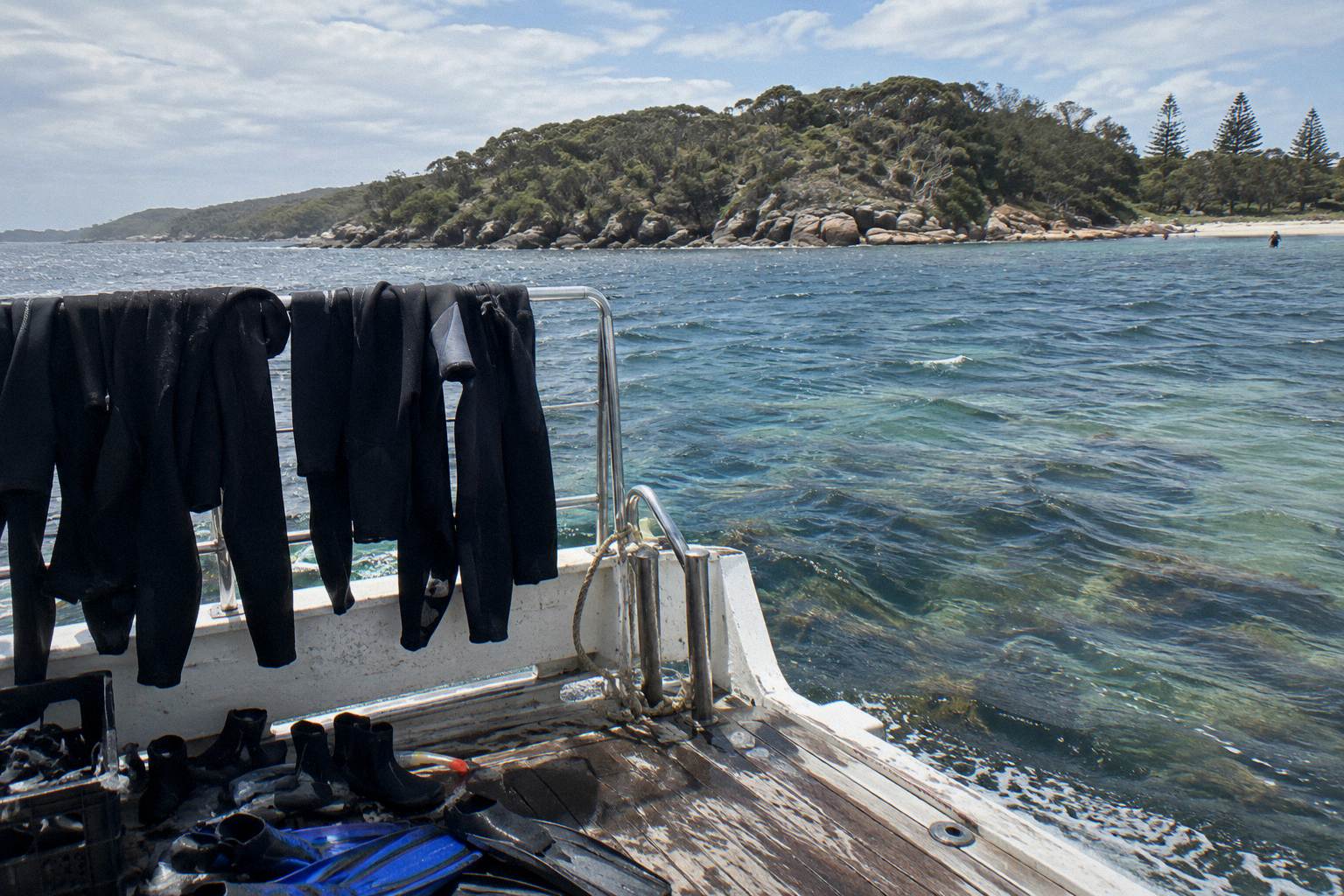
A boom net is a net slung off the side of a vessel that guests sit in while the boat moves through the water; it is a net ride over the surface, never a swim with dolphins and never contact with them. On Moonshadow's Dolphin Discovery cruise the boom net stays inshore, and the trip is 1.5 hours from A$46, rated 4.4 from 1,047 reviews.
That definition deserves unpacking, because the words around boom nets get slippery in tourism copy. The net sits against the hull, the boat moves, water passes through, and you hold on as it does. The dolphins are somewhere else entirely, beyond the distances in the rules, and no operator here says otherwise. Never say a dolphin approaches the net on purpose, and no trip should be sold to you on the idea that one might. The boom net exists because it is fun in its own right, a splash-and-laugh feature that needs no dolphin inside it to justify the fare.
Knowing which trips carry a net saves disappointment at the dock. The Dolphin Discovery cruise, the BBQ and Boom Net cruise, Imagine's Dolphin Watch Cruise and Sail and the Marine Discovery snorkel trip all have boom nets; the Wild Port Stephens cruise on the MV Osprey does not, and that boat's appeal is panoramic decks and marine park sightseeing instead.
| Trip | Boom net | Length | From (per person) |
|---|---|---|---|
| Moonshadow Dolphin Discovery Cruise | Yes, inshore only | 1.5 hours | A$46 |
| Dolphin Watch Cruise and Sail (Imagine) | Dry bow-net and wet boom-net | 1.5 hours | A$50 |
| 1-Hour Dolphin Watch Express (Aquamarine) | No | 1 hour | A$55 |
| BBQ and Boom Net Cruise (Moonshadow) | Yes, with sausage sizzle | 2 hours | A$59 |
| Wild Port Stephens, MV Osprey (Moonshadow) | No | 1.5 hours | A$46 |
For the Dolphin Discovery net, bring a swimsuit and towels, since neither is included; a bar and snacks are on board and cost extra. Children under 1.1 m may not use the net unattended, and smaller children go in with an adult. Free cancellation applies up to 24 hours before for a full refund.
The full detail on nets, height rules and what to pack is in the boom net experience explained for Nelson Bay.
Common Mistakes People Make About Dolphin Contact
The recurring mistakes are believing a cruise can lawfully let you touch a wild dolphin, reading a boom net as contact, treating a sighting guarantee as a contact promise, and assuming an operator's own practice is the law. Each one collapses the moment you check the approach distances, which is why the 50 m figure is worth memorising before you choose a trip.
The first mistake is the oldest: the petting-pool image carried over from marine parks, where dolphins in managed programs have long been touched under supervision. Nothing on a wild dolphin cruise resembles that, and the difference is the entire point of the species' status here. The second is subtler, and marketing sometimes blurs it: "swim with the boom net" is a phrase that means sitting in a net, and if a day trip lists an optional boom net ride, that option is a ride, full stop. The Newcastle Animal Lovers tour includes a dolphin boat cruise with an optional boom net ride, plus a BBQ lunch, Oakvale Wildlife Park entry and a 10-minute koala encounter for the group; the koala encounter is the touch-adjacent part of that day, and it happens ashore at a wildlife park, not with the wild pod.
The third mistake is reading guarantee language as more than it is. Moonshadow's terms are a free return voucher on a standby basis if dolphins are not located, non-transferable, with no cash refund; Imagine's Dolphin Guarantee is likewise a free return. Both are fair terms for wild animals; neither is a promise of proximity. The fourth mistake, taking an operator's summary as law, is easy to make because operator pages often compress the rules into friendly shorthand. The NSW Government's approach-distance page is short enough to read in a few minutes and settles every argument a deck conversation can start.
| Mistake | What people assume | What is true |
|---|---|---|
| Touching | A cruise can let you reach a dolphin | Vessels must stay 50 m from dolphins under NSW rules |
| Boom net | The net is contact with dolphins | The net is a ride off the hull; dolphins stay beyond the rules |
| Guarantees | A dolphin guarantee means contact | Both operators' guarantees mean a free return trip if none are found |
| Operator wording | An operator's practice is the law | Only the NSW approach distances and marine park rules bind boats |
| Feeding | Feeding attracts them to the boat | Feeding wild dolphins is not part of any trip described here |
What Happens When The Dolphins Stay Away?
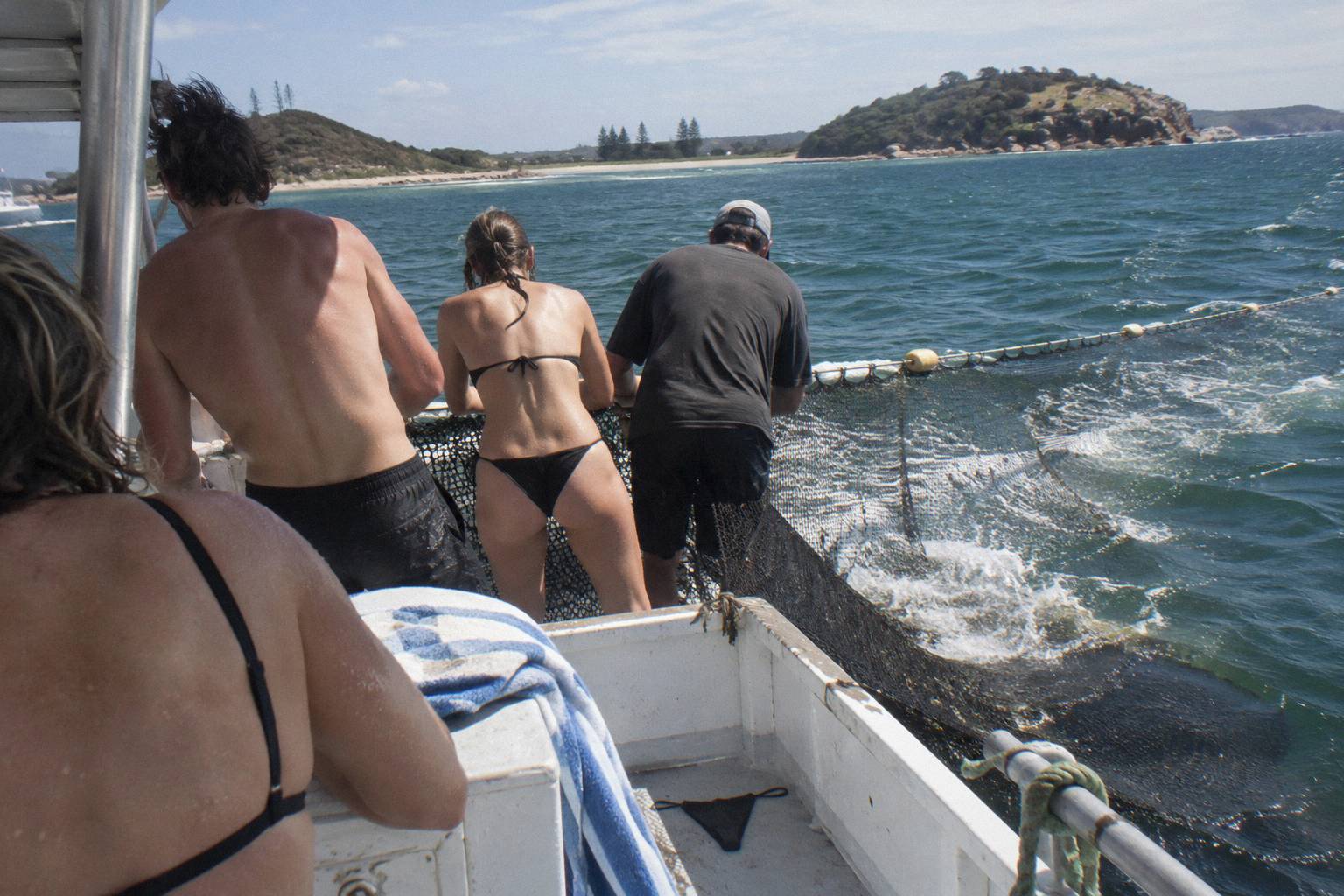
Moonshadow says plainly that the dolphins are totally wild and "100% sighting success isn't guaranteed": if dolphins are not located, it issues a non-transferable free return voucher on a standby basis rather than a cash refund. Imagine's Dolphin Watch Cruise and Sail carries a "Dolphin Guarantee (Free Return)". Both terms reward patience, not persistence, and both are reasons to book early in a stay.
The voucher mechanics are worth planning around. A standby return means you come back on a later departure if space allows, so a cruise on your last afternoon in town leaves no room to use it. Book the boat for your first full day and keep a spare morning free; the advice is plain planning logic, not an operator promise. Cancellation runs the other way: every trip here allows free cancellation up to 24 hours before for a full refund, while Moonshadow's own terms charge a standard cruise cancelled inside 24 hours in full, add an admin fee to amendments, and give no refund or transfer if you simply miss the departure. If the operator cancels, you get a full refund or a transfer.
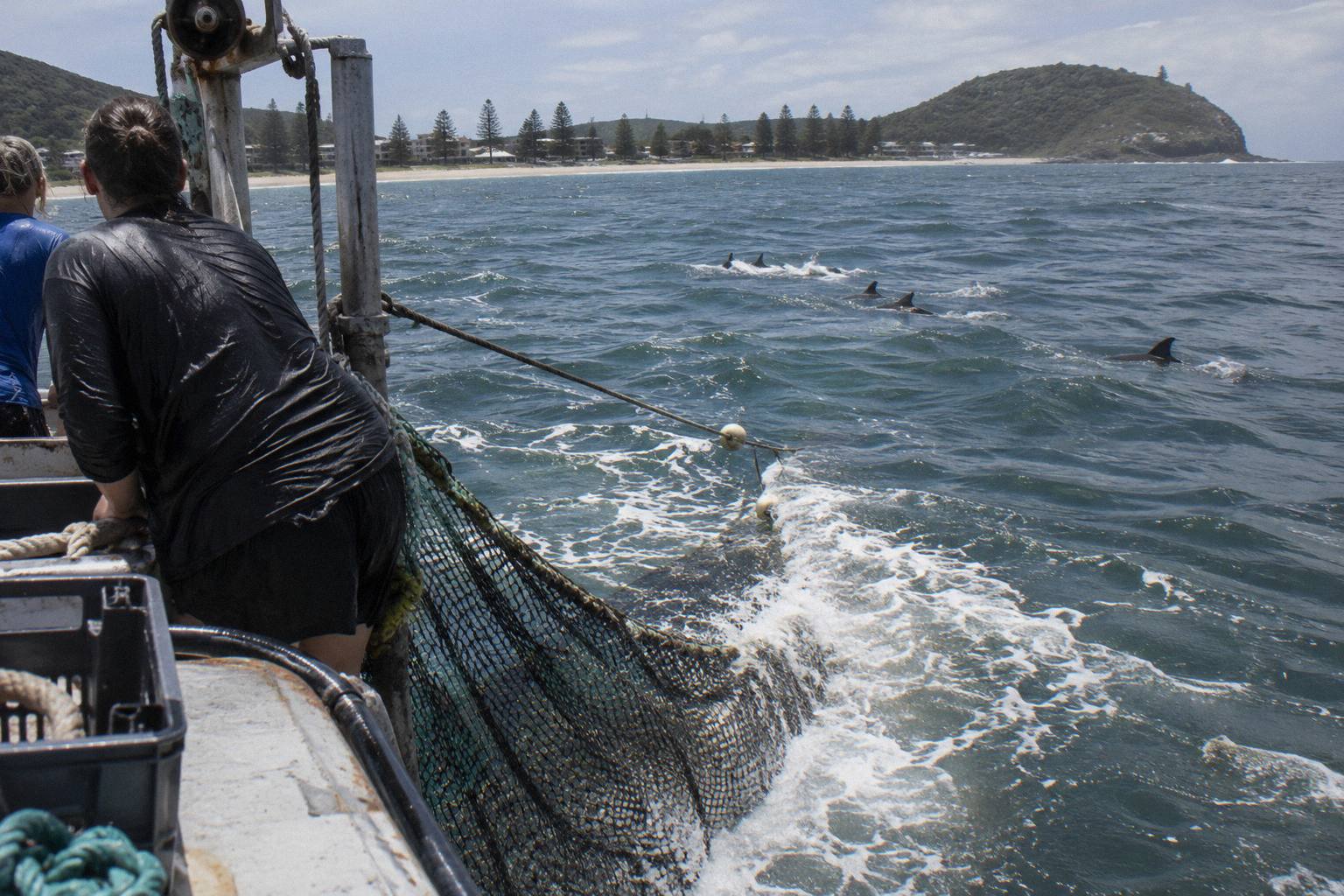
Weather follows the same logic. If offshore conditions are poor, the Wild Port Stephens route may stay in the bay, per the operator, and the Dolphin Discovery cruise keeps its boom net inshore by design. Neither is a downgrade so much as a fact of a large sheltered harbour; dolphins live in it all year, so a shorter route does not mean an empty one. For depth on refunds, reschedules and rough-day calls, the weather and cancellation decisions on Nelson Bay dolphin boats covers the calendar side in full, and how likely you are to see dolphins from a Nelson Bay boat takes the odds question on directly.
The resident pod gives the odds their floor. The NPWS visitor guide puts the permanent population at roughly 90 to 120 animals living in the marine park's waters, present in every season, so the question on any given departure is where they are and what they are doing, not whether the bay holds any. Operators never promise a number you will see, and no writer should either. What Port Stephens Dolphin Cruises can tell you is which boats leave from d'Albora Marina, how long each runs and what each costs, and those three facts narrow a choice faster than any sighting story.
Common Questions About Touching Dolphins
Why Can't You Touch A Dolphin?
Dolphins in Port Stephens are wild animals, and NSW approach-distance rules keep vessels at least 50 m from them, with a 150 m caution zone. No cruise here can lawfully close that gap for contact, and the operators describe their dolphins as totally wild.
Can A Dolphin Come To You On Its Own?
Yes, dolphins sometimes choose to bow-ride, and when they do the rule is that the vessel maintains course and speed. The dolphins close the distance by their own decision; the boat never does.
Is The Boom Net A Way Of Touching Dolphins?
No. A boom net is a net slung off the vessel that guests sit in while the boat moves; it is a ride over the surface, not contact with any animal, and no operator here presents it otherwise.
Do Any Rules Say You Cannot Swim With Dolphins?
The NSW approach-distance rules govern vessels, jet skis, drones and aircraft; they say nothing in themselves about swimming. The distances and the marine park rules together are why no cruise here offers a swim with the wild pod.
What If No Dolphins Appear On The Cruise?
Moonshadow issues a non-transferable free return voucher on a standby basis if dolphins are not located, with no cash refund; Imagine's Dolphin Watch Cruise and Sail carries a Dolphin Guarantee (Free Return). Free cancellation up to 24 hours before applies for a full refund.
How Many Dolphins Live In Port Stephens?
Roughly 90 to 120 Indo-Pacific bottlenose dolphins live permanently in the waters of Port Stephens within the marine park, per the NSW National Parks and Wildlife Service, and no cruise promises how many you will see.