
The Bottlenose Dolphins Of Port Stephens: The Resident Pod
Roughly 90 to 120 Indo-Pacific bottlenose dolphins live permanently in Port Stephens, a population the NSW National Parks and Wildlife Service describes as genetically distinct from the dolphins along the open coast. They are the reason the dolphin boats leave d'Albora Marina all year, and their story is more interesting than the brochures suggest.
Short answer
Port Stephens is home to roughly 90 to 120 Indo-Pacific bottlenose dolphins (NPWS) that live permanently inside the marine park. Macquarie University research found the population is genetically distinct and seldom interbreeds with coastal dolphins, and a second community lives near Broughton Island about 20 km away. Boat trips from Nelson Bay visit them under NSW approach rules.
Roughly 90 to 120 Indo-Pacific bottlenose dolphins live permanently in the waters of Port Stephens, according to the NSW National Parks and Wildlife Service, and they stay put: the same animals, year round, inside the same drowned river valley. That permanence is unusual. Most dolphin populations along the Australian coast roam widely, but the Port Stephens animals have carved out a resident life within the Port Stephens-Great Lakes Marine Park, and research from Macquarie University has shown they are genetically distinct from the coastal dolphins nearby and seldom interbreed with them.
For a visitor, that fact changes what a dolphin cruise is. You are not chasing a migrating animal that happens to be passing. You are entering the home range of a closed community with a 30 to 40 year lifespan, animals that know every channel and seagrass bed, and that live alongside a second, separate dolphin community near Broughton Island about 20 km away to the north east. Port Stephens Dolphin Cruises covers the boats that go out to meet them; here the focus is the pod itself, because understanding it tells you when to go, which trip suits you, and why the rules on the water look the way they do.
Who Are The Bottlenose Dolphins Of Port Stephens?
The Port Stephens dolphins are Indo-Pacific bottlenose dolphins, and roughly 90 to 120 of them (NPWS) live permanently inside the marine park's waters. They are wild animals, not a captive or semi-tame population, and no cruise can promise how many you will see on any given day. Their lifespan runs 30 to 40 years, so many of the adults a boat passes today have been swimming these waters for decades.
Roughly 90 to 120 Indo-Pacific bottlenose dolphins live permanently in Port Stephens, per the NPWS Port Stephens Bottlenose Dolphins Visitor Guide. Our guide to how likely you are to see dolphins from a Nelson Bay boat builds on that number.
The species name is worth getting right, too. Indo-Pacific bottlenose dolphins (Tursiops aduncus) differ from the common bottlenose (Tursiops truncatus) most people picture from aquariums: they are generally slighter, with a longer beak and spots that appear on the belly and flanks as they age. In the water from a moving deck the distinction is subtle, but it is the reason scientists treat the Port Stephens community as something worth protecting in its own right.
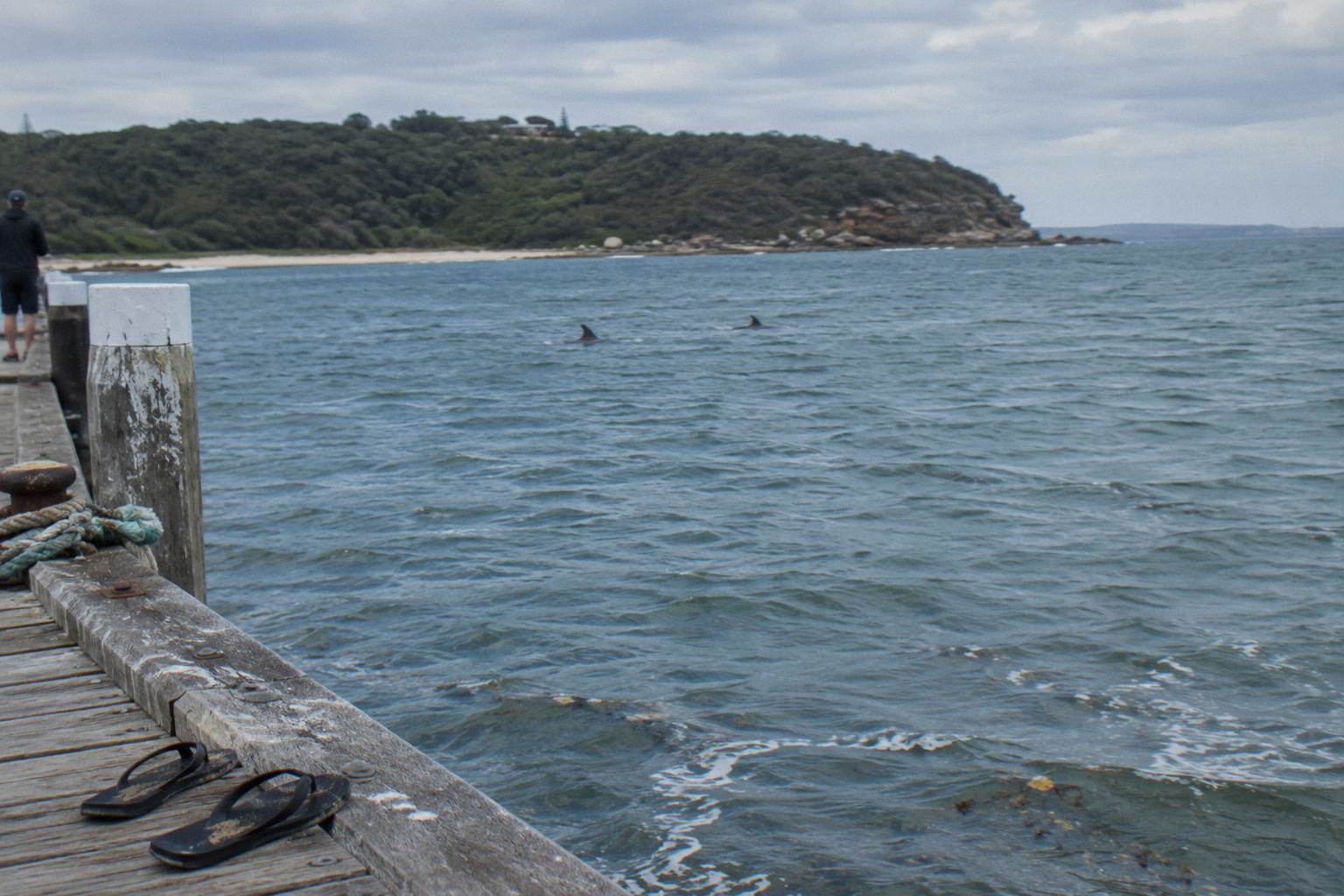
The pod's daily geography is well documented. Dolphins in the eastern section of the port are often seen off Shoal Bay beach, close enough that swimmers and stand-up paddleboarders sometimes share the water with them, and some animals travel outside the Heads to the open ocean and return. An annual Community Dolphin Census run in the area keeps a running watch on the population, one of the few long-term community science programs of its kind on the Australian east coast.
Why The Port Stephens Pod Is Genetically Distinct
Macquarie University research found the Port Stephens bottlenose population is genetically separate from the dolphins of the open coast, and the two groups seldom interbreed. That isolation makes the local pod effectively self-contained: its future depends on its own breeding success inside the port, not on dolphins arriving from elsewhere, which is why the marine park treats it as a population to manage in place.
Genetic distinctiveness sounds abstract until you consider what it means for a population of barely a hundred animals. A closed gene pool that small is vulnerable to the usual problems of small populations, and every calf matters proportionally more than it would in a roaming stock of thousands. It also explains why the NSW Government sets approach distances for dolphins state-wide rather than leaving behaviour near pods to individual skippers: one location can hold a significant fraction of an entire distinct community.
The separation has a physical logic. Port Stephens is a large, sheltered estuary with reliable fish stocks, seagrass beds and calm bays, everything a bottlenose group needs without the effort and risk of open-ocean hunting. Some animals do travel outside the Heads, NPWS notes, so the boundary is porous, but the breeding lines have stayed local. The Broughton Island community about 20 km north east adds a second layer: two dolphin groups, geographically close, yet functioning as separate societies.
For a visitor, the genetics translate into something you can see. Because the pod is resident, the dolphins use the same favoured feeding and resting areas week after week, and the local skippers know those spots. Because newborns matter, the rules that protect groups with calves are the strictest on the water. And because the population is closed, the Community Dolphin Census that runs each year is genuinely tracking a fixed neighbourhood of animals, many of them identifiable by fin markings, rather than sampling a passing stream.
Three trips make natural first choices if the pod's story is what draws you out: the marine park sightseeing cruise, a fast one-hour express, and a two-hour barbecue cruise with a boom net.
Where The Dolphins Live: The Marine Park And Its Zones
The resident dolphins live inside the Port Stephens-Great Lakes Marine Park, created in 2005, which is zoned into sanctuary, habitat protection, general use and special purpose zones. Two areas, Middle Grounds and the whole Jimmys Beach sanctuary zone, carry 4-knot speed limits specifically because they are important resting and feeding areas for the resident bottlenose dolphins.
The zoning, administered by the NSW Department of Primary Industries, is the legal backbone of the pod's protection. Boating, snorkelling and diving are all allowed in sanctuary zones, so the restrictions do not keep people out; they keep extraction out, with no collecting permitted in sanctuary areas. For dolphin watching, the most consequential zones are the slow-speed ones. A vessel crawling at 4 knots through Middle Grounds or the Jimmys Beach sanctuary zone is the rule, not a courtesy, and the dolphins that rest and feed there depend on it.
| Marine park feature | What applies | Why it matters to the pod |
|---|---|---|
| Sanctuary zones | Boating, snorkelling and diving allowed; no collecting | Protects the habitat the resident dolphins feed in |
| Habitat protection and general use zones | Boating with fewer restrictions | Most dolphin cruise routes pass through these |
| Middle Grounds 4-knot area | Vessels limited to 4 knots | Identified as a key resting and feeding area |
| Jimmys Beach sanctuary zone | 4 knots across the whole zone | Also a key resting and feeding area |
| Park establishment | Created in 2005 | Zoning has governed the port for two decades |
What does a 4-knot zone do for a dolphin? Speed is the variable boats control most easily. A fast hull is loud underwater and arrives without warning; a displacement-speed vessel gives resting animals time and quiet. The zones concentrate that logic in the two places DPI identifies as the pod's most important, which is why route choice on a cruise is not purely about scenery. A skipper who threads the slow zones properly is working with the park's design rather than around it.
The Wild Port Stephens Marine Park Cruise exists precisely for this: a 1.5-hour sightseeing circuit of the marine park on the MV Osprey, a 24 m vessel with panoramic decks and commentary, with no boom net, priced from A$46 per person. Because it is built as a park tour rather than a thrill ride, it suits a reader whose interest in the pod is natural-history first. If offshore conditions are poor, the operator says the route may stay inside the bay, which for a resident pod is no loss at all.
The MV Osprey's marine park circuit pairs nicely with reading on where the dolphin boats leave from at d'Albora Marina, since all the Nelson Bay trips board on the Teramby Road side of the marina.
How Close Can A Boat Get? The Official Approach Rules
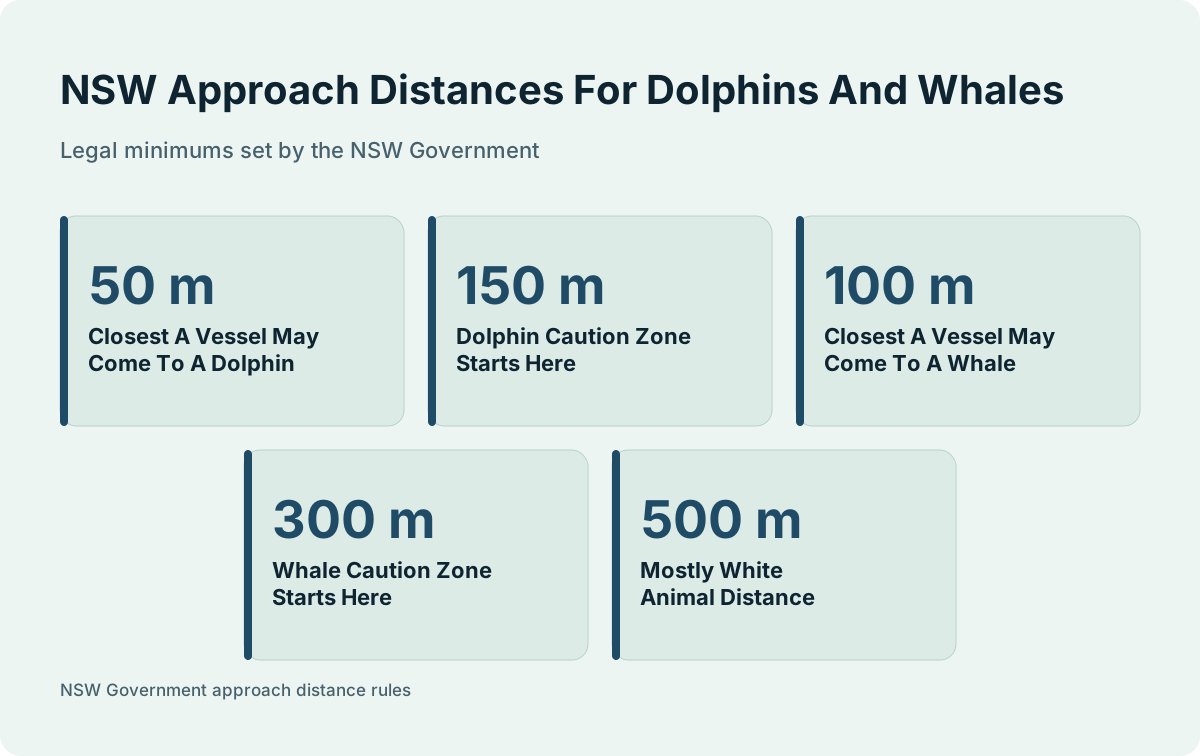
NSW law sets the minimum approach distances: a vessel may come no closer than 50 m to a dolphin, with a caution zone starting at 150 m, and no closer than 100 m to a whale, with its caution zone starting at 300 m. If a calf is present, a vessel may not enter the caution zone at all, and a mostly white animal always carries a 500 m distance. These are government rules, not operator policies.
Inside the dolphin caution zone the conduct rules are specific, and they are set out by the NSW Government rather than by any cruise company: a vessel approaches from the side at an angle of at least 30 degrees, at constant slow speed, with a lookout posted when two or more people are on board, and only three vessels may be within the whole caution zone at once. Jet skis must stay 300 m away, drones 100 m, and helicopters 500 m. One clause rewards good dolphin manners: if dolphins choose to bow-ride, the vessel maintains its course and speed rather than swerving away.
| Situation | Minimum distance or rule |
|---|---|
| Vessel approaching a dolphin | No closer than 50 m |
| Dolphin caution zone | Starts at 150 m |
| Vessel approaching a whale | No closer than 100 m |
| Whale caution zone | Starts at 300 m |
| Dolphin or whale calf present | Vessel may not enter the caution zone for closer viewing |
| Mostly white animal | Always 500 m |
| Inside any caution zone | Approach from the side at least 30 degrees, constant slow speed, lookout posted, three vessels maximum |
| Dolphins bow-riding | Vessel maintains course and speed |
| Jet ski | 300 m |
| Drone | 100 m |
| Helicopter | 500 m |
A passenger sometimes asks why the boat does not simply pull up alongside the pod for photos. The answer is those distances, published by NSW's environment authority on its approach distances page. Commercial skippers work inside the same numbers as everyone else. Moonshadow's own materials describe company practices such as time limits per pod and boat numbers, but those are the operator's practice, quoted as such, not the law; the legal figures are the government ones in the table above.
The rules govern vessels, and notably they say nothing about touching or swimming. What swimming with wild dolphins actually involves in NSW, and why it is so tightly constrained, is covered separately in our page on what is allowed when swimming with dolphins in Port Stephens. From a dolphin cruise deck, the distances are the skipper's job, not yours.
For context on the water: these distances are generous by wildlife-watching standards, and 50 m on a calm day is close enough to see a dorsal fin cut, a spy-hop, or a mother and calf surfacing in step. A hat and sun protection are worth packing, as covered in what to wear on a Nelson Bay dolphin boat.
What The Research Found About Boats And Dolphins
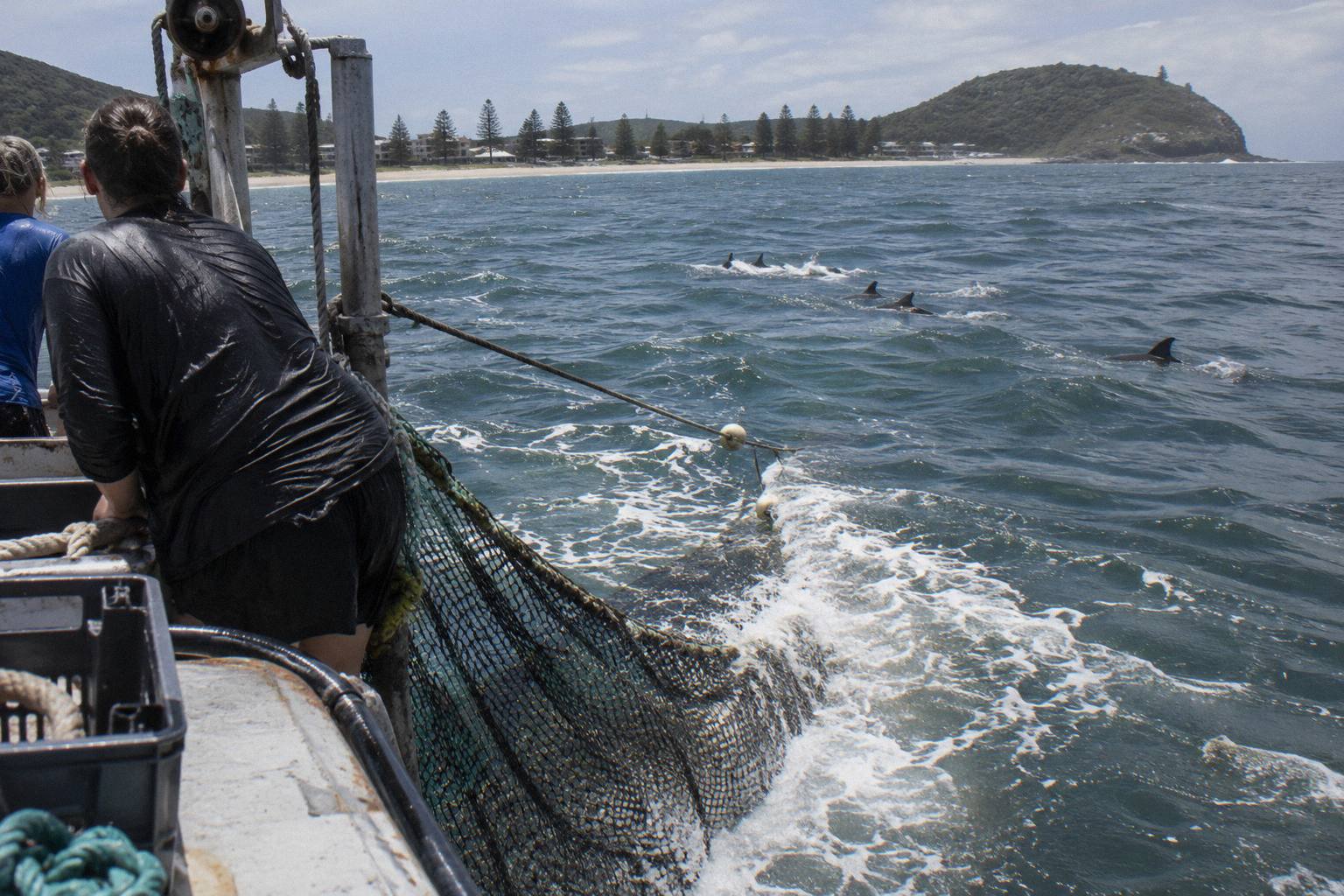
A 2012 Journal of Environmental Management paper by Steckenreuter, Moller and Harcourt, using boat surveys from August 2008 to August 2009, found that while dolphin-watching boats were present, Port Stephens dolphins fed and socialised less, and groups with newborns came closer than the minimum approach distances in nine of ten encounters. It is 2008 to 2009 data and cannot be read as a description of today's fleet.
That study, published in the Journal of Environmental Management, is the most cited piece of science on this exact pod, and its findings explain much of the modern framework. Feeding and socialising are the two activities a resident population can least afford to lose: a closed community of 90 to 120 animals trades energy carefully, and interrupted meals compound over a lifetime. Newborn groups being approached closely in nine of ten encounters was the sharpest finding, given how much each calf matters to a genetically isolated population. The paper is publicly accessible via its journal DOI.
The way to use the study is as history with consequences. The survey work predates the mature marine park zoning and the codified approach distances described above, so the numbers describe a port under different management. What the study established is mechanism: boats measurably change dolphin behaviour, and the change concentrates on feeding, socialising and calf groups, precisely the things the 4-knot zones and calf cautions now target. Regulation followed evidence, which is the ordinary and reassuring sequence.
A visitor does not need to do anything with that science except choose with a little care. Every Nelson Bay trip operates under the same legal distances, but trip style varies, from a fast one-hour express to a slow catamaran sail, and our comparison of dolphin watching trips by boat type lays out the differences. If quiet observation is your aim, a sailing or sightseeing format matches it better than a high-speed run.
Which Boat Trips Take You To See The Pod?
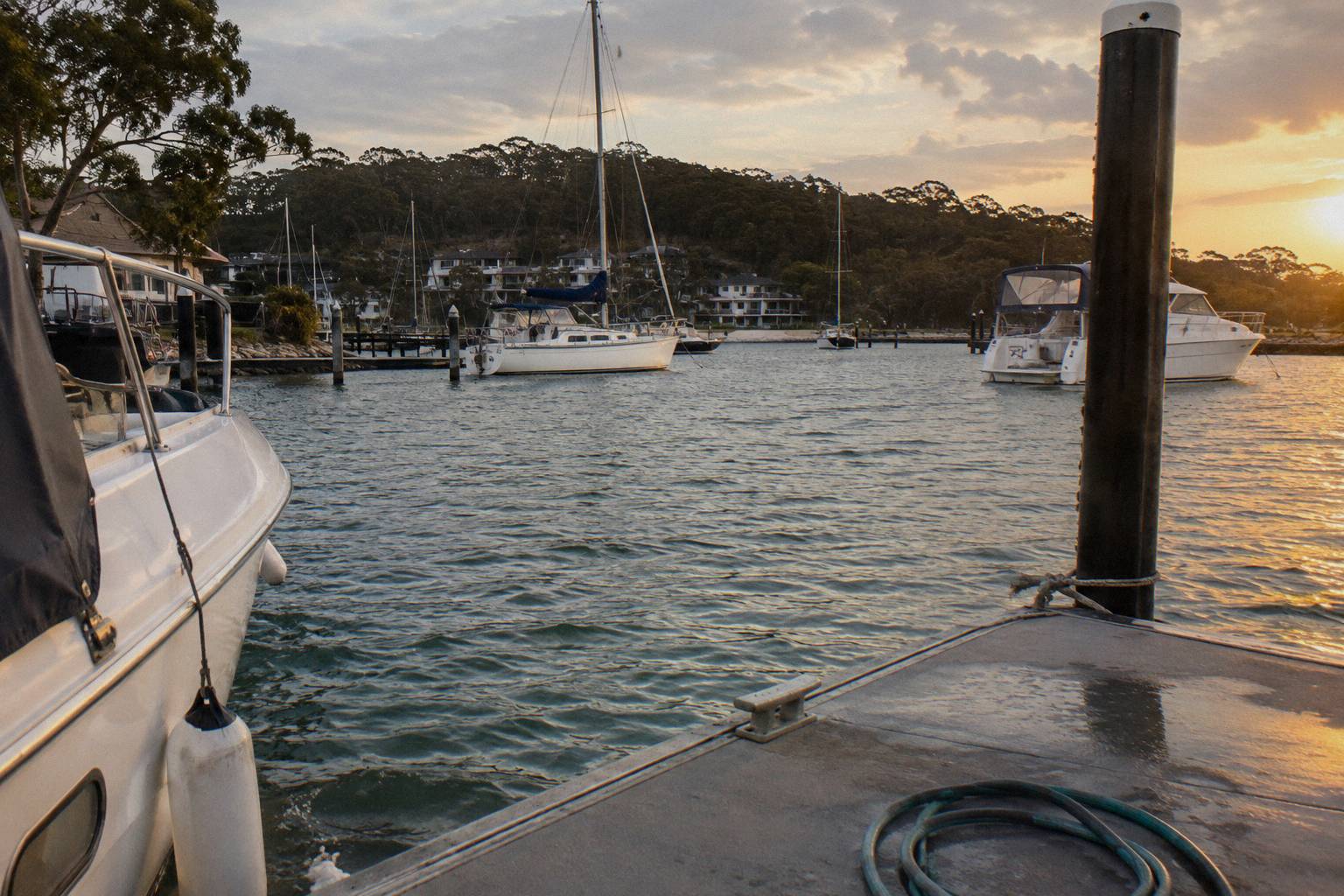
Six boat trips from Nelson Bay put you on the water with the resident pod, from the 1-hour Dolphin Watch Express at A$55 to the 3.5-hour Marine Discovery snorkel cruise at A$100, spanning three operators: Moonshadow-TQC Cruises, Imagine Cruises and Aquamarine Adventures. All are dolphin-focused rather than whale boats, and all board at d'Albora Marina except the barbecue cruise, which boards at the Victoria Parade terminal.
The differences between them are style, duration and inclusions rather than odds of dolphins, since all three operators work the same resident pod under the same rules. The table below is the short version, with prices in Australian dollars and ratings shown only where a review pool exists.
| Trip | Operator | Duration | From (per person) | What it is |
|---|---|---|---|---|
| 1-Hour Dolphin Watch Express | Aquamarine Adventures | 1 hour | A$55 | Fast power-catamaran cruise to the resident bottlenose dolphins; 4.9 from 62 reviews |
| Dolphin Discovery Cruise | Moonshadow-TQC Cruises | 1.5 hours | A$46 | Inshore cruise with boom net, captain's commentary; 4.4 from 1,047 reviews |
| Dolphin Watch Cruise And Sail | Imagine Cruises | 1.5 hours | A$50 | Sailing catamaran, bow net and boom net, tea and coffee; 4.8 from 106 reviews; November to April |
| Wild Port Stephens Marine Park Cruise | Moonshadow-TQC Cruises | 1.5 hours | A$46 | MV Osprey sightseeing circuit of the marine park, commentary, no boom net |
| BBQ And Boom Net Cruise | Moonshadow-TQC Cruises | 2 hours | A$59 | Twin-level boat, headlands and eastern harbour, sausage sizzle, boom net; December to April |
| Marine Discovery Snorkel Cruise | Imagine Cruises | 3.5 hours | A$100 | Snorkel cruise with dive-master guide, gear included, sailing when conditions permit |
Two of those formats pair naturally with an interest in the pod's world. The Imagine sailing catamaran moves at sail pace when the breeze allows, 360-degree viewing from a stable platform, tea and coffee self-service included, with the operator's Dolphin Guarantee (Free Return) if no dolphins are found. The Moonshadow Dolphin Discovery cruise is the volume favourite, 1.5 inshore hours with a boom net ride, a bar on board and snacks to buy, and Moonshadow's own terms: totally wild dolphins, no 100 percent sighting guarantee, and a non-transferable free return voucher on a standby basis if dolphins are not located.
The boom net deserves a plain definition, because it is often misunderstood. It is a net slung off the side of the vessel that guests sit in while the boat moves, a ride in the boat's wake rather than anything else, and no dolphin approaches it on purpose or by invitation. Only the trips named as having one carry it. If the net is the draw for your group, our boom net experience explained page covers who it suits and what to bring: a swimsuit and towels, which are not supplied.
What If No Dolphins Appear?
No cruise promises dolphins, and each operator words its fallback differently: Moonshadow says 100 percent sighting success is not guaranteed and issues a non-transferable free return voucher on a standby basis if dolphins are not located, while Imagine's sailing cruise carries a Dolphin Guarantee (Free Return). The dolphins are totally wild animals, and the operators treat a missed day as a rebooking question, not a refund question.
This is the practical edge of everything above. A resident pod of 90 to 120 animals in a sheltered port is about as reliable as wild dolphin watching gets anywhere, which is why the operators can offer return schemes at all, but wild is wild. Moonshadow's scheme is a standby voucher, meaning you come back on a future cruise subject to space; Imagine's is likewise a free return rather than cash back. Read the terms on each operator's page when you book, and weigh them equally with price.
Cancellation runs the other way, and it is uniform across the trips covered here: free cancellation up to 24 hours before departure for a full refund. Inside that window, Moonshadow's terms charge a standard cruise cancelled within 24 hours in full, amendments carry an admin fee, and a missed departure means no refund or transfer. If the operator cancels, you receive a full refund or a transfer. Weather and cancellation mechanics, including what happens when conditions turn, are covered in full in weather and cancellations on Port Stephens dolphin boats.
The best mental model is a fishing-trip model rather than a theme-park one. You are buying three things: a competent crew that knows where the pod tends to be, a boat that is pleasant to spend the trip on, and a fallback if the day goes quiet. Judged that way, a missed sighting is a disappointment, not a failure, and the resident pod will still be there for the return voucher.
When To Visit, And What A Trip Around The Pod Costs
The resident dolphins live in Port Stephens all year, so there is no closed dolphin season, though individual trips vary: the Imagine sailing cruise runs November to April and the barbecue cruise December to April, while Moonshadow's dolphin cruises run every day except Christmas Day. Fares run from A$46 to A$100 per person for the dolphin boats, and day trips from Sydney or Newcastle cost more.
Because the pod never leaves, timing becomes a question of trip availability and comfort rather than migration. Summer and autumn offer the widest choice of formats, including the seasonal sailing and barbecue cruises, while winter still has the year-round boats and the calmest crowding. The Bureau of Meteorology's Nelson Bay climate averages give the shape of the year: January means a 27.3 degree maximum, July a 17.6 degree maximum, and rainfall peaks in May and June at around 150 mm a month. None of that is a sea condition, only the land climate, but it guides packing.
| Month | Mean max (C) | Mean min (C) | Rainfall (mm) |
|---|---|---|---|
| January | 27.3 | 19.0 | 99.5 |
| April | 23.6 | 15.4 | 129.2 |
| July | 17.6 | 9.2 | 136.7 |
| October | 23.2 | 14.3 | 78.4 |
| December | 26.0 | 17.8 | 91.7 |
For planning depth, two companion pages break the calendar down: the dolphin watching season month by month and dolphin boat ticket prices by boat type. If you are coming without a car, the Sydney coach day trip, from A$199, wraps a 90-minute Dolphin Discovery cruise inside a 12-hour itinerary that also visits a koala sanctuary and the Stockton Beach dunes, and our Sydney to Nelson Bay day trip guide covers it in full.
A note on seasons beyond dolphins: humpbacks pass Port Stephens from May to November, with up to 40,000 animals migrating along the NSW coast each year, and the whale express from A$99 carries a free return voucher valid 12 months if no whales are seen. Some guests report dolphin sightings on that trip too, since its crew keeps a lookout for pods, but it is a seasonal whale boat, not one of the dolphin trips above. The overlap months, late autumn and spring, are the one window when both stories share the water.
Mistakes People Make When Dolphin Watching In Port Stephens
The common mistakes are expecting a guaranteed sighting, assuming every trip is the same, arriving without the right gear for the boom net, booking the sailing cruise in winter when it does not run, and misunderstanding the approach rules as operator marketing rather than law. Each is avoidable with a little planning, and none of them requires spending more money, only matching the trip to the day and the reader.
The first mistake is treating a cruise ticket as a dolphin voucher. As covered above, both major operators offer return schemes rather than refunds, and both say plainly that the animals are wild. Go expecting a good boat trip with a strong chance of dolphins and the day lands well either way. The second is skipping the comparison: a one-hour express, a sailing catamaran and a two-hour barbecue cruise are genuinely different experiences at similar prices, from A$46 to A$59 for the three core formats.
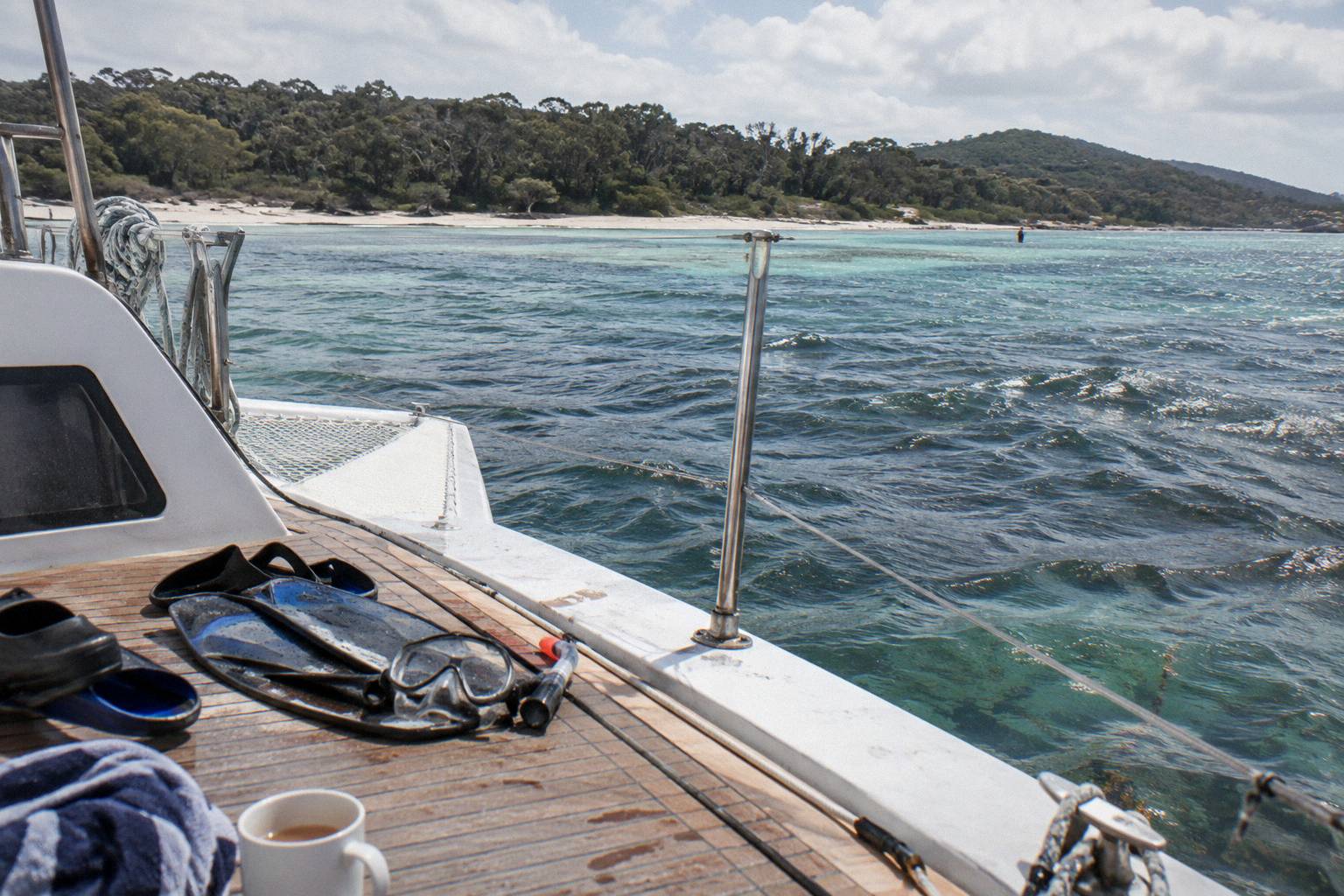
The third is packing. Swimsuit and towels are not supplied for the boom net, and on the snorkel cruise wetsuits and towels are excluded too, though the mask, snorkel and fins are included and a dive-master guides the water. The fourth is calendar blindness: the Imagine sailing cruise finishes at the end of April and the barbecue cruise runs December to April, so a June visitor choosing by price alone will find their pick unavailable. The fifth is misreading the rules. The 50 m dolphin distance and 150 m caution zone are NSW law, published by the environment authority, not a courtesy a particular company made up; knowing that makes sense of why the boats behave as they do around a pod, as Moonshadow's own dolphins page and its practices reflect within those limits.
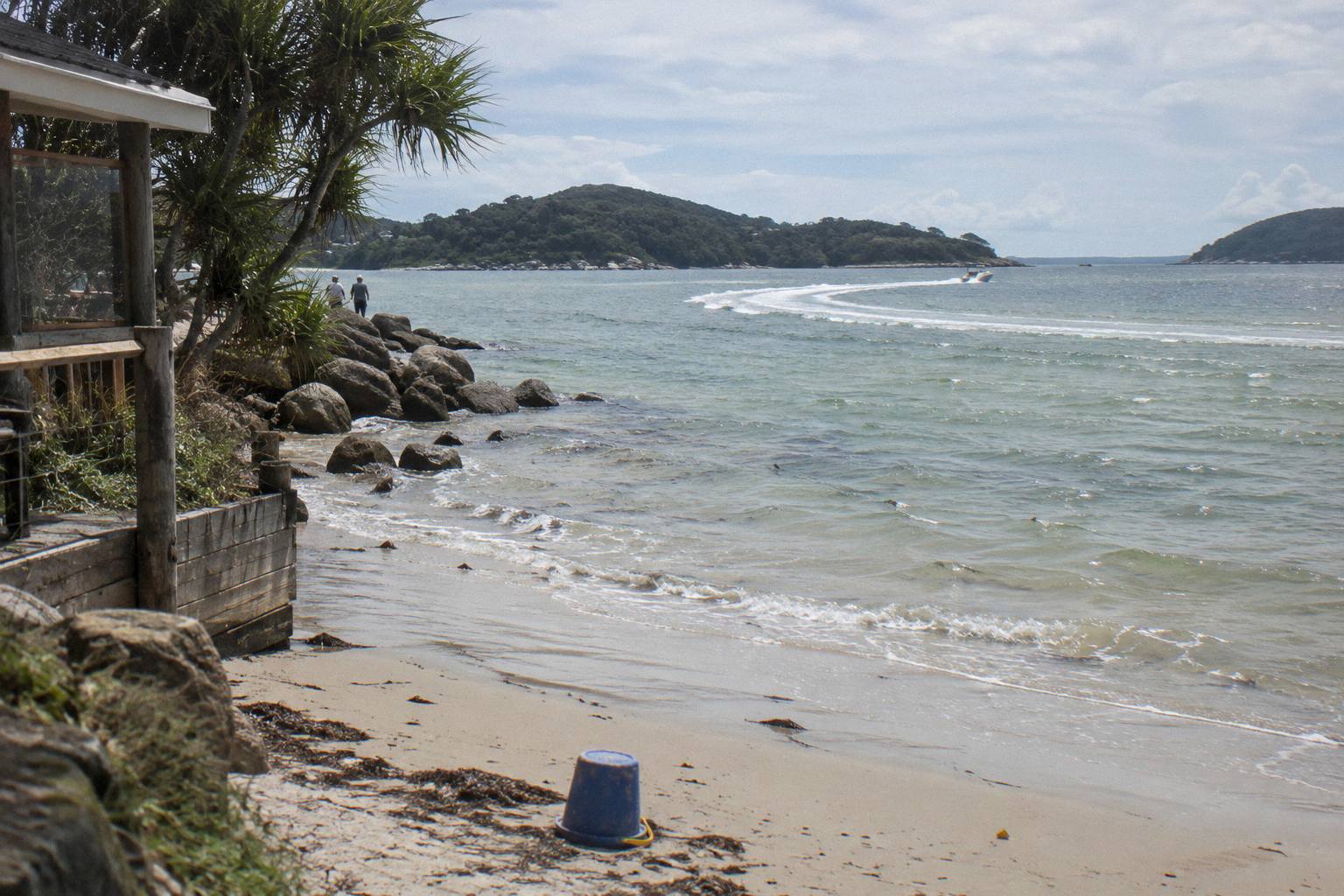
If those mistakes are sidestepped, the resident pod rewards patience. Roughly 90 to 120 genetically distinct Indo-Pacific bottlenose dolphins, a 30 to 40 year lifespan each, a marine park arranged around their resting grounds, and a fleet of boats that know where they feed: it is one of the most accessible wild dolphin populations in Australia, and the trip that suits you is mostly a question of style, season and how long you want to stay out.
Common Questions About The Port Stephens Dolphins
How Many Dolphins Live In Port Stephens?
Roughly 90 to 120 Indo-Pacific bottlenose dolphins live permanently in Port Stephens, according to the NSW National Parks and Wildlife Service, with a second community at Broughton Island about 20 km away.
Are The Port Stephens Dolphins There All Year?
Yes. NPWS notes the population lives permanently within the marine park and Nelson Bay can be visited at any time of year to see them, though individual cruises have their own seasons: the sailing cruise runs November to April and the barbecue cruise December to April.
What Kind Of Dolphins Are In Port Stephens?
They are Indo-Pacific bottlenose dolphins, a species generally smaller and slimmer than the common bottlenose, and Macquarie University research shows the Port Stephens population is genetically distinct and seldom interbreeds with coastal dolphins.
How Close Can Boats Get To Dolphins In Port Stephens?
NSW rules set a 50 m minimum approach distance for vessels, with a caution zone from 150 m, and boats may not enter the caution zone at all when a calf is present. If dolphins bow-ride, the vessel maintains course and speed.
Do Dolphin Cruises In Port Stephens Guarantee Sightings?
No. Moonshadow states that 100 percent sighting success is not guaranteed and offers a non-transferable free return voucher on a standby basis if dolphins are not located, while Imagine's sailing cruise carries a Dolphin Guarantee (Free Return).
Can You Swim With The Port Stephens Dolphins?
The boat trips from Nelson Bay do not offer dolphin swims. The boom net is a net ride off the side of the vessel, not a swim with dolphins, and the rules governing vessels say nothing that permits swimming up to wild pods.