
Morning Or Afternoon Dolphin Boat At Nelson Bay: Which Departure
Moonshadow's dolphin cruises leave in the late morning and early afternoon all year, with an extra afternoon departure in school holidays outside winter. Neither slot sees more dolphins: the resident pod is in the bay every month, so the choice comes down to daylight, season and your own timetable.
Short answer
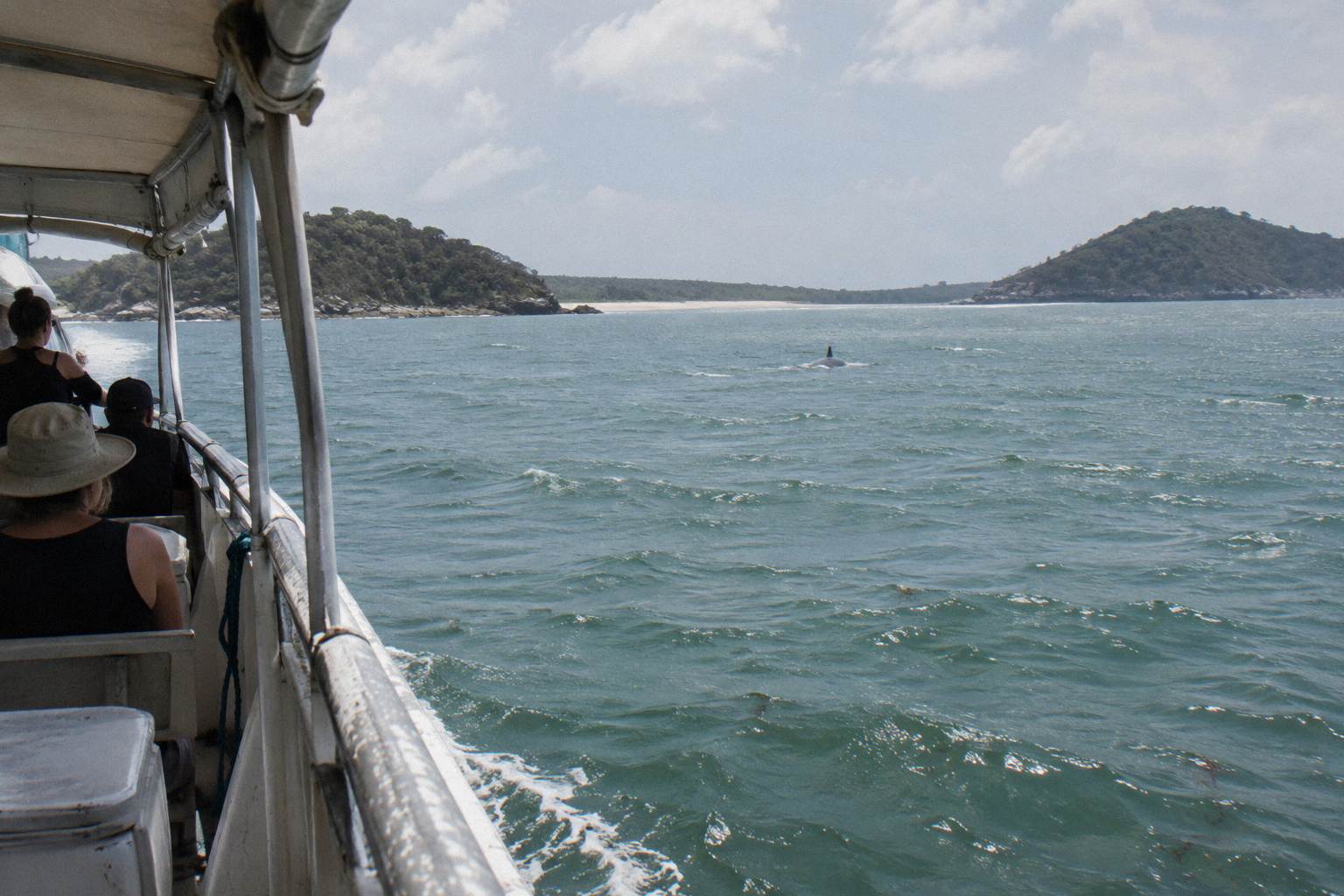
Moonshadow runs late-morning and early-afternoon departures daily all year, plus an extra afternoon departure in school holidays except winter. The resident pod of roughly 90 to 120 dolphins stays in Port Stephens year-round, so no departure hour sees more of them. Pick by season, daylight and your schedule; trips run from A$46 per person.
Which Departure Time Should You Pick For A Nelson Bay Dolphin Boat?
Pick the departure that fits your day, not one that promises more dolphins, because the resident pod lives in Port Stephens every month of the year. Moonshadow describes late-morning and early-afternoon departures daily all year, with an extra afternoon departure in school holidays except winter. No cruise here guarantees a sighting, and no hour of the day is proven better than another. Choose by season, daylight and your family's rhythm instead.
The most common question a booker asks after choosing a boat is which departure to take, and the answer starts with an inconvenient truth: nobody can sell you a better hour. The NSW National Parks and Wildlife Service counts roughly 90 to 120 Indo-Pacific bottlenose dolphins living permanently inside the Port Stephens-Great Lakes Marine Park, and they are out there in January froth and July drizzle alike. Dolphins do not keep a timetable that favours lunchtime over mid-morning, and no figure exists in any operator material that says one departure slot outperforms another.
What does differ between a late-morning and an early-afternoon departure is everything around the boat. A late-morning slot leaves your afternoon free for the beach at Shoal Bay or lunch on the Nelson Bay foreshore. An early-afternoon slot suits a slower hotel breakfast, a morning sand-dune activity or a drive in from Newcastle. In the shoulder months, the two slots can sit in quite different weather: the Bureau of Meteorology's Nelson Bay climate averages show the port's wettest months are May through July, when an extra hour of cloud can change how a trip feels on the water.
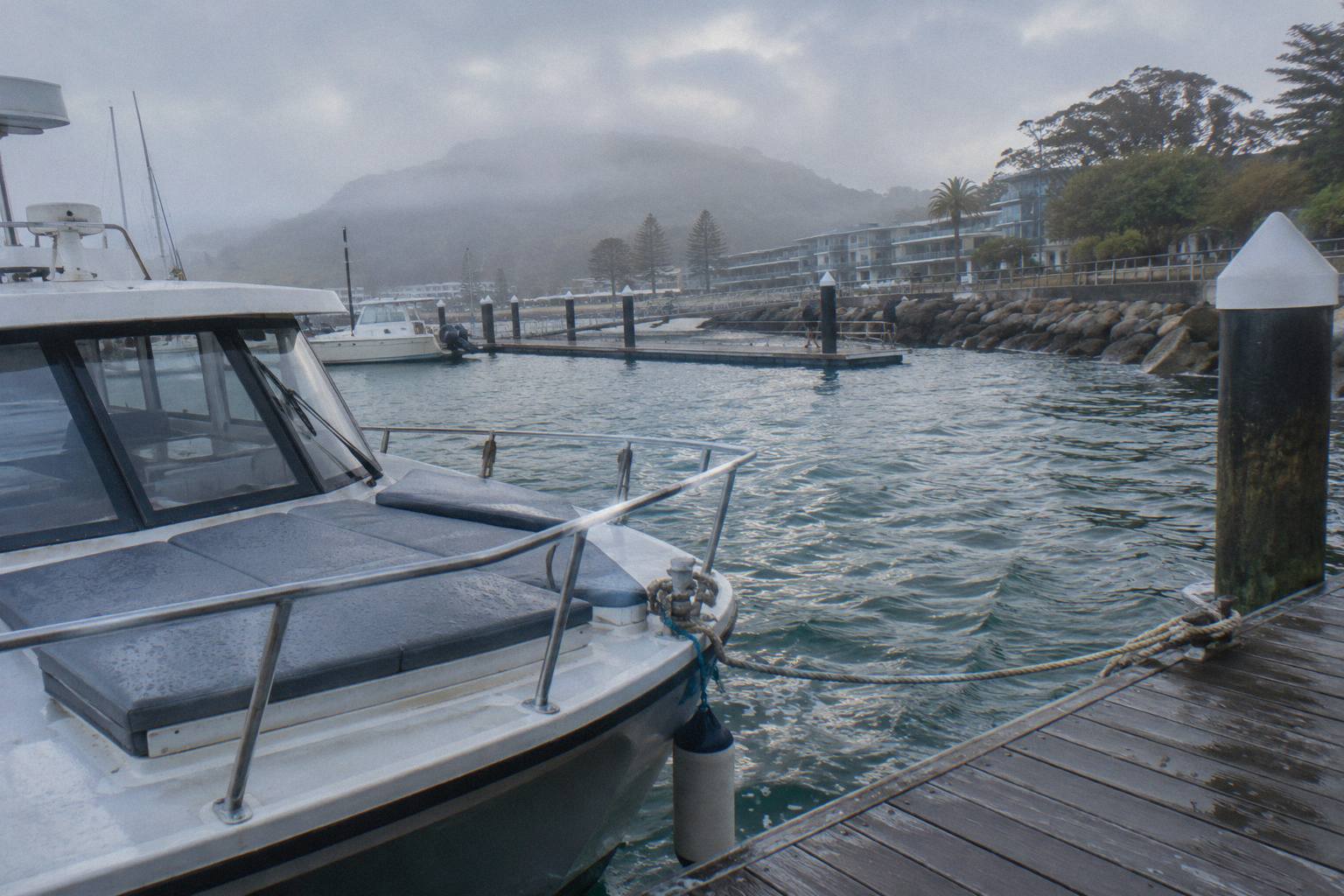
The featured boat for making that call is the Moonshadow Dolphin Discovery Cruise, a 1.5-hour trip from A$46 per person rated 4.4 from 1,047 reviews, with a boom net ride, captain's commentary and a bar on board. It runs all year from d'Albora Marina, Nelson Bay, and you can check availability once you have settled on a slot. The dock is on your booking confirmation, and Moonshadow asks guests to board about 15 minutes before departure, which matters more for a late-morning start when parking near the marina fills quickly.
If you are building the whole Port Stephens picture before choosing an hour, start with the parent guide to Nelson Bay dolphin cruises, boats and marina details, which lays out the boats, the boarding points and the year at a glance.
| Question | Short answer |
|---|---|
| Do morning boats see more dolphins? | No hour is proven better; the pod lives in the bay all year |
| What departures exist? | Late morning and early afternoon daily all year (Moonshadow); extra afternoon slot in school holidays except winter |
| Do any boats run at dawn or sunset? | No dolphin cruise here runs at dawn or dusk; the sunset cruise is a separate evening product |
| Which slot suits kids? | The one that sits around naps and meals; the boom net needs swimmers and towels |
| Can you change departure later? | Free cancellation up to 24 hours before on every trip here; amendments after that carry terms |
What Departure Patterns Do The Nelson Bay Boats Actually Run?
Moonshadow's dolphin cruises run every day except Christmas Day, with a late-morning and an early-afternoon departure daily all year and an extra afternoon departure in school holidays outside winter. Imagine's sailing catamaran cruise runs November to April only. Aquamarine's express runs a fast one-hour format. Clock times are set by each booking calendar and change, so the pattern, not the hour, is what you plan around.
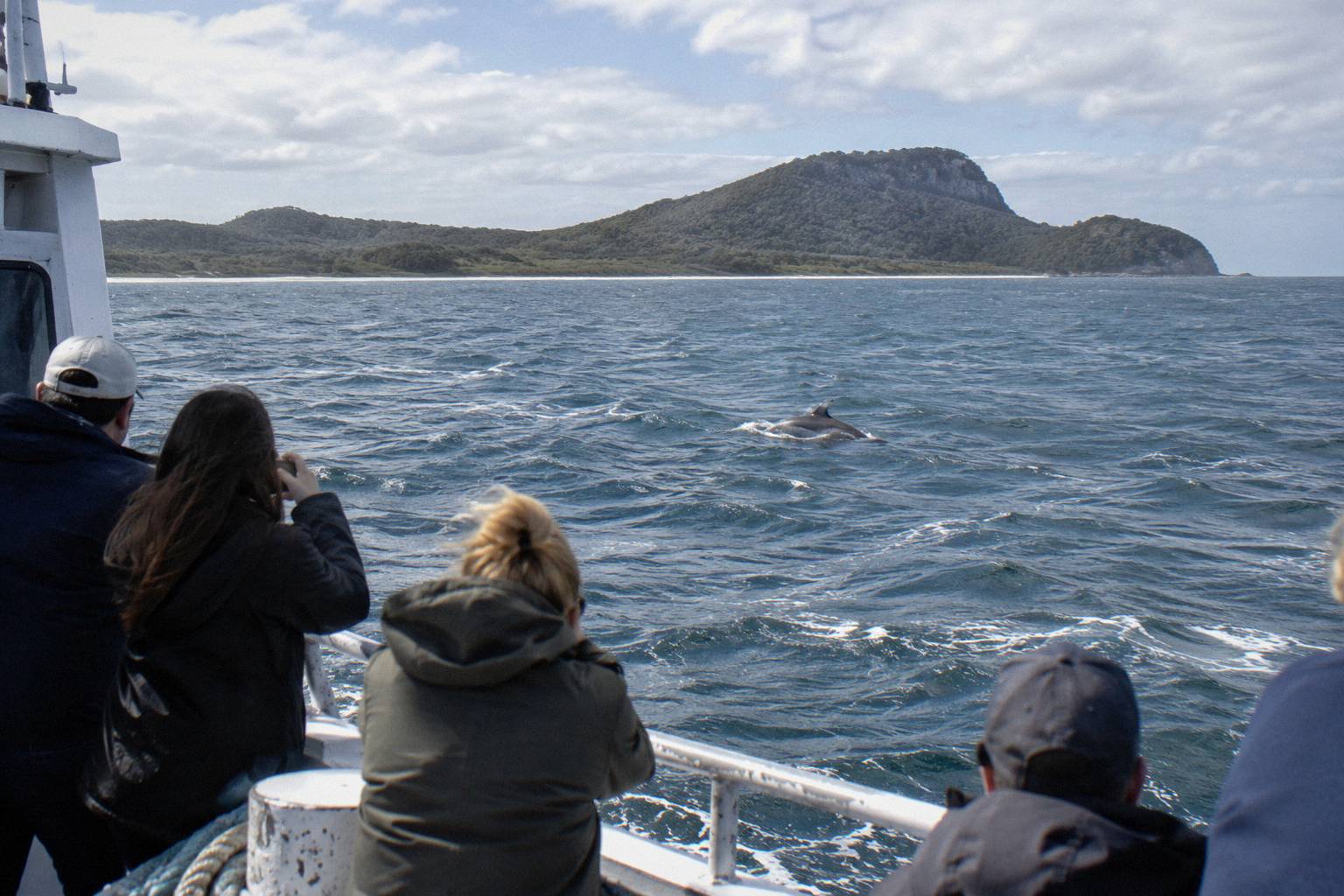
The pattern matters because it decides how much freedom you really have. Moonshadow, which runs the Dolphin Discovery cruise, the Wild Port Stephens cruise on the MV Osprey and the BBQ and Boom Net cruise, publishes its dolphin-watching calendar as late morning and early afternoon departures every day of the year, per its own cruise pages. In school holidays it adds one more afternoon departure, except in winter. That means a July visitor usually has two slots to choose between, while a January visitor often has three, and the third is always an afternoon one.
The other boats follow their own clocks. Imagine's Dolphin Watch Cruise and Sail, a 1.5-hour trip on a sailing catamaran from A$50 rated 4.8 from 106 reviews, runs only from November to the end of April, so a winter booker never faces a morning-or-afternoon choice on that boat at all. Aquamarine's 1-Hour Dolphin Watch Express, from A$55 rated 4.9 from 62 reviews, compresses the whole outing into one fast hour on a power catamaran, which pairs well with a morning slot when you want the rest of the day ashore. Boarding for the dolphin boats is at d'Albora Marina, Nelson Bay, except the BBQ and Boom Net cruise, which boards at Wharf 1, the Cruise Passenger Terminal on Victoria Parade.
The reason no article can hand you a fixed timetable is that the calendars move with demand, season and daylight, so printing a time would mislead you within weeks. What stays stable is the shape: late morning, early afternoon, and in peak periods a third afternoon departure. Check the calendar for your exact date when you book.
For a deeper comparison of each boat's format, see which Port Stephens dolphin boat gets you closest, which works through decks, nets and viewing angles across the fleet.
How Does Daylight Change Through The Year At Nelson Bay?
Nelson Bay swings from about 14.3 hours of daylight in December to about 10.0 hours in June, so both standard departures happen in full daylight year-round, but the morning slot starts brighter in summer and the afternoon slot ends darker in winter. A computed table of approximate sunrise and sunset times, always about, shows the shape of each month. These are daylight figures, not boat times and not light-quality claims.
Daylight is the one factor that genuinely changes between the departure slots, and it changes slowly enough to plan around. The computed figures below are a NOAA-style calculation for the 15th of each month at Nelson Bay, Australia/Sydney time, approximate and unofficial. In midsummer the sun rises about 5:38am in December and sets about 8:02pm in January, so a late-morning departure sits deep inside a long bright day. In midwinter sunrise slips to about 6:51am in June with sunset about 4:52pm, which pulls the early-afternoon departure closer to the day's end without pushing it into dusk.
| Month (15th) | Approximate sunrise | Approximate sunset |
|---|---|---|
| January | about 5:58am | about 8:02pm |
| February | about 6:28am | about 7:44pm |
| March | about 6:51am | about 7:11pm |
| April | about 6:12am | about 5:31pm |
| May | about 6:33am | about 5:02pm |
| June | about 6:51am | about 4:52pm |
| July | about 6:52am | about 5:02pm |
| August | about 6:30am | about 5:23pm |
| September | about 5:51am | about 5:42pm |
| October | about 6:12am | about 7:02pm |
| November | about 5:43am | about 7:30pm |
| December | about 5:38am | about 7:55pm |
Read the table as a planning tool, not a promise about light on the water. What it tells a booker is that in the June-to-July trough both departures fit inside roughly ten hours of daylight, so an early-afternoon cruise in winter finishes with the sun already leaning west, while the same slot in January finishes with hours of light to spare for a swim afterwards. Neither condition affects the dolphins.
The Bureau of Meteorology's Nelson Bay climate averages add the temperature backdrop: summer months average a maximum of 27.3 °C in January against 17.6 °C in July, with the wettest period from May to July. Those land averages describe what you will wear to the marina, not sea conditions, and no wind or swell figure exists in the operator material to print.
One more daylight nuance: the morning departure in winter means a sunrise start to your drive if you are coming from Sydney, which is about 2.5 hours by car per operator figures. The afternoon slot removes that pressure entirely.
Does The Season Matter More Than The Hour?
Yes: season changes what runs at all, while the hour only changes when it runs. The dolphin boats run all year, the sailing catamaran cruise runs November to April, and the BBQ and Boom Net cruise runs December to April, so in some months your morning-or-afternoon question applies to fewer boats. The resident pod of roughly 90 to 120 dolphins does not take a season off.
Season decides the menu; the hour decides the seating. A booker in February can weigh the Moonshadow Dolphin Discovery cruise, Imagine's sailing catamaran, Aquamarine's express and the BBQ and Boom Net cruise against one another, all of them offering morning and afternoon slots on their calendars. A booker in July faces a shorter list: the sailing catamaran is out of the water until November, the sausage-sizzle cruise is paused until December, and what remains still leaves every day of the week with departures, because Moonshadow's dolphin cruises run all year.
The reason the sailing option disappears is simple: Imagine Cruises runs its Dolphin Watch Cruise and Sail from November to the end of April only, per the operator. When it runs, the choice between morning and afternoon on that boat has a distinct flavour: tea and coffee are self-service and included, the catamaran gives 360-degree viewing with a dry bow-net and a wet boom-net, and the trip carries Imagine's own Dolphin Guarantee, a free return if no dolphins are found. It is a 1.5-hour cruise from A$50 per person, rated 4.8 from 106 reviews, boarding at d'Albora Marina.
Whale season overlaps the quieter end of that window. Humpbacks pass Port Stephens from May to November, with up to 40,000 animals migrating along the coast, and the Aquamarine Whale Watching Express (1.5 hours, from A$99, 4.5 from 87 reviews, ages 5 and over) runs while they are here. Some guests report dolphin sightings on that trip too, since its crew keeps a lookout for pods. If your date falls inside whale season and you want both animals, the combined-cruise question is covered in the guide to dolphin and whale watching combined cruises from Port Stephens, and the month-by-month detail sits in the Port Stephens whale watching season guide.
For the dolphin picture alone, the NPWS visitor guide is the authority worth reading: the population is genetically distinct, seldom interbreeding with coastal dolphins, with some animals travelling outside the Heads and a second community near Broughton Island about 20 km away. None of that changes by the hour of your departure.
| Trip | Operator | Duration | From (per person) | Season |
|---|---|---|---|---|
| Dolphin Discovery Cruise | Moonshadow | 1.5 hours | A$46 | All year |
| 1-Hour Dolphin Watch Express | Aquamarine | 1 hour | A$55 | All year |
| Dolphin Watch Cruise and Sail | Imagine | 1.5 hours | A$50 | November to April |
| BBQ and Boom Net Cruise | Moonshadow | 2 hours | A$59 | December to April |
| Marine Discovery Snorkel Cruise | Imagine | 3.5 hours | A$100 | Check when booking |
| Wild Port Stephens Marine Park Cruise | Moonshadow | 1.5 hours | A$46 | Check when booking |
Prices are in Australian dollars and are shown as from-prices; the current price is on each calendar when you check dates.
Which Trips Only Run At Certain Times Of Year?
Two named trips shut for winter: the BBQ and Boom Net cruise runs December to April, and Imagine's Dolphin Watch Cruise and Sail runs November to the end of April. Everything named above them runs year-round. A summer booker therefore gets more boats to choose a departure hour on, and the two-hour sausage-sizzle cruise is the one most shaped by season.
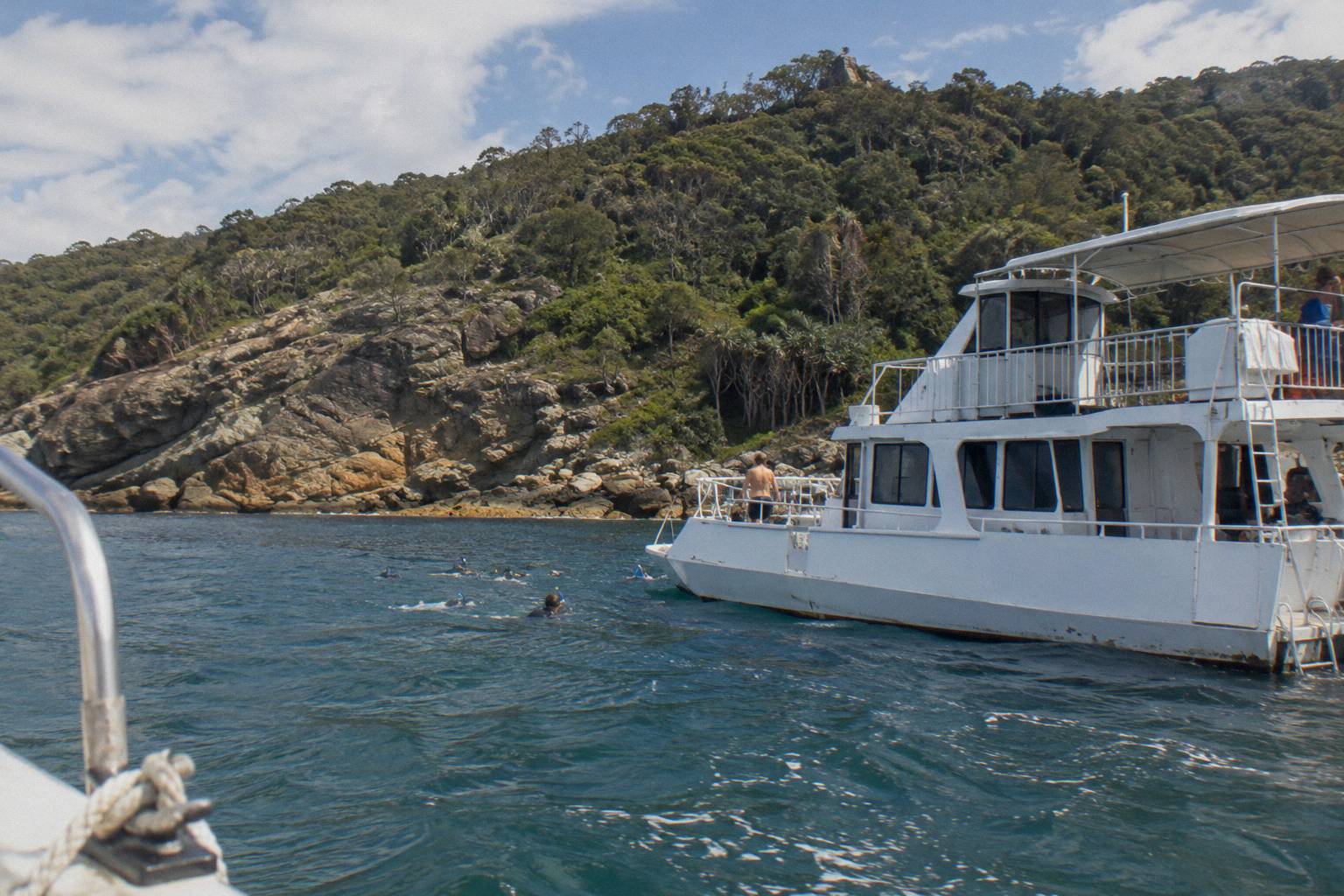
The BBQ and Boom Net cruise is a 2-hour Moonshadow trip from A$59 per person that boards at a different place from the rest: Wharf 1, the Cruise Passenger Terminal at 40 Victoria Parade, Nelson Bay. It runs December to April, sweeps the headlands and eastern harbour on a twin-level boat with walk-around decks, includes a classic sausage sizzle and a boom net, and carries live captain's commentary. Its operator also flags it as unsuitable for people prone to seasickness, which makes the departure-hour question sharper here: some travellers simply feel better earlier in the day, and asking the crew for a mid-boat suggestion when boarding is reasonable.
The longer summer daylight is part of why that trip thrives in its window: a 2-hour cruise plus boarding 15 minutes early plus a sausage sizzle eats a bigger slice of a winter afternoon than a summer one. Drinks are not included, there is a bar and snack food on board, and child and family fares are set by the operator and shown when you check dates.
For a fuller treatment of the net itself, the guide to the boom net dolphin experience at Nelson Bay explains what the ride is and is not: a net slung off the vessel that guests sit in while the boat moves, inshore on the Dolphin Discovery cruise, never a swim with dolphins.
What About Weather, Cancellations And Refunds?
Every trip here can be cancelled free up to 24 hours before departure for a full refund, and if the operator cancels you get a full refund or a transfer. Moonshadow's own terms charge a standard cruise cancelled inside 24 hours in full, and its dolphin policy is a non-transferable free return voucher on standby, not cash, when no dolphins are found. Weather decisions belong to the operators, not to you.
This is where a departure-hour decision quietly becomes a risk decision. Booking a morning slot the night before, in a port whose wettest months are May to July by the Bureau of Meteorology's Nelson Bay averages, leaves you a smaller weather window to judge than booking three days out. The climate averages put monthly rainfall at 149.7 mm in May and 157.2 mm in June against 78.4 mm in October, with 9.6 and 9.4 rain days of a millimetre or more respectively. Those are land figures, not sea conditions, and no swell or wind number exists in the material to print, but the pattern is real: winter bookings deserve the 24-hour cushion.
| Month | Mean max °C | Mean min °C | Rain days (1 mm+) |
|---|---|---|---|
| January | 27.3 | 19.0 | 7.8 |
| March | 25.9 | 18.0 | 8.8 |
| June | 18.2 | 10.3 | 9.4 |
| September | 21.4 | 12.2 | 7.7 |
| December | 26.0 | 17.8 | 7.6 |
The sighting terms differ by operator and never cross over. Moonshadow says the dolphins are totally wild, that 100% sighting success is not guaranteed, and that if dolphins are not located it gives a non-transferable free return voucher on a standby basis with no cash refund. Imagine's Dolphin Watch Cruise and Sail carries its Dolphin Guarantee (Free Return). No cruise guarantees dolphins, and no refund policy should be read as one. If offshore conditions are poor, the Wild Port Stephens route may stay inside the bay, per its operator.
One wildlife-law point worth knowing while you wait on the marina: NSW approach rules keep vessels at least 50 m from a dolphin, with a caution zone from 150 m, and if dolphins choose to bow-ride the boat holds course and speed. The official approach distances for whales, dolphins and dugongs are published by the NSW Government, and the boats you are choosing between work inside them.
Common Mistakes Picking A Departure
The recurring mistakes are chasing a mythical best hour, ignoring boarding buffers, mixing up marinas, assuming every boat runs all year, and treating a sighting guarantee as one. None of the departure slots outperforms another on sightings, two boarding points exist in Nelson Bay, and the year-round boats sit alongside seasonal ones that vanish in winter. Avoid these five and the choice collapses to convenience.
The first mistake is hunting for a magic hour. The resident pod of roughly 90 to 120 dolphins (NPWS) lives in the marine park permanently, and nothing in any operator's material ranks one departure above another for sightings. A booker who picks a slot around sleep, meals and parking will enjoy the cruise more than one who picks it around a rumour.
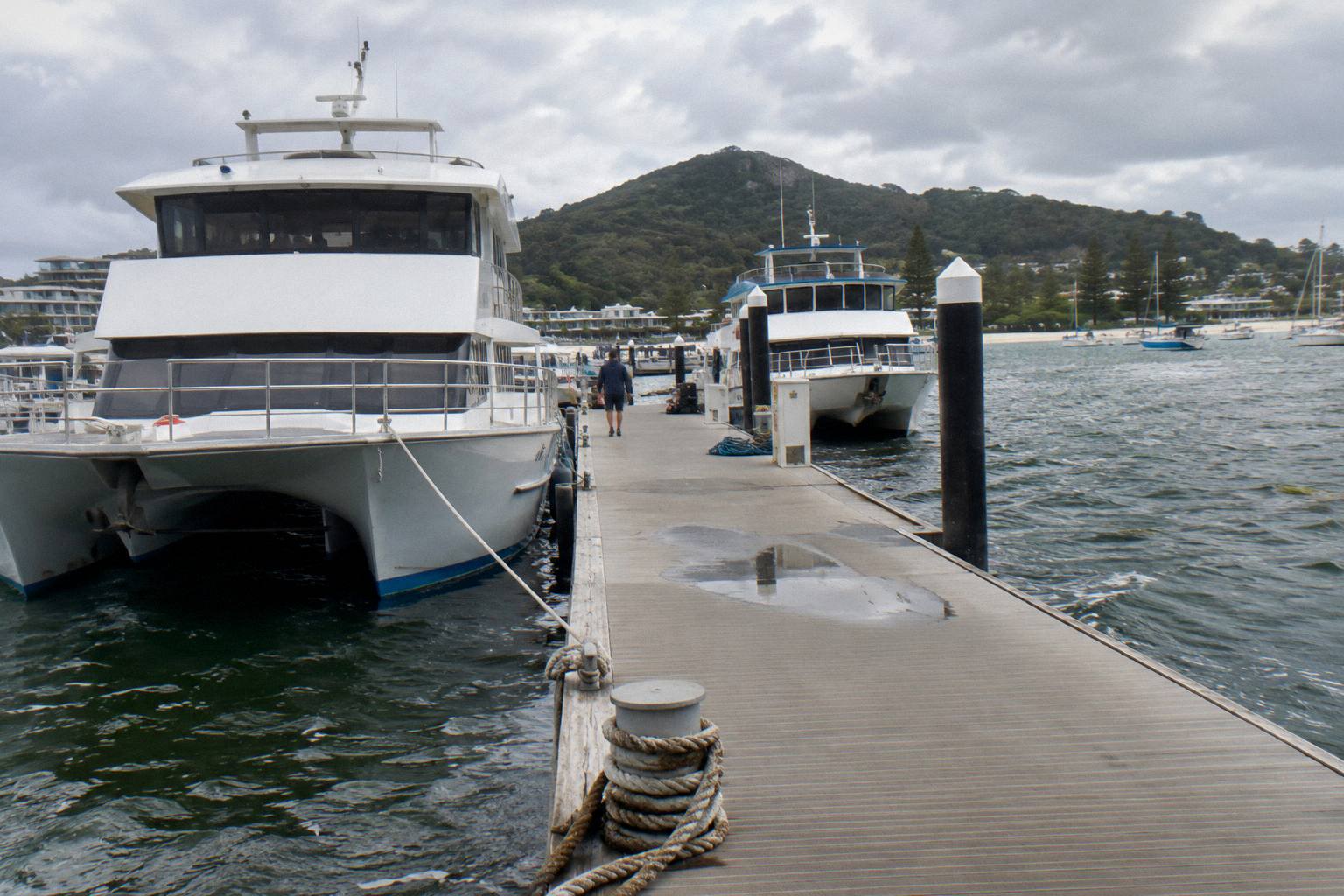
The second is underestimating the buffer. Moonshadow asks guests to board about 15 minutes before departure, parking around d'Albora Marina and Victoria Parade is paid up to 4 hours between 8:30am and 4:30pm, and some streets nearby are free and unlimited, so a late-morning departure in peak season needs slack for both the walk and the ticket machine. The council runs number-plate Smart Parking with time limits and possible fines; check the signs and the app.
The third is mixing up the boarding points. The dolphin boats leave from d'Albora Marina, Nelson Bay, with the dock on your booking confirmation, while the BBQ and Boom Net cruise boards at Wharf 1 on Victoria Parade, a different place entirely. Arriving at the wrong one costs your departure, and Moonshadow's terms allow no refund or transfer if you miss the boat.
The fourth is assuming summer availability in winter. The sailing catamaran cruise ends in April and the BBQ cruise ends with it; a July planner who fixates on either loses a day of re-planning. The fifth is reading a dolphin guarantee as a dolphin promise: both operators' terms are free-return arrangements, and Moonshadow's voucher is standby and non-transferable. For what to actually pack, see what to wear on a Nelson Bay dolphin boat, and for the rough-seas question, seasickness on a Nelson Bay dolphin boat covers the options: ask a pharmacist about motion-sickness remedies and speak to a doctor if you are pregnant or have a health condition.
How To Decide In Five Minutes
Run four checks in order: your date's season, your daylight budget, your party's needs and your cancellation cushion. In summer all boats run and all slots are bright; in winter fewer boats run and the afternoon slot runs shorter on light. Families with small children usually prefer a late-morning start; slow starters and day-trippers usually prefer the afternoon. Book once, keep the 24-hour window open, and adjust if the forecast turns.
The whole decision compresses into one table. Find your month, read across, and the slot usually picks itself.
| Your situation | Better slot | Why |
|---|---|---|
| Summer family with a baby | Late morning | Fits naps; collapsible strollers are stored by the crew on Moonshadow vessels |
| Winter visitor wanting light | Late morning | Roughly 10 hours of daylight in June; the afternoon slot ends closer to sunset |
| Summer visitor, no plans after | Either | About 14 hours of December daylight; both slots finish in full light |
| Prone to seasickness | Ask the crew | No slot is proven calmer; ask a pharmacist about options beforehand |
| Driving from Sydney that day | Early afternoon | About a 2.5-hour drive per operator figures; the morning slot means a pre-dawn start |
| Adding the boom net or snorkel | Depends on trip | Bring swimsuit and towels for the net; the snorkel cruise is 3.5 hours |
Two age rules shape the last two rows. Moonshadow's boom net requires children under 1.1 m to ride with an adult, and prams are not allowed on its vessels though collapsible strollers are stored by the crew. The Marine Discovery Snorkel Cruise, Imagine's 3.5-hour trip from A$100 with a qualified dive-master guide and snorkel gear included, asks that guests be able to swim to snorkel, though non-swimmers are welcome as observers; wetsuits and towels are not included, so bring your own or hire one. Because it is the longest trip here, its departure consumes half a day, which is exactly why the hour question matters most on it.
The final tiebreaker is the calendar itself. Departure patterns are stable, clock times are not, so when two slots both look right, check dates and the current price on the trip you want, take the one that leaves room for the rest of your day, and let the resident pod take care of the rest. If you are still weighing whether the outing earns its ticket at all, is a dolphin cruise worth it works through the value question, and the best time to go on a dolphin cruise covers the general case beyond Port Stephens Dolphin Cruises' home port.
Common Questions About Morning And Afternoon Dolphin Boats
Do Morning Dolphin Cruises See More Dolphins Than Afternoon Ones?
No departure hour is proven better. The resident pod of roughly 90 to 120 Indo-Pacific bottlenose dolphins lives in Port Stephens all year, and no operator publishes a sighting figure that favours one slot over another.
What Time Do Nelson Bay Dolphin Cruises Actually Leave?
Moonshadow describes late-morning and early-afternoon departures daily all year, with an extra afternoon departure in school holidays except winter. Clock times are set by the booking calendar and change, so check dates for your day.
Is Morning Or Afternoon Better For A Dolphin Cruise In Winter?
Winter runs about 10 hours of daylight at Nelson Bay, with sunset about 4:52pm in June, so the late-morning slot gives you more light afterwards. Both slots operate in full daylight; the choice is about your plans ashore.
Are There Extra Dolphin Cruise Departures In School Holidays?
Yes. Moonshadow adds one extra afternoon departure in school holidays, except in winter, per the operator. Peak-season dates fill faster, so book ahead.
Can I Change My Dolphin Cruise To A Different Time After Booking?
Every trip here allows free cancellation up to 24 hours before departure for a full refund. Inside 24 hours, Moonshadow charges a standard cruise in full and amendments carry an admin fee, so shift your slot early.
Which Dolphin Cruise Departure Is Best With Kids?
Whichever slot fits naps and meals. Bring swimsuits and towels for the boom net, note that children under 1.1 m ride the net with an adult, and remember prams are not allowed on Moonshadow vessels though collapsible strollers are stored by the crew.